
Quote Stories
A Chorus of Small Bells
Tavi learns that a tradition can ring truest when no one voice controls it.
The first bell split while Tavi was carrying it to the kiln.
It made a thin, startled sound and broke neatly in two, as if someone had drawn a line through its middle.
Tavi stared at the pieces. Outside her workshop, the lake flashed between the reeds, and a ferry horn answered from the far pier. Three weeks remained before the annual Bell Walk.
By sunset, the rest of the old molds had cracked too.
“They were older than my grandmother,” said Orro, the ferry keeper, turning a broken mold in his hands.
“Then they’ve had a good life,” Tavi replied.
The town council asked whether she could make replacements. Tavi, twenty-nine and proud of producing the cleanest work in the lakeside district, said yes before anyone could suggest another plan.
She worked alone for ten days. She measured the old bells, refined their curves, and carved elaborate new molds. Her bells were beautiful: blue as deep water, pale as moonlight, red as a tiled roof after rain. She tuned each one carefully.
Then she hung them in a row and struck them.
The sound was dreadful.
One bell boomed. Another chirped. Three clanged together like spoons falling down a staircase.
Tavi adjusted their thickness, changed the openings, and fired another batch. The result was louder but no better.
At the next council meeting, everyone had an opinion.
“The bells should sound like the old ones,” said a shopkeeper.
“They should sound grander,” said the mayor.
“They should sound like the lake,” said a child from the back row.
Orro folded his arms. “The lake doesn’t make one sound.”
That stayed with Tavi.
The next morning, she carried a basket of unfired clay to the ferry dock. She asked Orro what sound meant home to him.
“The rope knocking against the mast,” he said. “Before dawn.”
She gave him clay and showed him how to pinch a small bell around a strip of reed. Its surface came out lopsided, with a thumbprint pressed near the rim.
At the market, a baker shaped a bell with a wide mouth, saying it should echo the hollow thump of bread being set on a counter. An elder made one with a narrow slit for the sound of rain on shutters. Two children built bells that rattled because, they explained, home was never quiet when their cousins visited.
Tavi made notes. She stopped correcting their designs.
For four evenings, the workshop filled with clay dust, wet footprints, arguments, laughter, and the occasional crash. People disagreed about everything: size, color, handles, strings, even whether a bell ought to have a pleasant sound.
“Pleasant is not the same as true,” said the elder with the rain bell.
Tavi began testing the bells in groups. Some were bright, some low, some rough. Together they formed patterns she could not have planned. The ferry keeper’s deep note gave the children’s rattles somewhere to land. The baker’s hollow bell answered the narrow rain bell. Between them, a melody appeared—not polished, but alive.
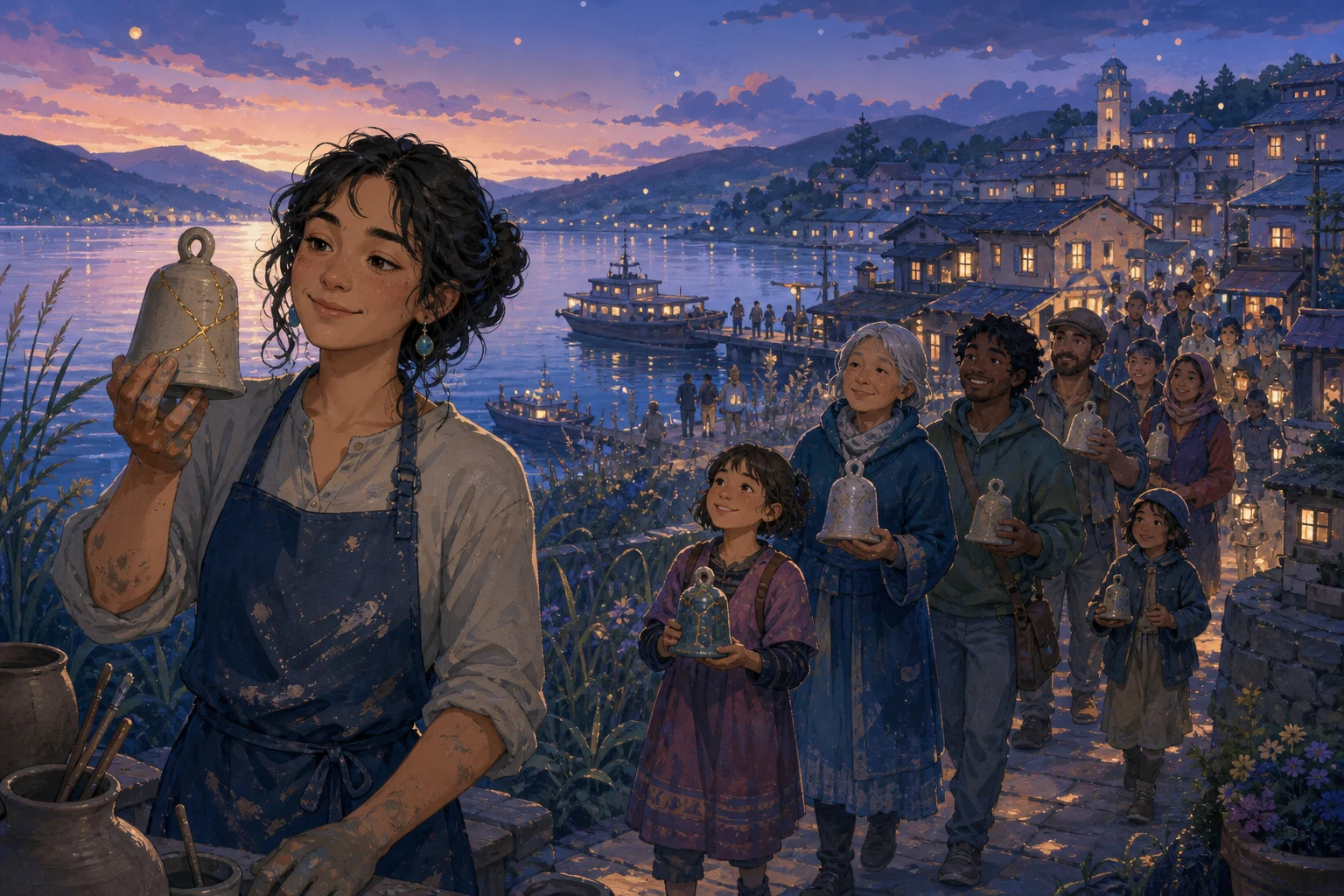
On the evening of the Bell Walk, hundreds of bells hung from poles, bicycles, boat rails, and ribbons tied between the houses. The procession followed the sloping path from the pottery quarter to the lake.
Tavi walked near the middle, carrying her first cracked bell. She had mended it with a thin line of gold-colored glaze. It still made a small, imperfect note.
When the walkers reached the water, the bells began to ring.
The sound was uneven. It was bright and heavy, trembling and bold. It carried the scrape of ferry ropes, the clatter of kitchens, the rush of rain, the laughter of crowded homes, and the quiet pause before dawn.
No one voice controlled it. Somehow, everyone could recognize it.
Orro leaned toward Tavi. “Not bad for a broken mold.”
Tavi looked across the shore, where every bell moved in the evening breeze.
“Not bad,” she said, “for a whole town.”
Related Quote Stories
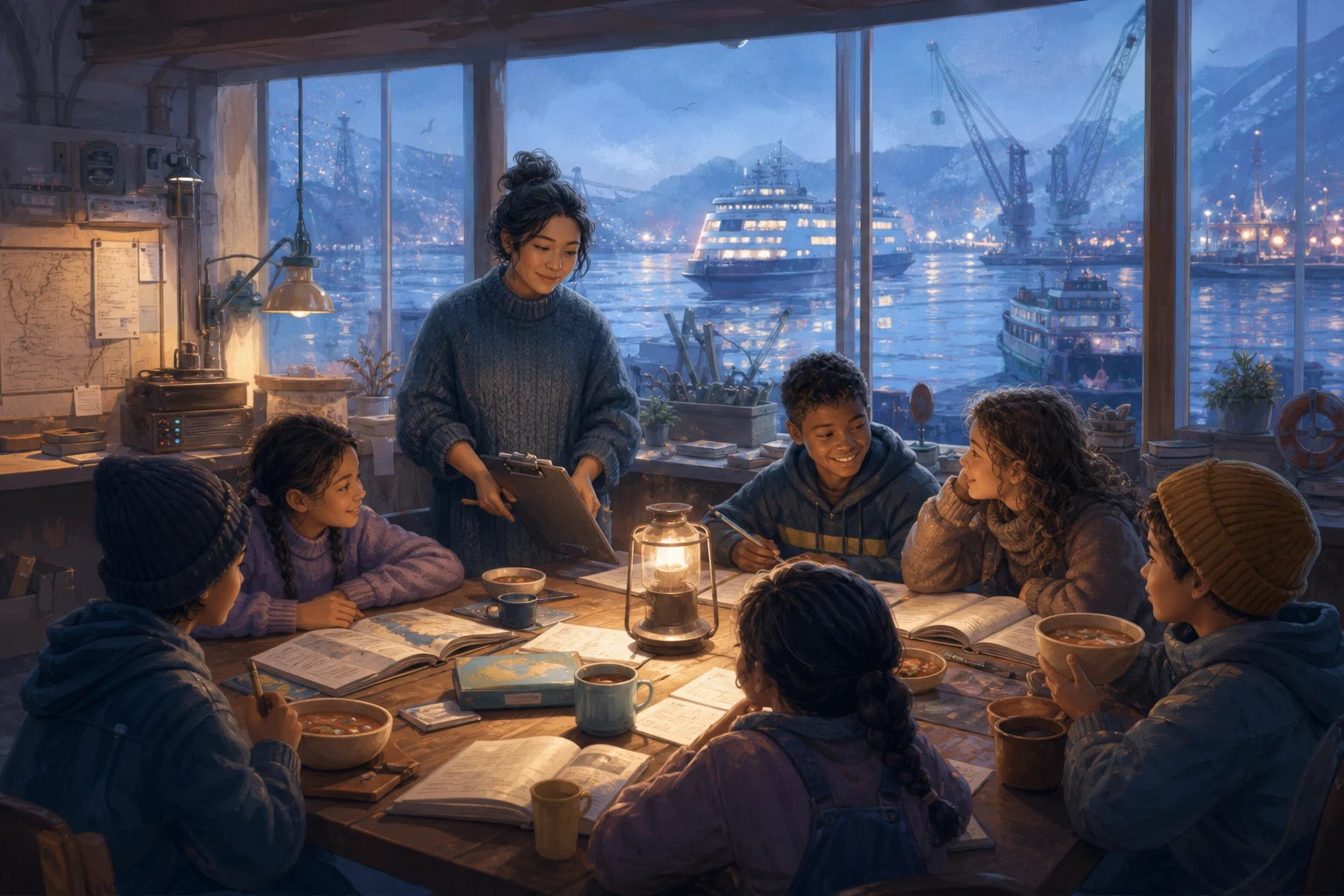
When the Harbor Hums
A night-shift harbor dispatcher opens an unused ferry room for dockworkers’ children, then discovers that the strongest welcome is one the visitors help build.
Read Story →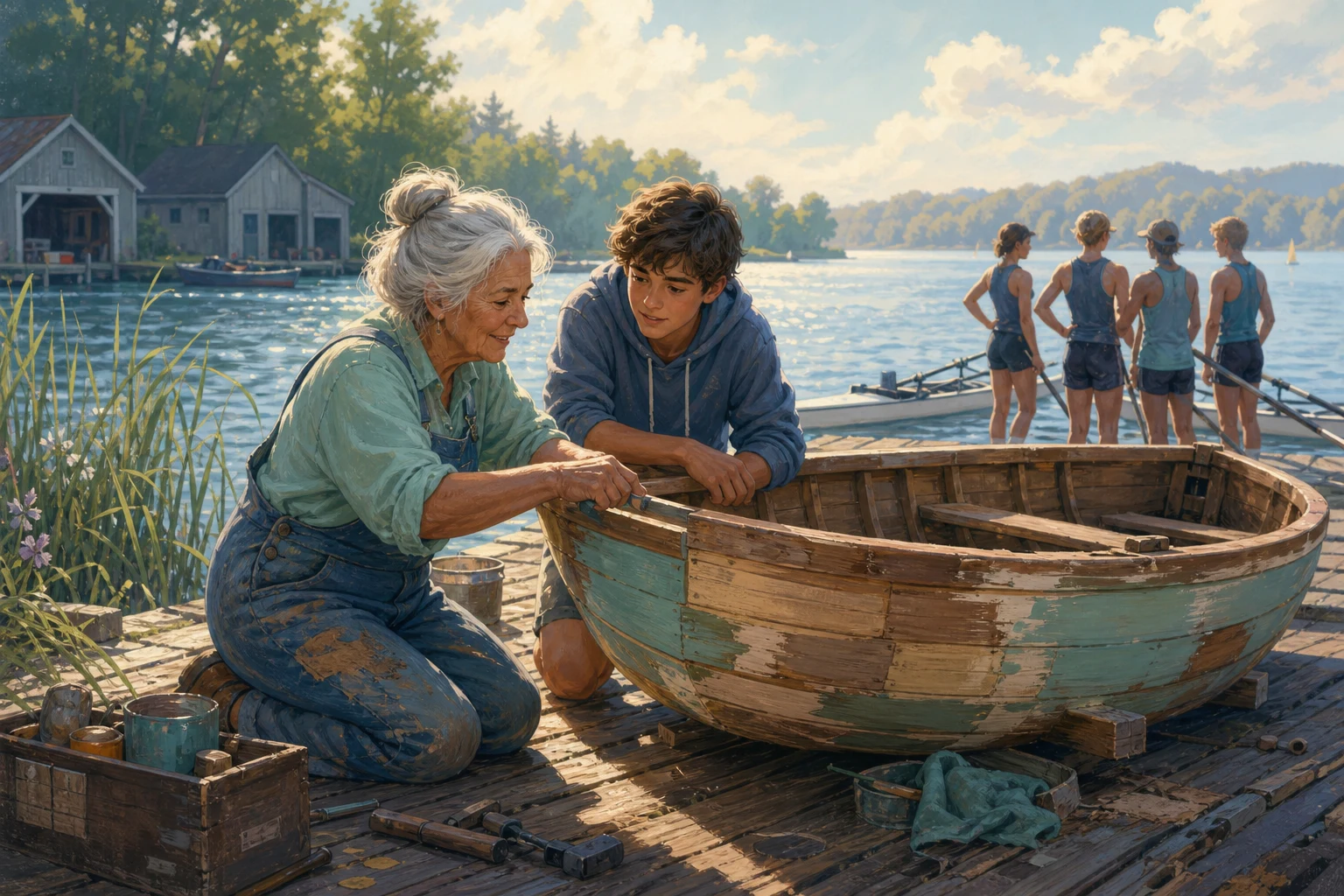
Built to Drift
Edda wanted her grandson to build a winning boat. He wanted the boat to win. Between them stood an old hull, a deadline, and a lake full of better questions.
Read Story →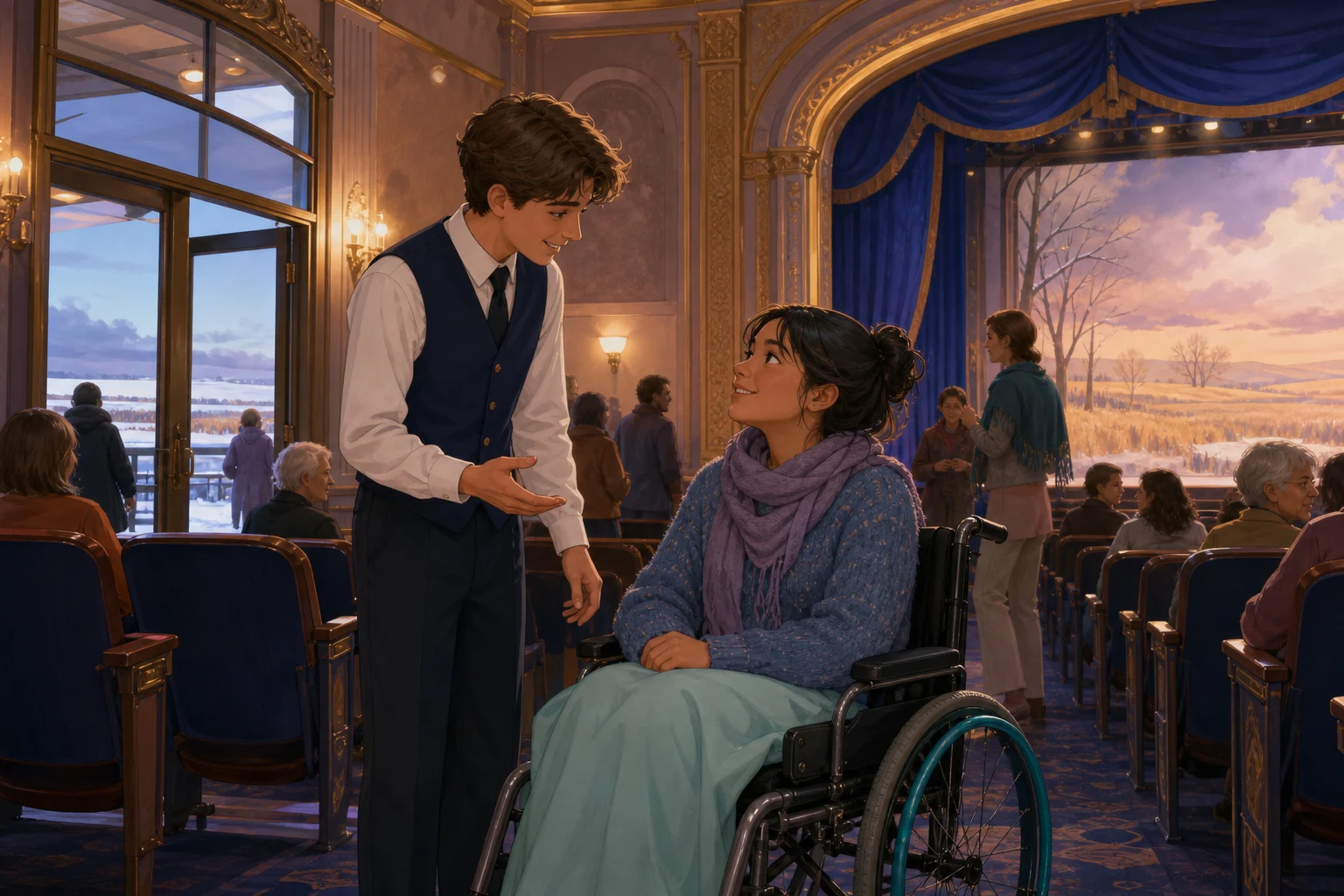
Before the Curtain Falls
When a gifted new student keeps leaving performances early, a teenage usher discovers that the kindest solution is not the one she invents alone.
Read Story →