
Quote Stories
A Menu for the Dark Season
Anja thought keeping a promise meant keeping everything unchanged. Tomas helped her see another way.

The soup pot slid three inches when the ferry struck the evening wake.
Anja caught it with one hand and the serving ladle with the other. A wave slapped the boat’s windows. Across the kitchen, her nephew Tomas grabbed a tray of rye cakes before it tipped into the sink.
“First night,” he said. “People enjoy a little drama.”
“They enjoy warm food,” Anja replied. “Drama is free, which is why everyone has too much of it.”
The ferry cookboat had belonged to her brother Soren, who had died the previous spring. It was hardly more than a long wooden room tied beside the quay, with a stove, six tables, and a hatch through which passengers could order supper while crossing to the evening market. During the bright months, Soren had sold fish stew, buttered potatoes, and his famous cloudberry buns.
Anja had promised to keep the boat open through winter. She had not promised to change a thing.
Tomas, seventeen and endlessly inventive, had other plans. He had written “smoked mushroom wraps” and “pepper-cabbage noodles” on a chalkboard behind her back. He had also designed a symbol for each dish, convinced that people would order faster if they did not have to read.
“They can read,” Anja said when she discovered the board.
“They can read while standing in snow, holding a baby, and trying not to fall into the lake?”
“That is an oddly specific customer.”
“That is three customers.”
On opening night, Tomas’s dishes took too long. The noodles clumped. The wraps tore. A passenger waited so long for a mushroom order that he accepted two buns and called it supper. Meanwhile, the old brass lanterns left half the dining room in a blue-gray gloom. Anja could see every mistake on the stove and none of the faces at the tables.
By the time the last ferry crossed, the boat was quiet except for the stove ticking as it cooled.
Tomas wiped flour from his sleeve. “You’re going to say we should return to the old menu.”
Anja looked at the chalkboard. The new words were smudged where his elbow had rubbed against them. Beneath the counter sat Soren’s recipe tin, dented at one corner. She had carried it from his kitchen to the boat without opening it.
“I’m going to say,” she answered, “that your wraps are not ready for public life.”
His shoulders lowered.
“And,” she continued, “that the lanterns are useless.”
He looked up.
“Those are not the same problem,” Anja said. “But both can be fixed.”
The next afternoon, Tomas walked the footpath from the quay to the cabins, knocking on doors with a notebook in his hand. Anja expected him to return with opinions about sauces. Instead, he came back with a list of practical requests.
The ferry mechanic wanted something he could eat with one hand. The night-watchwoman wanted a meal without fish. Two market sellers asked for smaller portions after closing. A child had suggested potato soup with dill “but not the green bits.”
Anja read the list twice.
“People told you all this?”
“They told me more. I removed the parts about your temper.”
She pretended to reach for the wooden spoon.
That evening, they tested the suggestions. Anja made Soren’s fish stew. Tomas made a smaller mushroom pie, folding the crust properly this time. They invited six passengers to taste both and write comments on slips of paper.
The first round was nearly unanimous: too much salt in the stew, not enough filling in the pie, and no one understood Tomas’s symbols.
“Your customers are fearless,” Tomas said.
“They are hungry.”
For the lighting, he borrowed a pair of copper lamps from the mechanic, three glass shades from the market seller, and a battery lantern from the watchwoman. Nothing matched. One lamp leaned left, one shade was amber, and the battery lantern blinked whenever the ferry engine started.
Anja hated the arrangement until she saw the room from the doorway. The mismatched lights spread a warm, uneven glow across every table. Soren’s old brass lantern still hung above the stove, but now it no longer had to do all the work.
They called the new menu “One Familiar, One New.” Each evening offered one recipe from Soren’s kitchen and one dish suggested or improved by someone who traveled the lake. A chalkboard listed the ingredients plainly. Tomas kept the portions quick and modest. Anja stopped correcting his handwriting.
Some experiments failed. The beet fritters collapsed. A pear-and-onion tart divided the room into passionate supporters and people who quietly ordered buns instead. But the boat grew busier. Passengers began arriving early to see what had changed. The ferry mechanic brought a lamp of his own. The child who disliked green bits eventually requested dill.
In midwinter, Anja opened the recipe tin. Inside were Soren’s measurements, but also scraps of paper: a baker’s note about adding warm milk, a passenger’s suggestion for extra pepper, and a sketch of a serving tray. Soren had been changing things all along. He had simply kept the evidence untidily.
She showed Tomas the papers.
“You could have told me,” he said.
“I didn’t know.”
That answer sat between them, gentler than an apology and more honest than one.
By the last dark week of the season, Anja and Tomas had enough savings to repair the boat’s leaking sideboard. They painted the new wood the same deep blue as the old hull, then left one narrow strip unfinished so the difference could be seen.
On the final evening, Tomas set a bowl of fish stew beside a mushroom pie. Anja placed two cloudberry buns between them.
“Your brother’s recipe?” Tomas asked.
“Mostly.”
“Mostly?”
“I added less sugar.”
He smiled. “Scandalous.”
Outside, the ferry bell rang. Passengers stepped aboard, shaking snow from their coats. The borrowed lamps glowed above them, each one casting its own shape of light.
Anja lifted the serving hatch.
“What’s tonight’s special?” someone called.
She glanced at Tomas, who was already reaching for the chalk.
“Something we remember,” she said, “and something we haven’t tried yet.”
Related Quote Stories
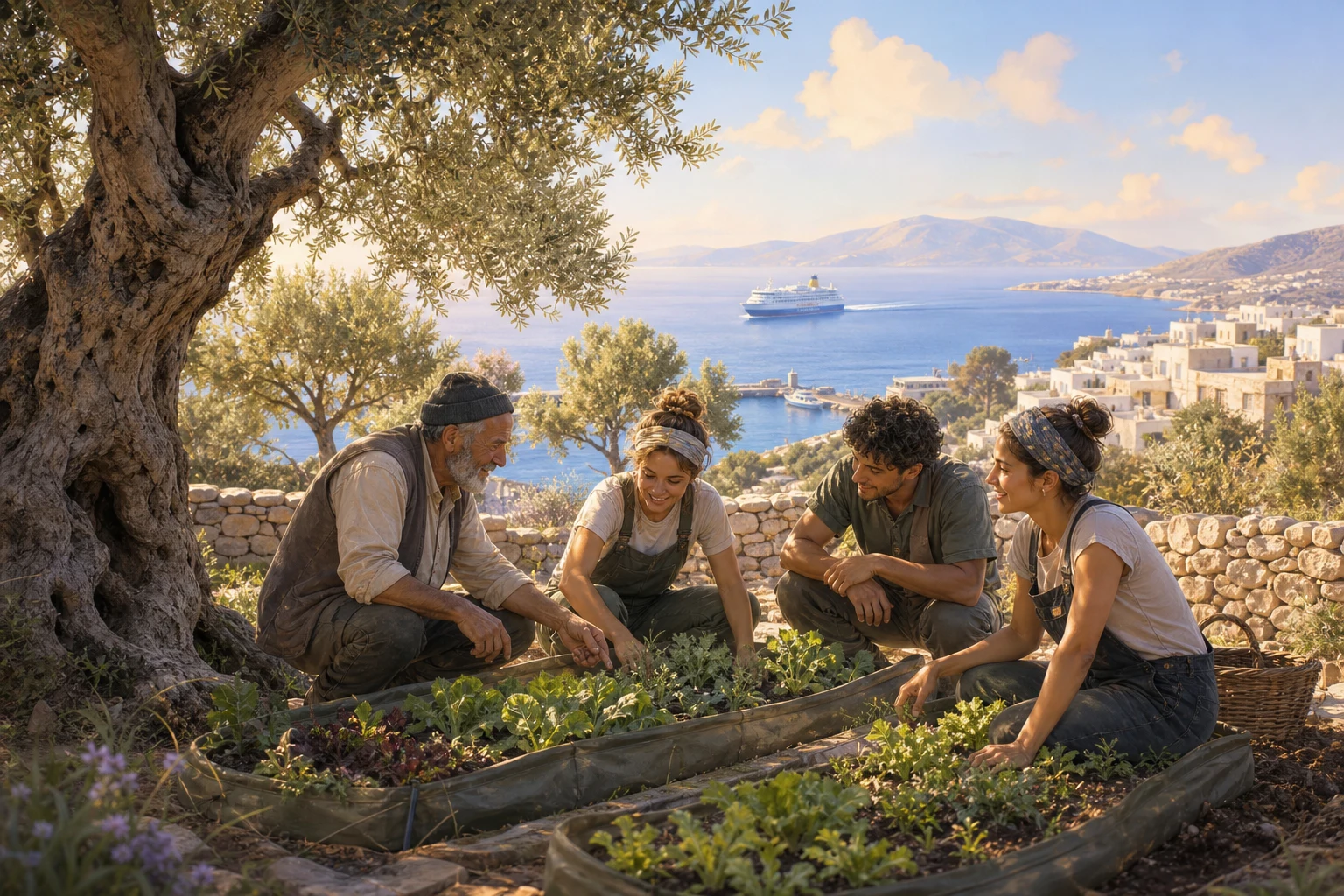
Where the Shade Falls
Tomas had already measured the orchard for sale when three young workers asked whether they could borrow it for one afternoon.
Read Story →
A Tune for Every Pocket
Celia could repair almost anything with a spring, a screwdriver, and enough patience. Her niece’s silence in music class required something different.
Read Story →
Lessons on Four Wheels
After losing his mapmaking contract, Elian rebuilds a handcart and fills it with puzzles, measuring tools, and books. The first lessons fail—until the people he hopes to teach show him how learning can begin with ordinary things.
Read Story →