
Quote Stories
Leave One Window Open
A sign painter learns that the best wall can make room for other hands.

Daro had brought six old photographs, three sharpened pencils, and a plan that left no space for anyone else.
The wall outside the recreation hall was long enough to hold a history lesson. Its plaster had been baked pale by years of sun, and beneath the peeling paint Daro could still see fragments of an earlier mural: a blue cup, half a bicycle wheel, the sleeve of a dancer.
He was fifty-one and had painted signs since he was seventeen. Letters behaved when he painted them. A curve met its proper line. A border stayed a border. So when the hall’s custodian asked him to restore the wall, Daro decided to show the building as it had looked decades earlier: children in neat clothes, a brass band, banners strung between the roofs.
“Will there be any of us in it?” asked Nima, one of the dancers who practiced inside.
“There will be children,” Daro said.
“That is not the same thing.”
Daro pretended not to hear.
For a week, he painted beneath the hard white light of the plateau. Then, one morning, he found a bright orange kite tail curling across the painted sky. By afternoon, someone had added a purple shoe to one of the historical children. The next day, a row of green windows appeared along the bottom edge.
Daro marched into the hall with a rag and a tin of solvent.
“Who did this?”
The dancers looked at one another. The custodian studied the ceiling. An elderly man waiting for his chess game to begin raised one hand.
“The shoe is mine,” he said. “My granddaughter wears one exactly like it.”
Daro scrubbed until the purple blurred into pink. He went home angry, though he could not have said at whom. The wall was his responsibility. A mural was not a noticeboard. It needed discipline.
The following morning, his smallest brush slipped. A line that should have been narrow widened across a painted face. Daro leaned close, then farther away. The letters on his paint tins had begun to swim when the sun was low. He sat on the curb with his hands folded over the brush.
Nima came out carrying two cups of tea.
“You can tell us to stop changing it,” she said.
“I have told you.”
“You have told the wall.”
That made him laugh, unwillingly.
Instead of painting, Daro spent the afternoon asking questions. He asked the dancers what they remembered from the hall. They described practicing steps in winter coats, sharing one broken mirror, and learning songs from an aunt who never performed herself. He asked the custodian, who remembered the first working water cooler. He asked the chess players, the children who came for table tennis, and a retired carpenter who had built the hall’s doors.
Their memories did not arrange themselves into a single grand scene. They arrived as small things: a hand on a shoulder, a shoe left beneath a bench, a paper cup of tea, a window glowing after sunset.
Nima drew six rectangles on a sheet of paper.
“Windows,” she said. “Each one can show something people hope for or remember.”
Daro frowned. “A wall needs a composition.”
“Then compose six windows.”
He looked at the blank spaces between them. For the first time, the emptiness seemed deliberate.
They began again. The dancers painted sweeping yellow lines that became scarves and sunbeams. The custodian added a green water channel. The chess players made black-and-white squares into a path. Children stenciled hands around a window showing a bright room with enough chairs for everyone.
Daro designed the frames and taught them how to mix colors without making mud. When his eyesight tired, the group widened the lettering and replaced delicate details with bold shapes. No one treated the change as a defeat. They simply made the mural easier for more eyes to read.
A week before the unveiling, Daro stood on the scaffold and studied the final panel. It showed an open window looking onto a pale morning. Beyond it was only sky.
“What goes there?” asked the retired carpenter.
Daro handed him a brush.
“Something you have not told us yet.”
By evening, the panel held a row of small marks: not birds, exactly, but the suggestion of their leaving.
The wall was finished enough to welcome people and unfinished enough to welcome more. At the bottom, Daro painted a simple line in large, steady letters: LEAVE ONE WINDOW OPEN.
Then he put down his brush. Nima picked it up and added a purple shoe beneath the words.
Daro looked at it, smiled, and signed his name beside hers.
Related Quote Stories

A Map Woven in Blue
Ilya’s patchwork bench covers began with lost gloves and ended as a map everyone could help complete.
Read Story →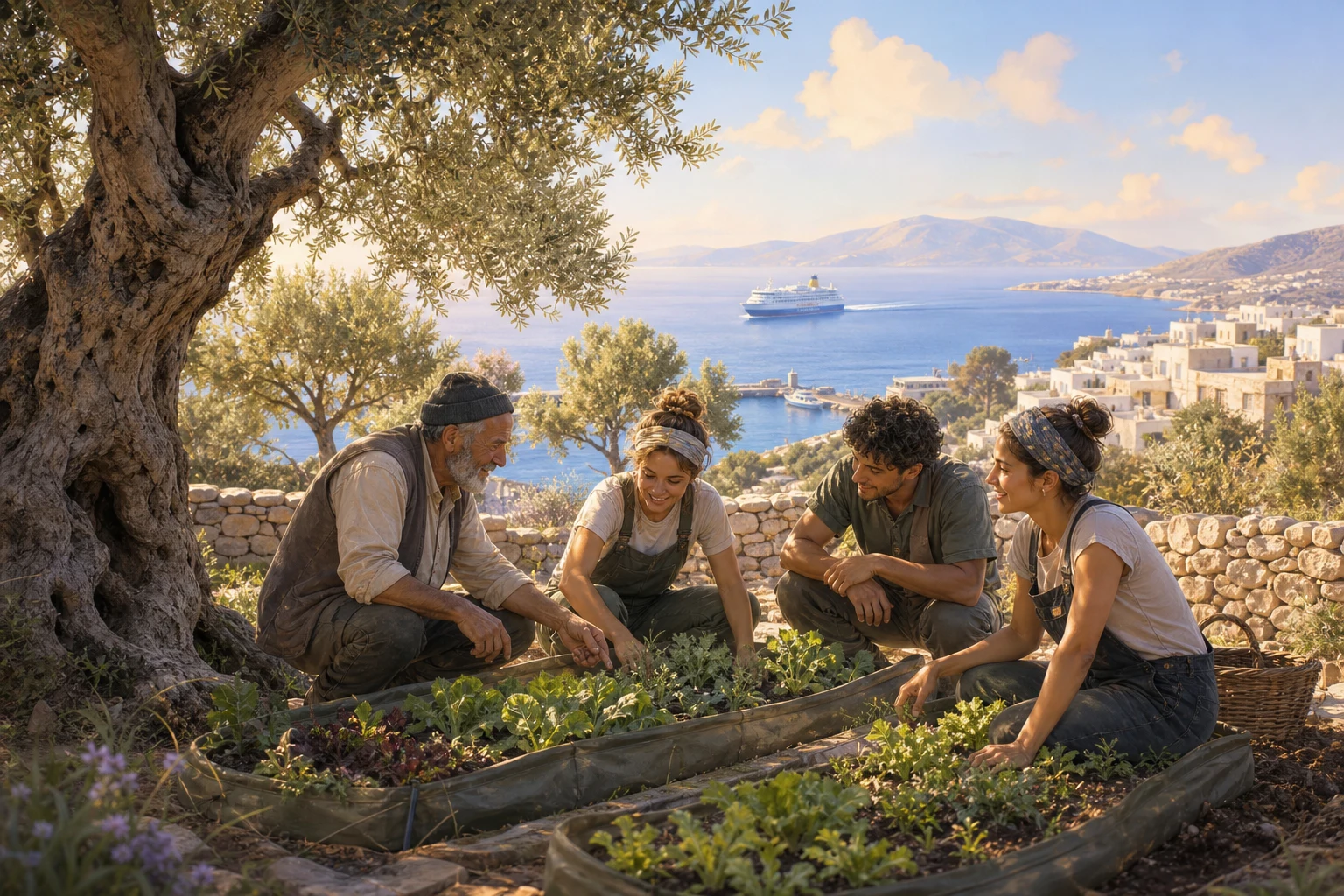
Where the Shade Falls
Tomas had already measured the orchard for sale when three young workers asked whether they could borrow it for one afternoon.
Read Story →
A Tune for Every Pocket
Celia could repair almost anything with a spring, a screwdriver, and enough patience. Her niece’s silence in music class required something different.
Read Story →