
Quote Stories
The Clockwork Seed Library
A rooftop garden grows beyond the competition
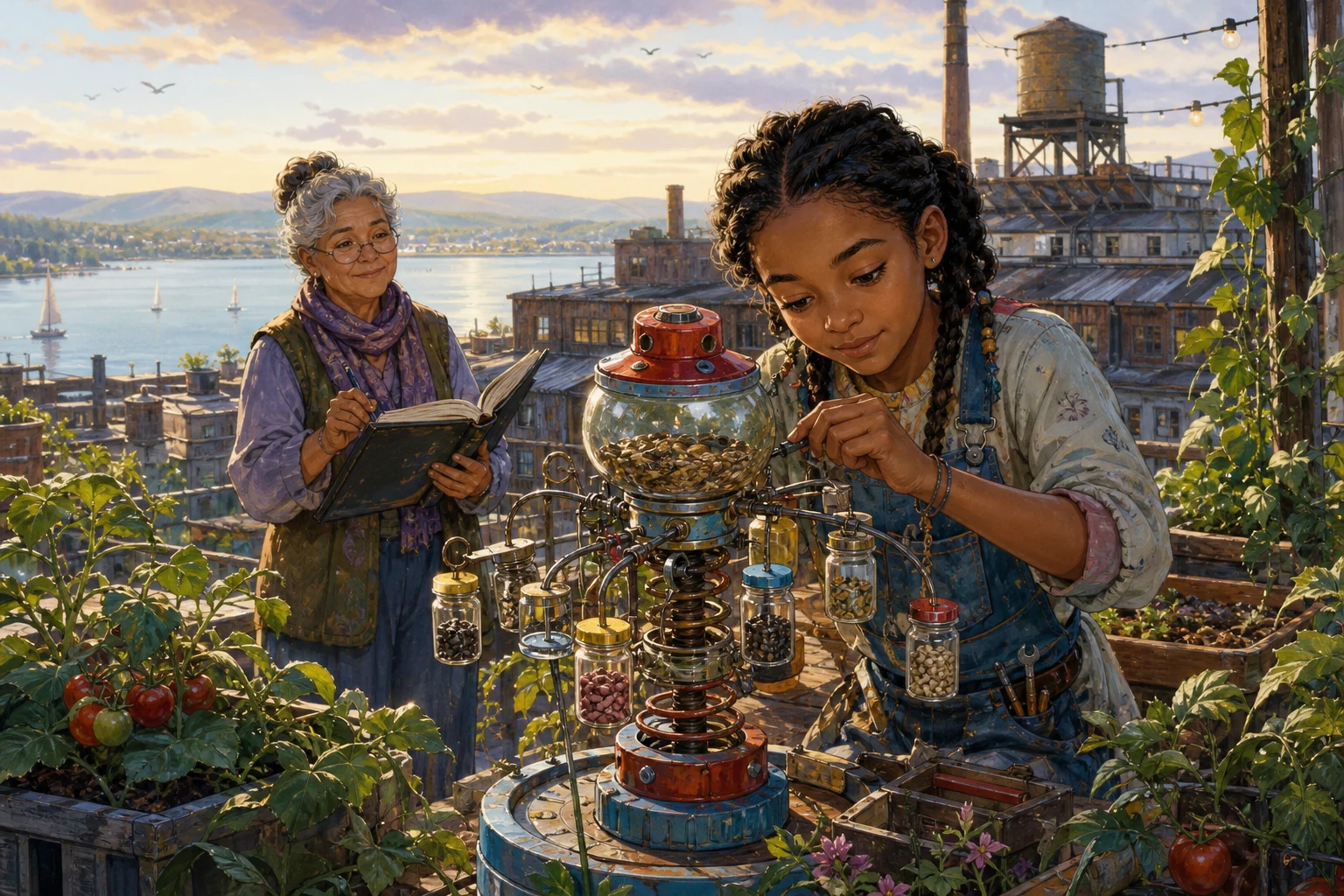
Mira Venn could make almost anything tick again.
At the repair kiosk beneath the old riverside warehouses, she coaxed music from cracked toy birds, made tin soldiers march with bottle-cap feet, and kept a drawer full of springs sorted by length. What she could not repair was the empty look on Mrs. Sava’s face when the woman asked whether a packet of bean seeds cost more than it used to.
“Seeds shouldn’t be the expensive part of growing food,” Mira said.
Across the water, the rooftops were bright with planters. Balconies held herbs in chipped bowls, tomatoes in paint buckets, and climbing beans tied to salvaged wire. But several gardeners had stopped planting. They saved their money for rent, medicine, or winter fuel.
Mira carried the problem to Ansel Reed, the community archivist, who kept careful records in a narrow room above the clock-repair shop.
“People have always shared seeds,” Ansel said, opening a ledger. “The difficult part is remembering what belongs to whom.”
Mira glanced at the shelves of labeled boxes. “Then we’ll make something that remembers.”
For three weeks, she collected discarded toy springs, bottle caps, wooden spools, and small glass jars. Ansel supplied waterproof labels and taught her how to record planting dates, harvest amounts, and which seeds had been returned.
Their first dispenser jammed. The second released all its seeds at once. The third worked beautifully, but only after Mira stopped rushing and measured each spring.
By spring, the rooftop garden had twelve little dispensers mounted along its railing. Turn a cap once, and a measured pinch of seeds dropped into a waiting envelope. Each label carried a crop name, a planting note, and a blank line for the next harvest.
Then the school announced its garden challenge.
The prize would go to the rooftop with the tallest plants and the largest display. Almost immediately, the gardeners began guarding their water. The tomato growers wanted every drop. The lettuce growers accused them of taking more than their share. Someone moved the bean dispenser behind a locked crate.
Mira found it there after sunset.
At the next meeting, she placed three envelopes on the table: bean seeds, lettuce seeds, and marigolds.
“Instead of measuring whose plants are biggest,” she said, “we could measure what the garden gives back.”
A gardener folded his arms. “The competition is about results.”
“Exactly. Count the harvest. Count the seeds returned. Count how many planters can be filled next season.”
Ansel unrolled a chart. It showed that the tallest tomatoes had produced less food than the shorter beans, while the marigolds had kept pests away from several beds. The figures did not settle everything, but they made the argument more difficult to turn into shouting.
The gardeners agreed to try Mira’s system for one week. They combined their water schedule, recorded every harvest, and opened the locked crate. Even the tomato growers discovered that sharing water kept the whole roof greener.
On judging day, the rooftop was not the neatest. Some plants leaned sideways. A few labels were smudged. But beneath the railing stood baskets of beans, herbs, tomatoes, and seed envelopes ready for the next planting.
The judges awarded the prize to the garden with the greatest shared yield.
Mira cared less about the ribbon than about Mrs. Sava’s hands. The older woman filled two envelopes, one for her balcony and one for a neighbor who had never grown anything before.
At the kiosk, Mira fitted a fresh spring into the first dispenser. It clicked, released exactly six seeds, and stopped.
Ansel wrote the number in the ledger. Then he left the next line blank.
“Why?” Mira asked.
“So someone else can decide what it remembers next.”
Related Quote Stories
Where the Shade Falls
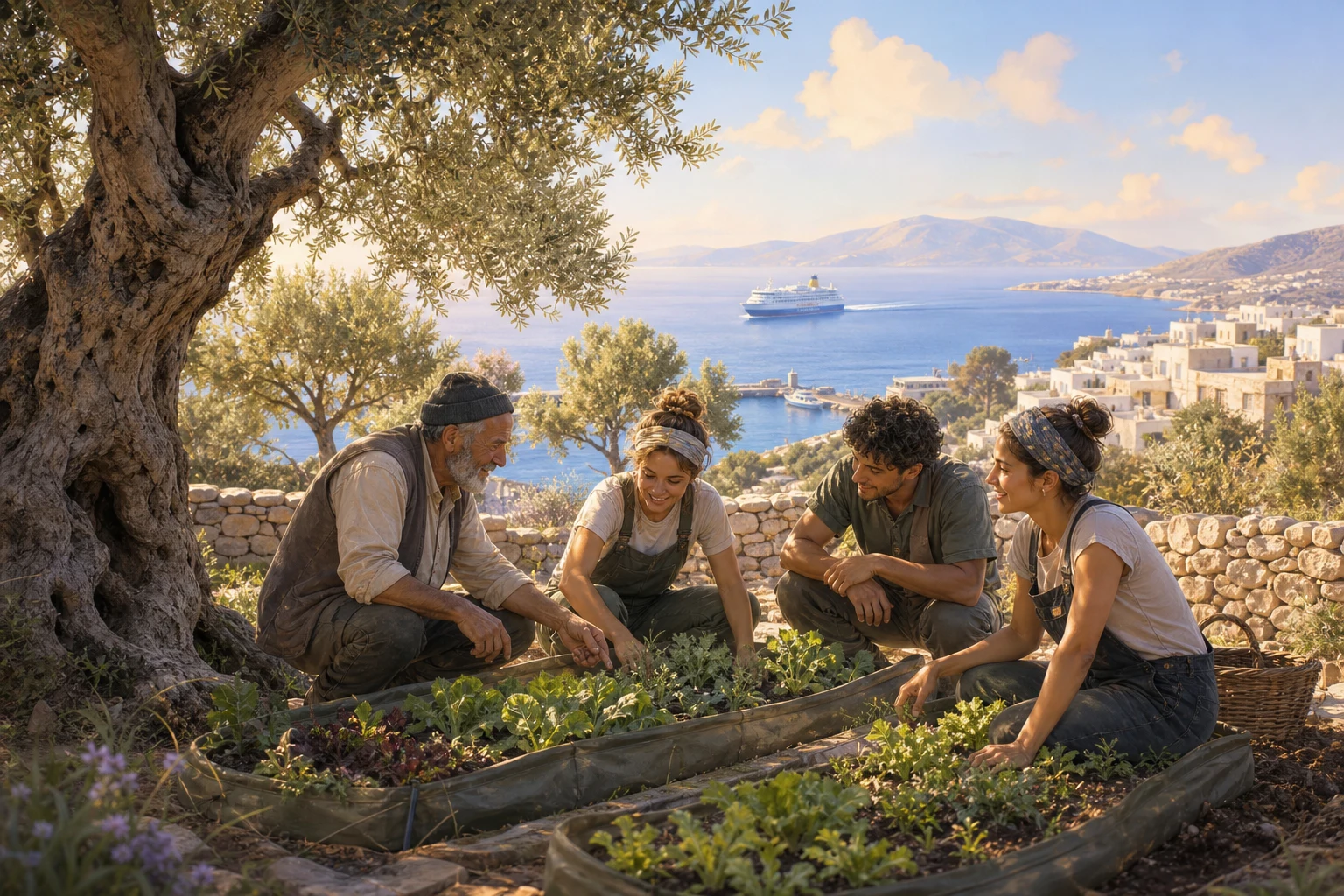
Tomas had already measured the orchard for sale when three young workers asked whether they could borrow it for one afternoon.
Read Story →
A Tune for Every Pocket
Celia could repair almost anything with a spring, a screwdriver, and enough patience. Her niece’s silence in music class required something different.
Read Story →
A Safer Way Through
When the lanterns fail beneath the freight bridge, Pera stops trying to carry the whole night alone.
Read Story →