
Quote Stories
Where the Water Makes Its Own Roads
A ferry dispatcher learns that dependable journeys can begin with listening.

“Cancel the six-forty crossing.”
Mara Selen said it before the morning bell finished ringing.
At the dispatch hut, she drew a red line through the route on her board. Beyond the open shutters, the river pressed high against the ferry posts, carrying leaves, branches, and the pale yellow flowers that fell from the trees along the banks. The old bridge stood farther upstream, its lower supports hidden beneath the swollen water.
By six-thirty, Mara had redrawn the timetable three times. She assigned one ferry to the western landing, another to the market steps, and a small covered boat to the canal behind the school. Every departure had a number. Every number had a time. Every time had Mara’s initials beside it.
“No one moves until I say so,” she told the boat crews.
That lasted until the first crowd arrived.
A fruit seller needed to reach the market before the heat spoiled her greens. Two schoolchildren had missed the canal boat because their grandmother’s foot was sore. A carpenter carried a bundle of long poles and could not fit through the western landing. A baker stood at the wrong pier, waving a paper ticket as if it were a flag of surrender.
Mara sent everyone to the correct place. Then she discovered that the correct places were changing.
At the western landing, the water had climbed over the lowest step. The canal behind the school was clear but narrow, and only the retired boat builder, Ivo, knew how to angle a ferry through it without scraping the walls. The market steps were crowded with people who had followed yesterday’s signs.
Mara hurried from post to post with her clipboard tucked beneath one arm. Each time she solved one problem, two more appeared behind it.
A boy in a green school shirt caught up with her beside a rain tree.
“You’re sending the empty boats past the quiet landing,” he said.
“It isn’t on the timetable.”
“It doesn’t need a timetable. My sister uses it every day.”
Mara looked across the water. The boy pointed toward a narrow shelf of stone almost hidden beneath hanging vines. A woman waited there with a sleeping toddler against her shoulder.
“Why didn’t she come to the market steps?” Mara asked.
“She can’t carry the stroller down those stairs.”
Mara opened her mouth to explain that the route was temporary, unsafe, and not yet approved. Instead, she watched the woman lift the stroller over a puddle while the toddler slept.
“What’s your name?”
“Jaro.”
“Show me.”
Jaro led her along a path behind the rain tree. It ended at the quiet landing, where the water was calmer because a line of reeds broke the current. Ivo arrived in his narrow boat, tested the depth with a pole, and nodded.
“Safe for the small boats,” he said. “Not the wide ones.”
Mara wrote it down.
By midday, her timetable had become a forest of arrows. Market vendors added notes in bright chalk: “Best after the shade reaches the wall.” Children drew pictures of the landings they used. Ivo marked underwater stones from memory. A woman who sold woven baskets suggested a departure point near the old fig tree, where people with heavy bundles could board without climbing.
Mara tried to arrange every suggestion herself. She copied the notes into a clean chart, assigned boat numbers, and began issuing instructions.
Then a gust of wind lifted the chart from the table and dropped it into the river.
The paper opened once on the surface, displaying all its careful lines. Then it folded and disappeared.
For a moment, Mara stood perfectly still.
Ivo rested both hands on his pole. “The river has opinions,” he said.
Mara almost laughed. She had spent the morning treating every unexpected thing as an interruption. Now the river had interrupted the entire plan.
She picked up a piece of charcoal and turned to the people gathered under the hut’s awning.
“Tell me the routes you already know,” she said. “Not the routes you think I want.”
They spoke over one another at first. The fruit seller knew which landing stayed shaded longest. Jaro knew where the schoolchildren could cross without passing the deep channel. The basket maker knew which steps were wide enough for carts. Ivo knew the places where the river looked calm but pulled hard underneath.
Mara listened. She asked questions. She drew only what they confirmed.
By evening, the new guide covered three boards instead of one. It had no single straight line from one side of the city to the other. It showed a chain of small crossings, each labeled with practical details: LOW STEP, SHADE AFTER NOON, TWO BOATS ONLY, ASK IVO ABOUT THE CURRENT.
At the bottom, Mara left a blank space.
“What is that for?” Jaro asked.
“For the route we haven’t noticed yet.”
The next morning, Mara did not arrive with a finished timetable. She brought colored cards, chalk, and a stack of waterproof paper. At every landing, travelers could mark a safer approach, a missing connection, or someone who needed help carrying a load.
The river had not forgotten the bridge. It had simply changed the question. The city no longer needed one perfect crossing. It needed many people paying attention to where the water moved.
Mara kept the boats running. She also kept listening.
Related Quote Stories

The Hour Nobody Owned
Mina’s first community hour is lively, crowded, and almost entirely controlled by the loudest guests. A ferry cleaner, a brass token, and one patient adjustment teach her what true hospitality requires.
Read Story →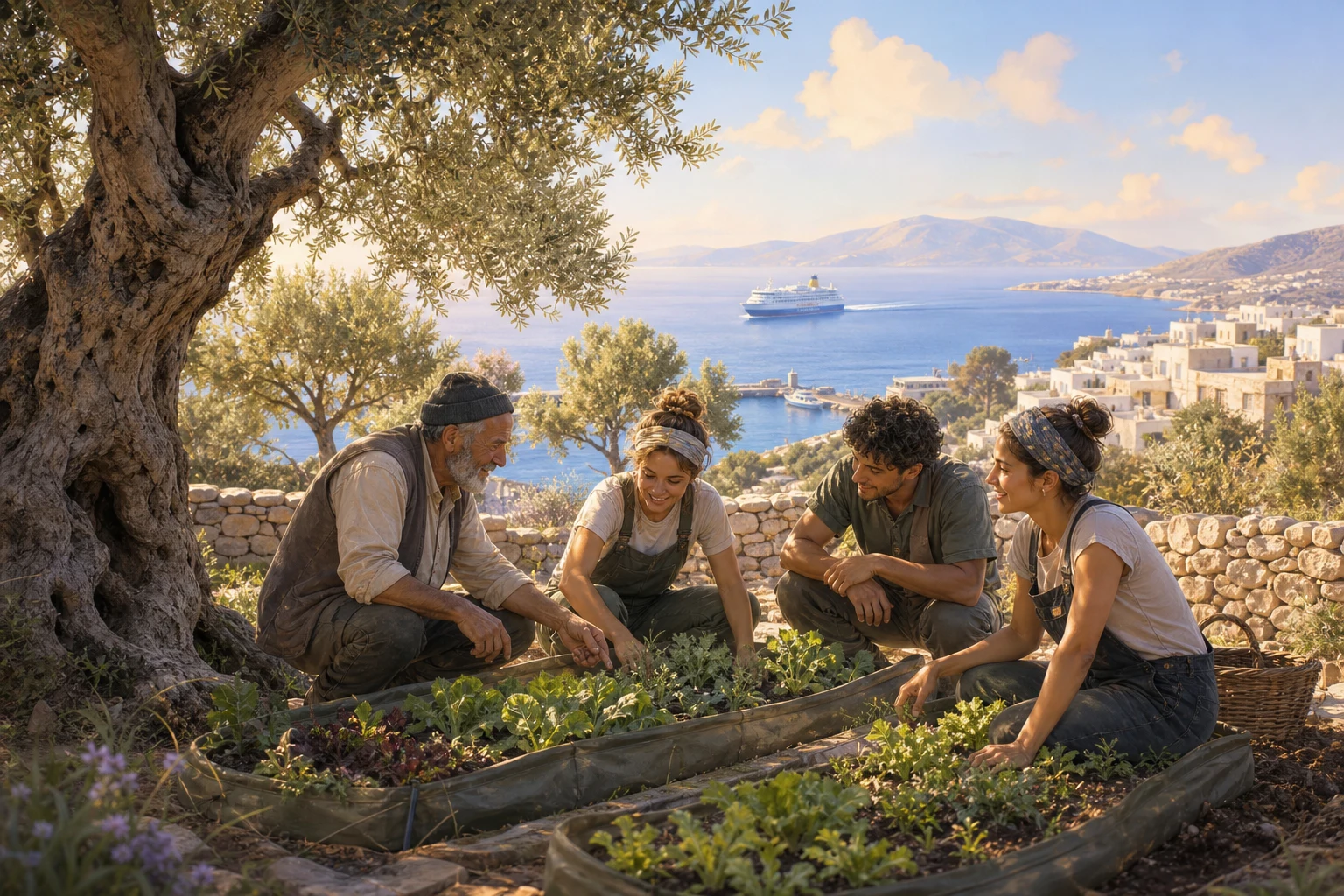
Where the Shade Falls
Tomas had already measured the orchard for sale when three young workers asked whether they could borrow it for one afternoon.
Read Story →
A Tune for Every Pocket
Celia could repair almost anything with a spring, a screwdriver, and enough patience. Her niece’s silence in music class required something different.
Read Story →