
Quote Stories
A Calendar for Every Tree
Amaya learns that a harvest can be shared before it is gathered.
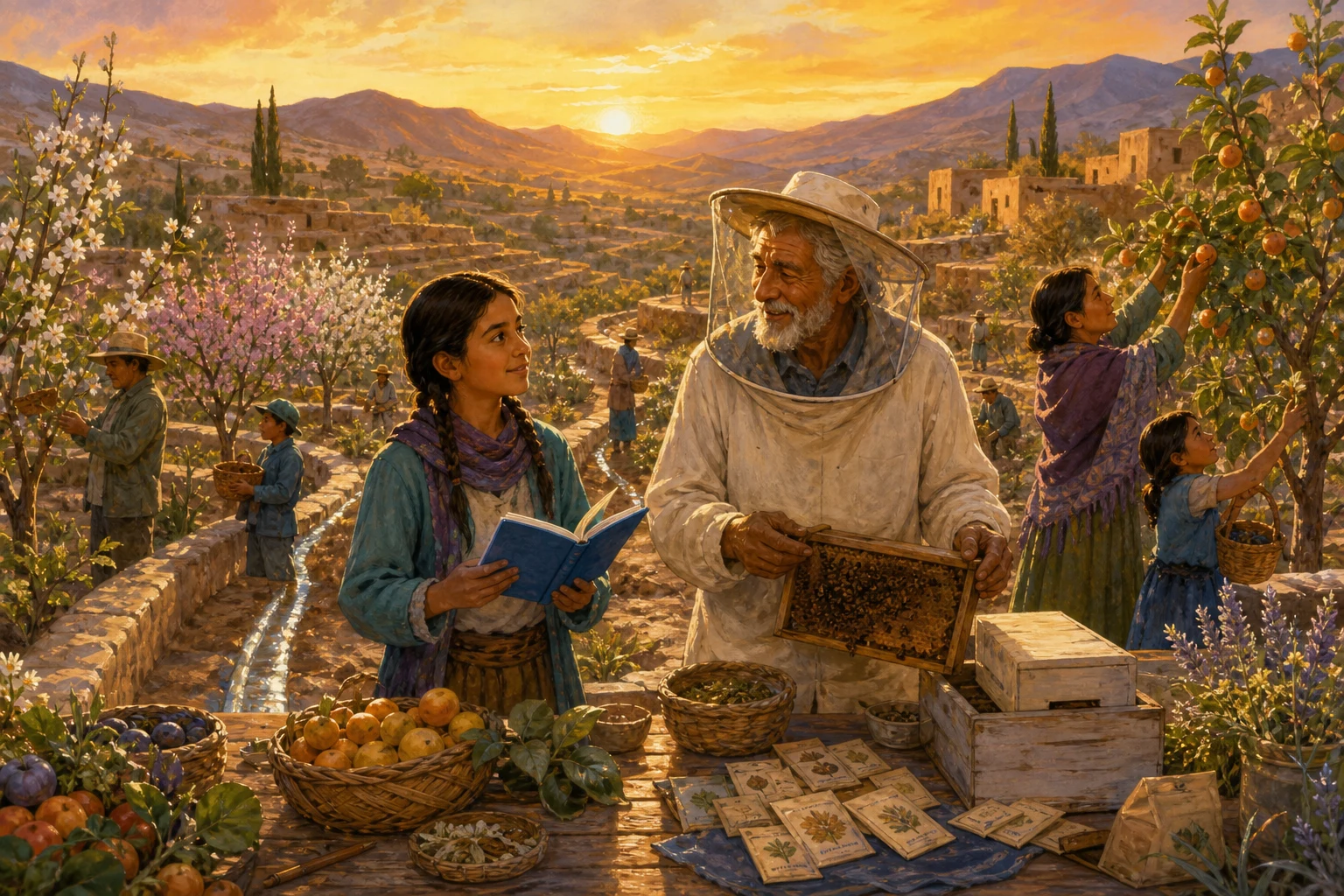
Amaya thought a good seed keeper should notice everything.
She noticed the cracked clay basin beneath the oldest apricot tree, the ants climbing the quince, the late shade cast by the eastern wall. She noticed which irrigation channel coughed air before water and which gate sagged after sunset. She wrote each observation in a narrow blue notebook and carried it everywhere, even to sleep.
So when the orchard’s caretaker left for the mountain springs and placed Amaya in charge of the harvest fair, she answered before he had finished asking.
“I can manage it.”
The orchard climbed the valley in terraces, its trees blooming according to habits no calendar could quite contain. Almonds flowered first, then apricots, quinces, late peaches, and a stubborn row of pears that seemed to consider every season personally.
Amaya drew a schedule. She marked watering times, pruning days, pest checks, and picking shifts. Then she began before dawn and stopped only when the last light slipped behind the ridge.
For three weeks, her plan looked brilliant.
Then the west channel clogged with gravel. While she cleared it, the eastern trees went thirsty. A gust tore blossoms from the pears. Amaya missed two branches heavy with fruit because she was repairing a ladder, and a family of finches discovered the ripest apricots before she did.
By the week of the fair, the orchard looked less like a promise than a collection of arguments. Some branches sagged with fruit. Others held only leaves. The apricots were soft, the quinces hard, and the pears seemed determined to remain green.
Amaya sat beneath the oldest tree, her notebook open on her knees. Beside her, retired beekeeper Nura examined a fallen leaf.
“You have given every tree the same thing,” Nura said.
“Water?”
“Attention.” Nura turned the leaf over. “That is not the same as care.”
Amaya closed the notebook. “The fair is in six days.”
“Then stop trying to be six days.”
Nura walked with her through the terraces. She suggested that Amaya ask each household to adopt a tree—not to own it, and not to guarantee its harvest, but to notice it. Children could draw the first flowers and record changes. Elders could explain old pruning marks and forgotten ways of directing water. Families who kept animals could watch for pests. The orchard’s work would become a collection of small promises, each one manageable enough to keep.
Amaya disliked the idea immediately. It sounded untidy. It left room for mistakes.
That afternoon, she invited the households anyway.
At first, people chose trees for sentimental reasons. Two sisters claimed the quince their grandmother had planted. A potter chose a peach because its fruit matched the glaze on his cups. Three children argued over the pear row until Amaya gave them separate branches and a piece of charcoal for marking the trunk.
The work changed at once—not magically, but visibly. Someone cleared the gravel from the west channel. Someone else propped up a broken limb. The children discovered that the pear trees bloomed late because the cold settled in that corner after sunset. Nura taught them to watch bees rather than clocks.
Amaya still worked hard. She simply stopped trying to be everywhere.
On the morning of the fair, the harvest filled fewer baskets than anyone had hoped. There were not enough perfect peaches for the planned display, and the pear table held more leaves than fruit.
Amaya prepared to apologize.
Then the children carried in their charcoal-marked branches. The elders brought jars of quince paste, dried apricots, and seeds wrapped in paper. The potter arranged small cups for tasting. Families compared notes, traded watering ideas, and saved seeds from the strongest fruit.
Visitors moved from table to table, tasting combinations no single household could have made alone. A pear beside a sharp cheese. An apricot folded into flatbread. Quince syrup poured over roasted nuts.
Near sunset, Amaya found Nura beneath the oldest tree. Its fruit was small, but sweet.
“I thought I was responsible for the harvest,” Amaya said.
Nura handed her a seed. “You were responsible for helping the orchard have caretakers.”
Amaya placed the seed in her notebook—not between the schedules, but in the back, where there was still room for names.
Related Quote Stories
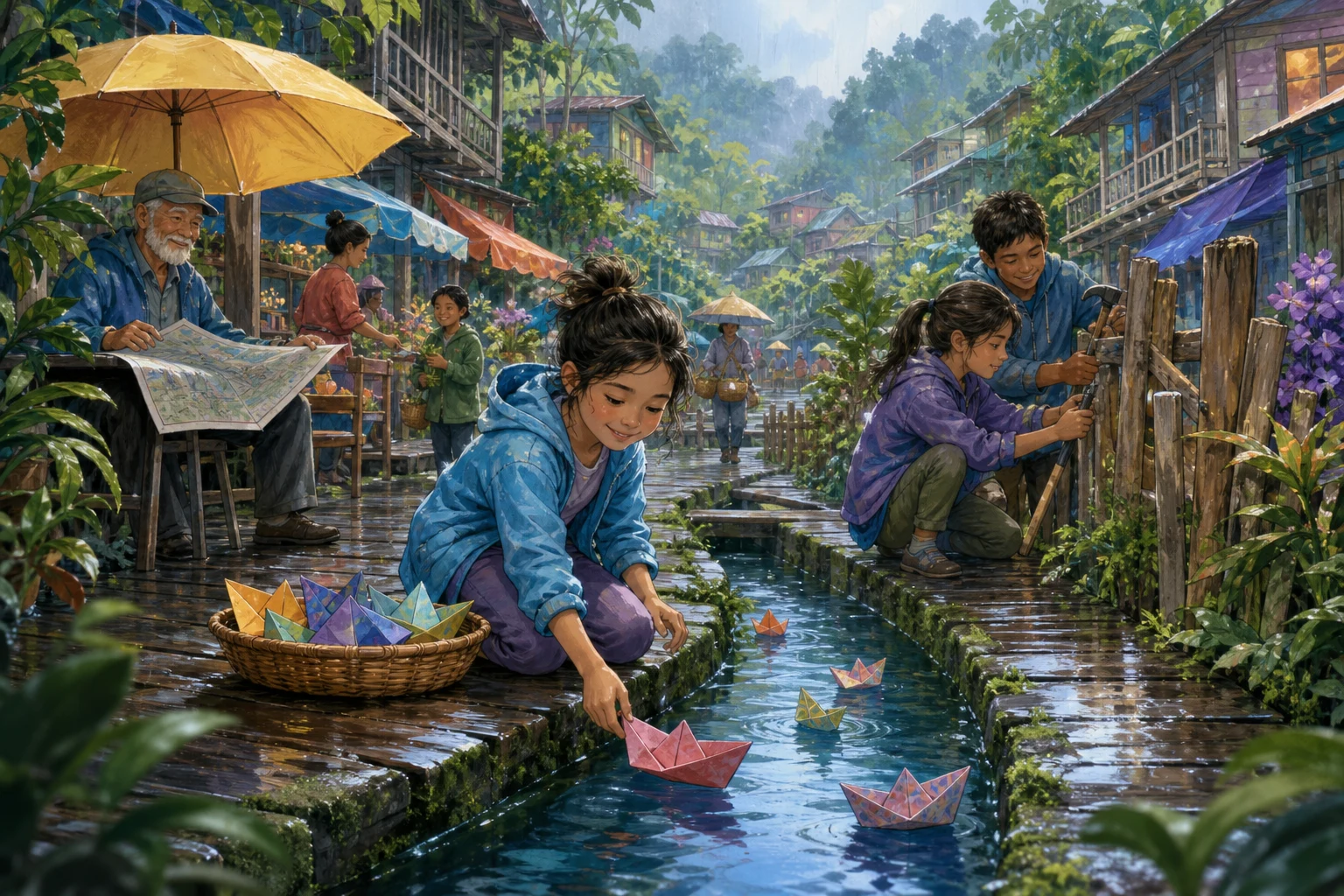
Where the Water Carries Words
Jo thinks she knows who is blocking the paper boats. Then an old mapmaker helps her ask a better question.
Read Story →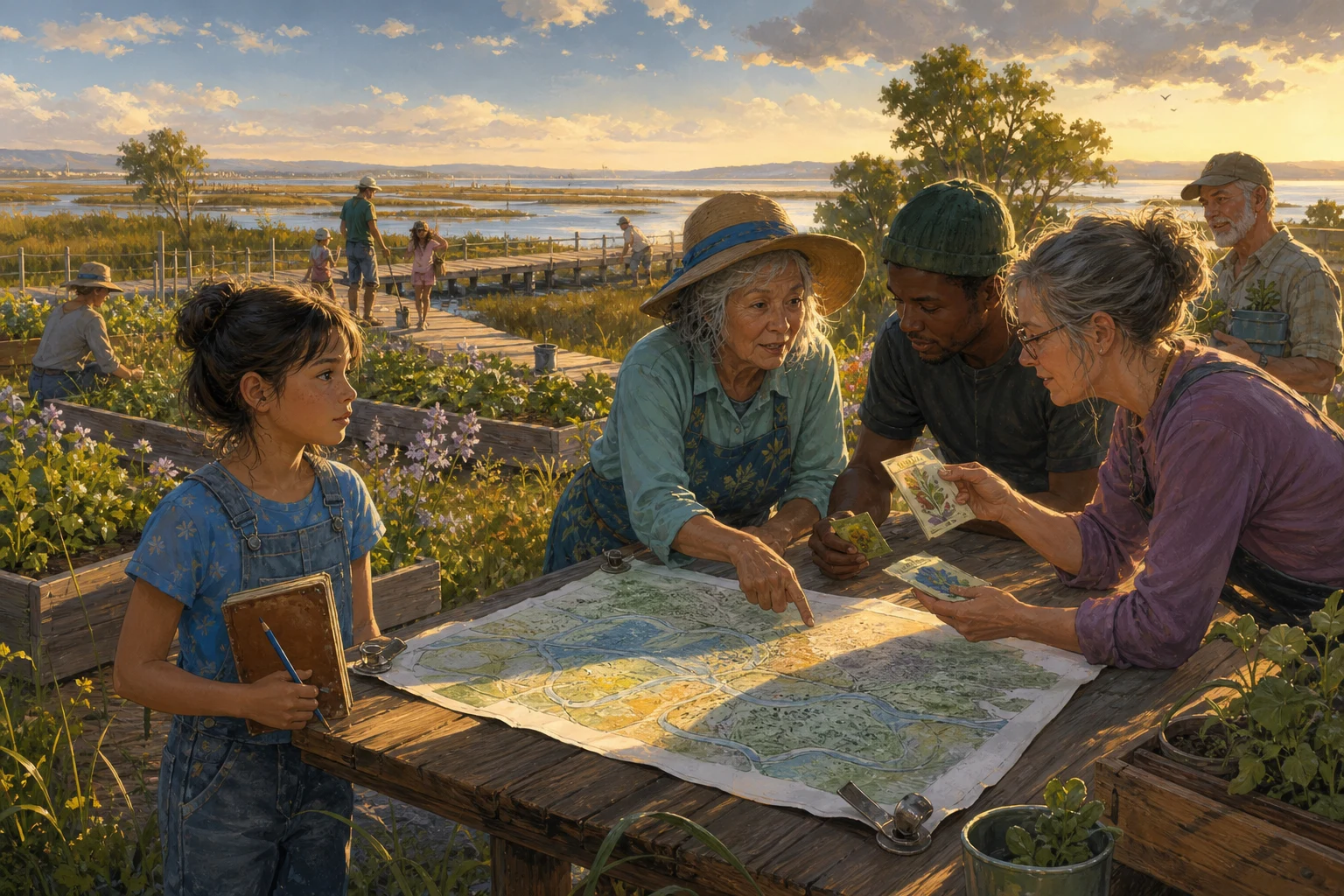
Where the Ground Remembers
When the community garden’s old map stops matching the shifting marsh soil, Yara discovers that the best plan is not a finished picture but a conversation that can keep changing.
Read Story →
Keep the Kites Close
Ema wants to rescue her town’s kite festival with one daring flight. Instead, listening to her neighbors leads her toward a celebration that belongs to everyone.
Read Story →