
Quote Stories
Where the Water Carries Words
A child follows a jammed paper boat toward a better kind of race.
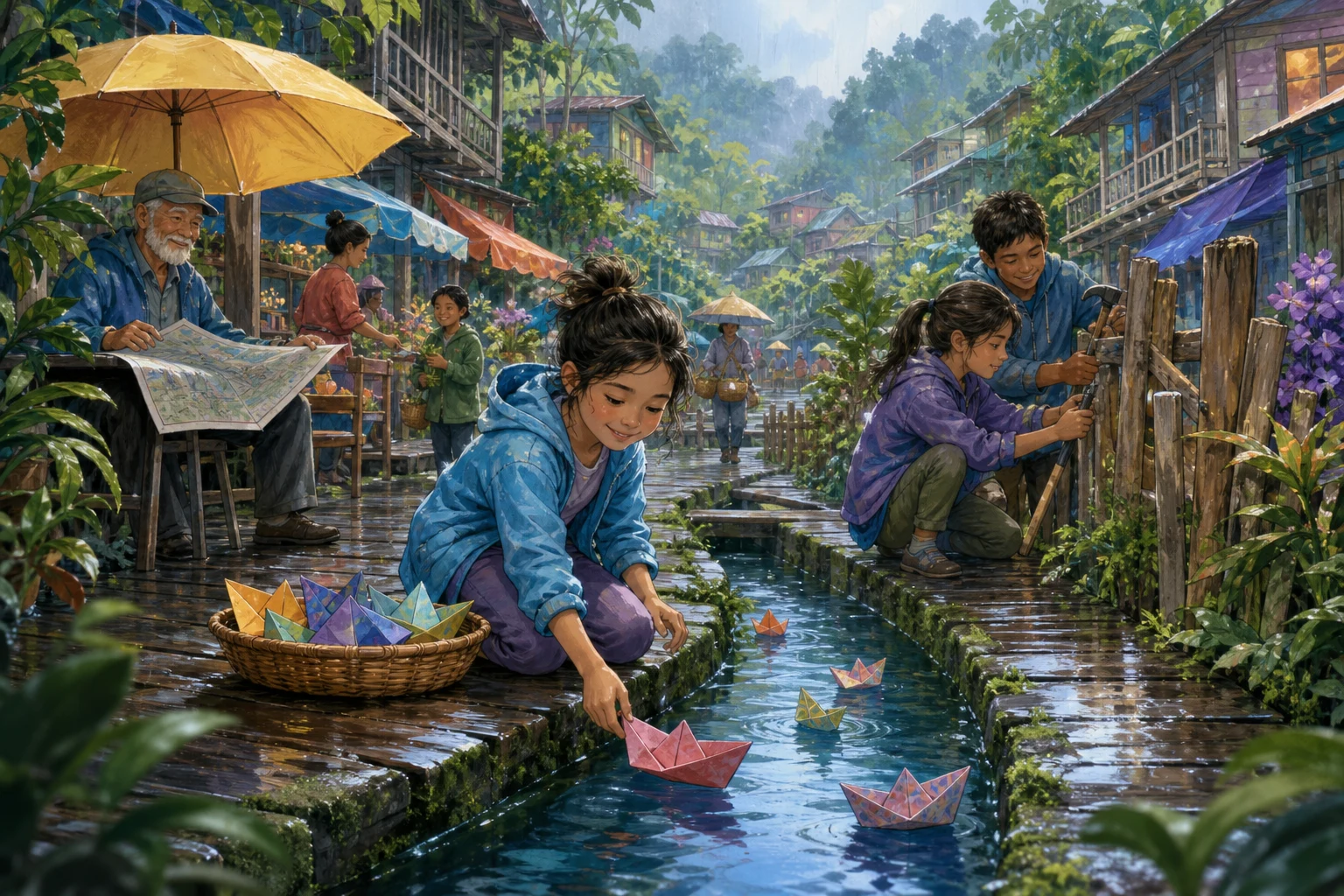
Jo’s paper boat was winning when it disappeared beneath the footbridge.
She dropped to her knees on the wet wooden walkway. Below, the drainage channel frothed brown and quick, carrying leaves, flower petals, and three bright boats folded from market flyers.
The boats had gathered against a crooked plank wedged between the bridge posts.
“Rami did it again,” Jo said.
On the far side of the bridge, a group of older children were dragging a rope between two trees. They had turned the walkway into a game course, and Jo had decided they were the reason her boats kept getting stuck.
She wrote in her notebook:
Boat 38: blocked by older children.
Boat 39: blocked by older children.
Boat 40: blocked by—
“By a plank,” said a voice behind her.
Jo turned. Mr. Sen, who had spent his working life drawing maps, stood beneath a yellow umbrella. His silver hair was wet at the edges.
“The plank is in the water,” Jo said. “The older children put it there.”
“Did you ask them?”
Jo closed the notebook. “I know what they’ll say.”
“Maps drawn from guesses are usually poor maps.”
Mr. Sen did not take the notebook from her. He only pointed toward the bridge. “Ask one question before you draw the answer.”
Jo marched over to the older children.
“Why did you put that plank in the channel?” she demanded.
A tall girl named Nima looked up from tying the rope. “We didn’t. It broke loose from the garden fence.”
“It stops the boats.”
“It stops our game too,” Nima said. “We need the bridge clear for the rope course, but nobody has fixed the fence, and every rain washes pieces down here.”
Jo glanced at the channel. Along its edge, leaves and wrappers had collected in thick, soggy banks. The plank was only the largest part of the mess.
A younger boy held up one of Jo’s boats. “We like the races,” he said. “But they splash mud on the people crossing.”
Jo looked at her notebook. Her careful list suddenly seemed less like a record and more like an accusation.
That afternoon, she asked more questions. The market sellers wanted the drainage channels clear before the next heavy rain. The children wanted a game that did not make them move aside every few minutes. The gardeners needed the broken fence repaired. Mr. Sen wanted everyone to stop pointing at the bridge as if it were the beginning of the problem.
Jo drew a new map.
At the top she wrote: PAPER BOAT DAY.
The race would begin after the cleanup. Children would collect leaves, sticks, and litter into woven baskets. The older group would repair the garden fence and move the loose planks. Then everyone could fold a boat and write a short message inside it: the name of someone who had helped them that week.
Nima added a second rule: boats would be launched from three different channels, so no one bridge had to bear the whole race.
Jo added a third: anyone who wanted to tell the story inside a boat could read it aloud at the finish.
The first Paper Boat Day began under a sky the color of pewter. For an hour, the children worked. They pulled vines from the grates, cleared the channel edges, and carried the broken fence pieces to the garden. Even Jo admitted that some of the older children were very good at lifting heavy things without dropping them on their feet.
When the rain arrived, it arrived all at once.
Water drummed on the awnings. The channels glittered and rushed. One by one, the boats entered the current.
Jo’s boat carried a message for Nima: Thank you for showing me where the water goes.
Nima’s boat carried a message for the younger boy: You always notice when someone is left out.
At the bridge, the boats passed cleanly beneath the newly cleared opening. They spun, separated, and hurried onward, each one carrying its small hidden sentence.
At the finish, Mr. Sen helped Jo open the boats. The paper was soft, the ink blurred, and some messages had become impossible to read. Others remained clear.
A boy read his aloud: “Thank you to the woman at the fruit stall who saves the bruised mangoes for my little sister.”
A gardener read another: “Thank you to the person who fixed the gate before I asked.”
Nima unfolded Jo’s boat and smiled. “You could have just asked us at the beginning.”
Jo tucked the damp notebook beneath her shirt. “I’m working on that.”
The next week, she began a new ledger. It had columns for the boat number, the waterway, the message, and one final question:
Who helped make room?
Sometimes the answer was a person. Sometimes it was a swept channel, a repaired fence, or a child who changed the rules. Jo drew them all on the map, leaving plenty of blank space for whatever the next rain might reveal.
Related Quote Stories
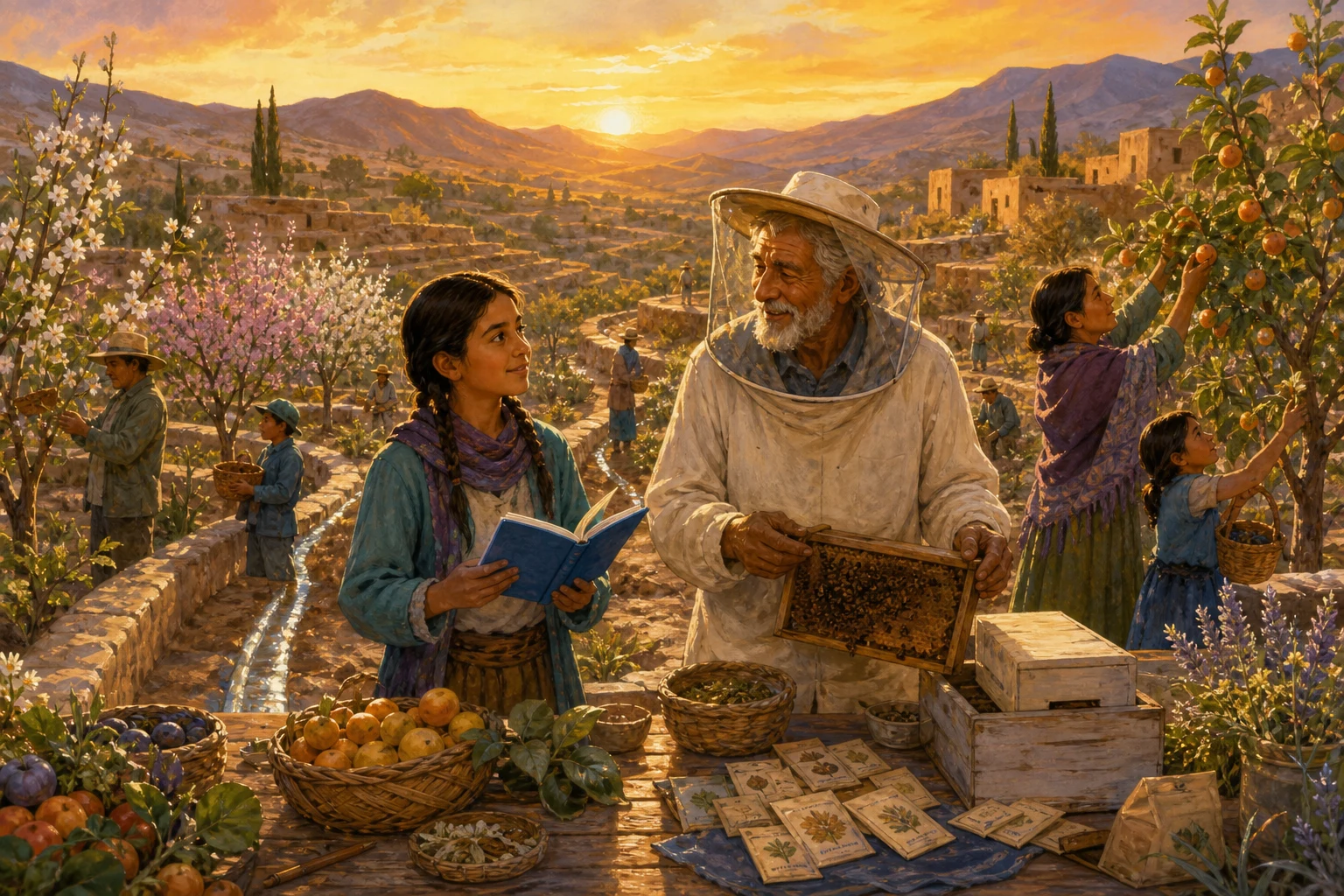
A Calendar for Every Tree
Amaya thought a good seed keeper should notice everything. By midsummer, she had noticed too much to manage alone.
Read Story →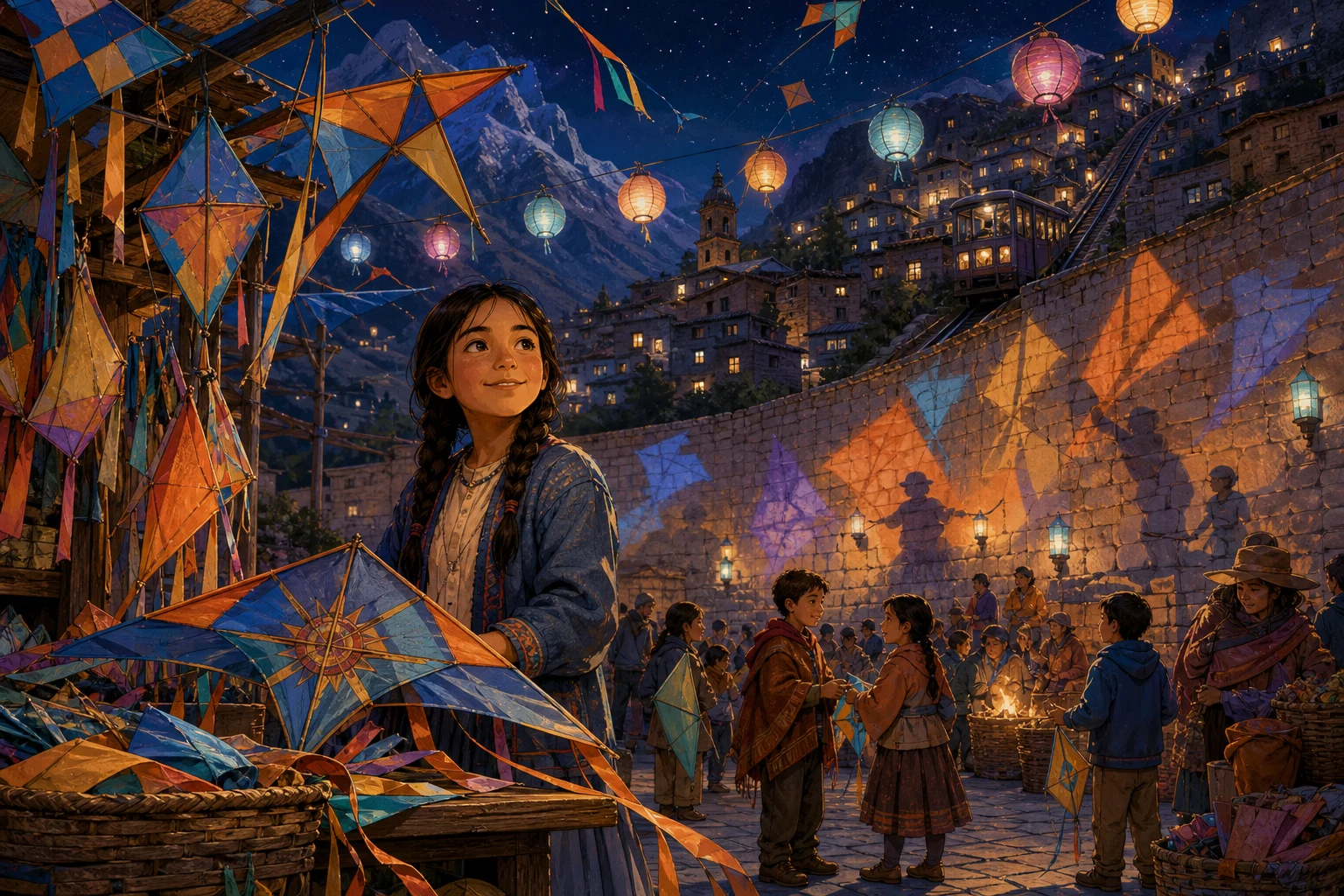
Keep the Kites Close
Ema wants to rescue her town’s kite festival with one daring flight. Instead, listening to her neighbors leads her toward a celebration that belongs to everyone.
Read Story →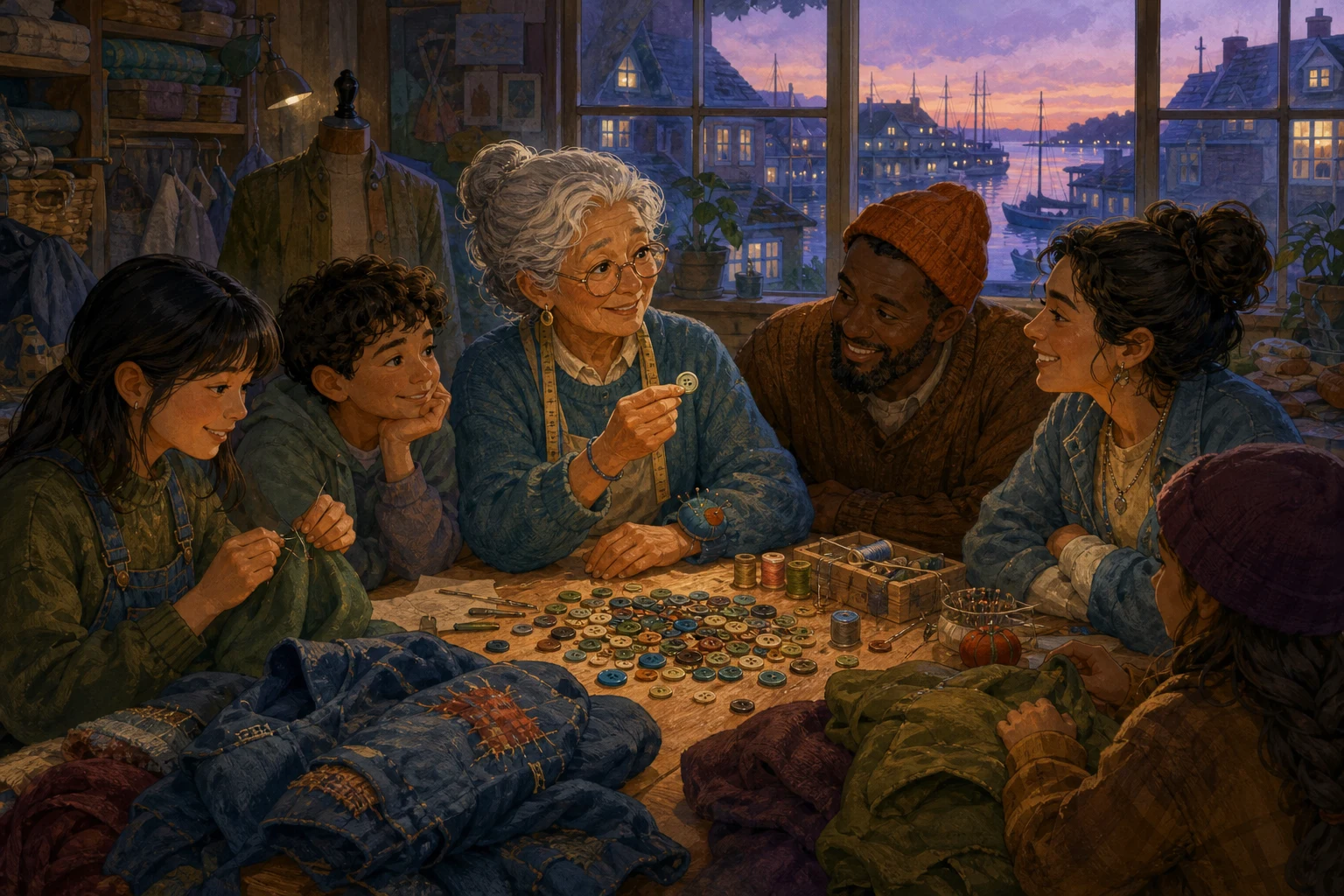
A Pocketful of Repairs
When a delivery rider brings Mara a jacket held together by mismatched buttons, the retiring tailor begins one last project: teaching the whole district how to mend what still has life in it.
Read Story →