
Quote Stories
Hours on Two Wheels
Pavel learns that a repair shop can run on more than repairs.
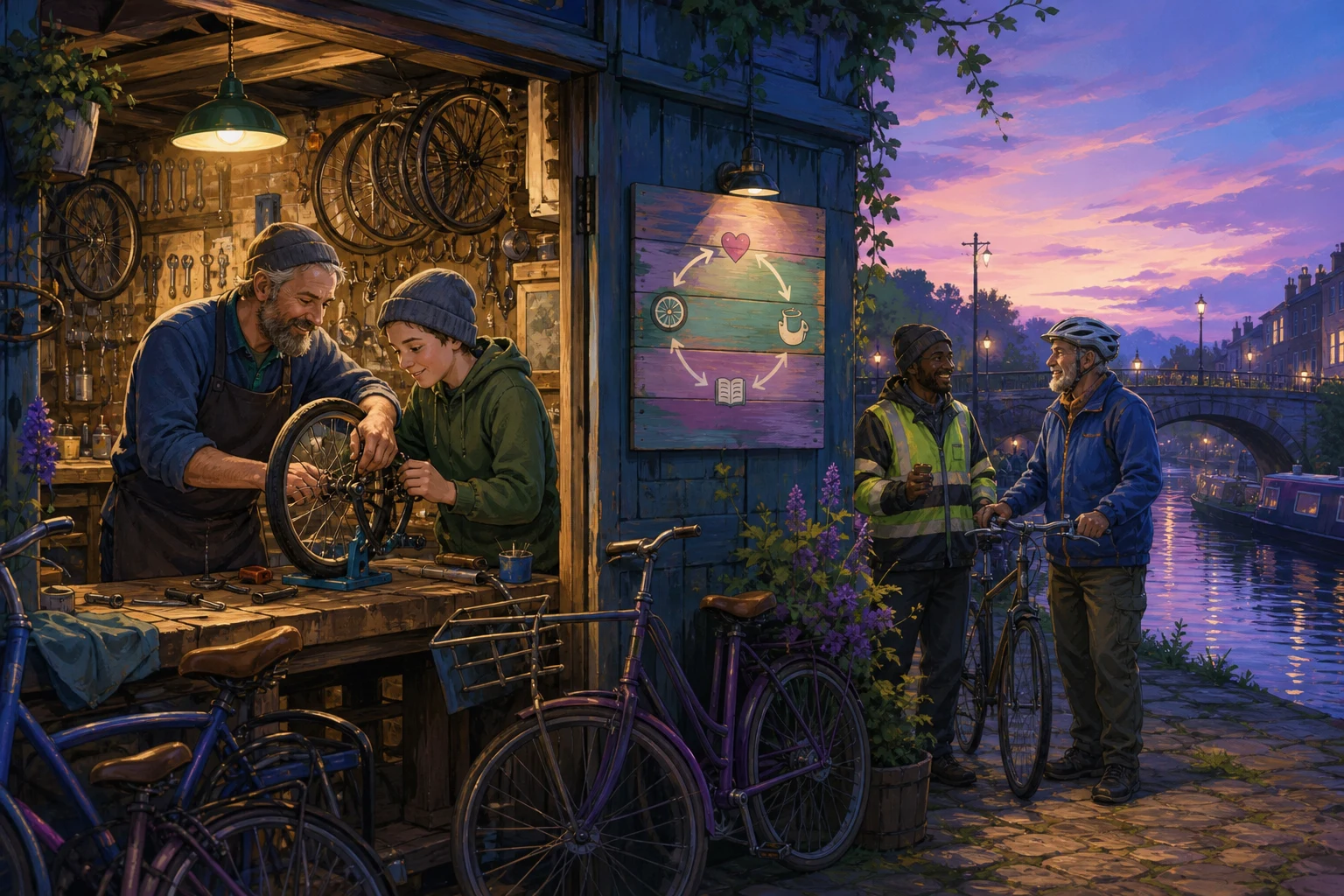
Pavel opened the shutters at five thirty, before the market carts began rattling over the square. He arranged his wrenches by size, set a kettle on the hot plate, and placed a hand-painted sign beside the door:
FREE AIR. SMALL REPAIRS. ASK.
He had painted the last word after three quiet weeks. Goodwill, he had decided, was an investment. People would remember the shop, tell their friends, and eventually pay for proper repairs.
The first visitor was a boy carrying a bicycle with its chain hanging like a silver tongue.
“Can you fix it?” the boy asked.
“I can show you how,” Pavel said.
The boy’s name was Niko. He watched closely while Pavel threaded the chain back over the gears. Then he asked why the chain had fallen, how often the gears needed oil, and whether a tire could be patched twice.
By seven, Pavel had answered all three questions and earned nothing but a thank-you.
At eight, Salma arrived in a reflective jacket, still smelling faintly of soap from her night shift at the apartment blocks near the canal. Her rear light had stopped working.
“I need it for the ride home,” she said. “The path is dark near the lock.”
Pavel replaced the battery and tested the light twice. Salma asked if he knew a way to keep the wire from shaking loose. He showed her how to secure it with a strip of old inner tube.
At nine, Mr. Varen came walking beside a bicycle whose tires were perfectly inflated.
“I don’t need a repair,” he said. “I need the courage to ride again.”
Pavel looked at the clock. He had three paid jobs waiting and a rent notice folded beneath the till.
“Courage is not usually included with a tune-up,” he said.
Mr. Varen smiled. “Then perhaps I’ll pay for the tune-up and borrow the courage.”
Pavel adjusted the seat, lowered the handlebars, and walked beside him around the courtyard. Mr. Varen wobbled, stopped, and tried again. By the time he managed a full circle, Pavel’s paid customers had begun asking when their bicycles would be ready.
That afternoon, Pavel removed the sign.
He did not throw it away. He placed it face down on the counter and spent the evening calculating how many free lessons he could afford. The answer was not many.
The next morning, he hung a sheet of cardboard beside the door. Across the top he wrote:
TIME EXCHANGE
NEED HELP? WRITE IT HERE.
CAN HELP? WRITE THAT TOO.
Underneath, he added three examples:
PATCHING — NIKO
SAFE NIGHT RIDING — SALMA
BALANCE PRACTICE — MR. VAREN
Pavel offered the shop and his tools. In return, visitors could contribute an hour of something useful: watching the counter, translating instructions, sweeping the floor, delivering a repaired bicycle, or teaching a skill they already had.
At first, the board looked ridiculous. One person wrote, “I can sharpen kitchen knives.” Another offered “two jars of plum jam.” A university student volunteered to make clearer instruction cards. Pavel circled the practical offers and crossed out the jam.
Then the system began to move.
Niko taught two younger children how to remove a wheel without losing the axle nuts. Salma showed Pavel how to explain safety checks using fewer words and more pictures. A tailor named Irena repaired the torn awning in exchange for a brake adjustment. Mr. Varen watched the shop during Pavel’s lunch breaks, though he still parked his bicycle directly in front of the doorway.
“You’re blocking customers,” Pavel told him.
“I’m demonstrating confidence,” Mr. Varen replied.
The shop grew busier, but not in the way Pavel had expected. People came for paid repairs because they trusted the place. They also came because they knew someone there would help them begin. A cleaner brought a bent wheel and left with a reliable commuter bicycle. A delivery rider paid for a full service and then stayed to teach Niko how to read a paper map. A woman who had never used a repair stand before fixed her own puncture and left with grease on her cheek and pride in her step.
Pavel still became impatient. One rainy Thursday, three people were waiting for paid repairs while Niko explained tire pressure to a crowd around the workbench.
“Lessons are not repairs,” Pavel snapped. “The shop cannot run on lessons.”
The room went quiet.
Salma folded her arms. “No,” she said. “But perhaps it can run on people who come back.”
Pavel looked at the cardboard board. Beside Niko’s name, someone had written: CAN WATCH SHOP ON FRIDAYS. Beside Salma’s: CAN TRANSLATE. Beside Mr. Varen’s: CAN WALK WITH BEGINNERS.
He picked up a pencil and added his own offer.
CAN REPAIR ALMOST ANYTHING.
Then, beneath it, after a pause, he wrote:
CAN LEARN TO WAIT.
By winter, the shop had a booking board, a shelf of shared tools, and a small paid class on Saturday mornings. The class fees covered the rent. The repairs covered Pavel’s living expenses. The exchange hours kept the door open to people who could not yet pay.
One evening, Pavel closed the ledger and watched the last light turn the canal windows gold. Mr. Varen rode past without stopping. He was still wobbly, but he was moving quickly enough to ring his bell at the corner.
Niko came in carrying a new notebook.
“What should we call the Saturday class?” he asked.
Pavel glanced at the old sign, still tucked beneath the counter. He turned it over and painted a fresh line across the back:
TIME IS PART OF THE REPAIR.
“Call it whatever you like,” he said. “Just leave room for another teacher.”
Related Quote Stories
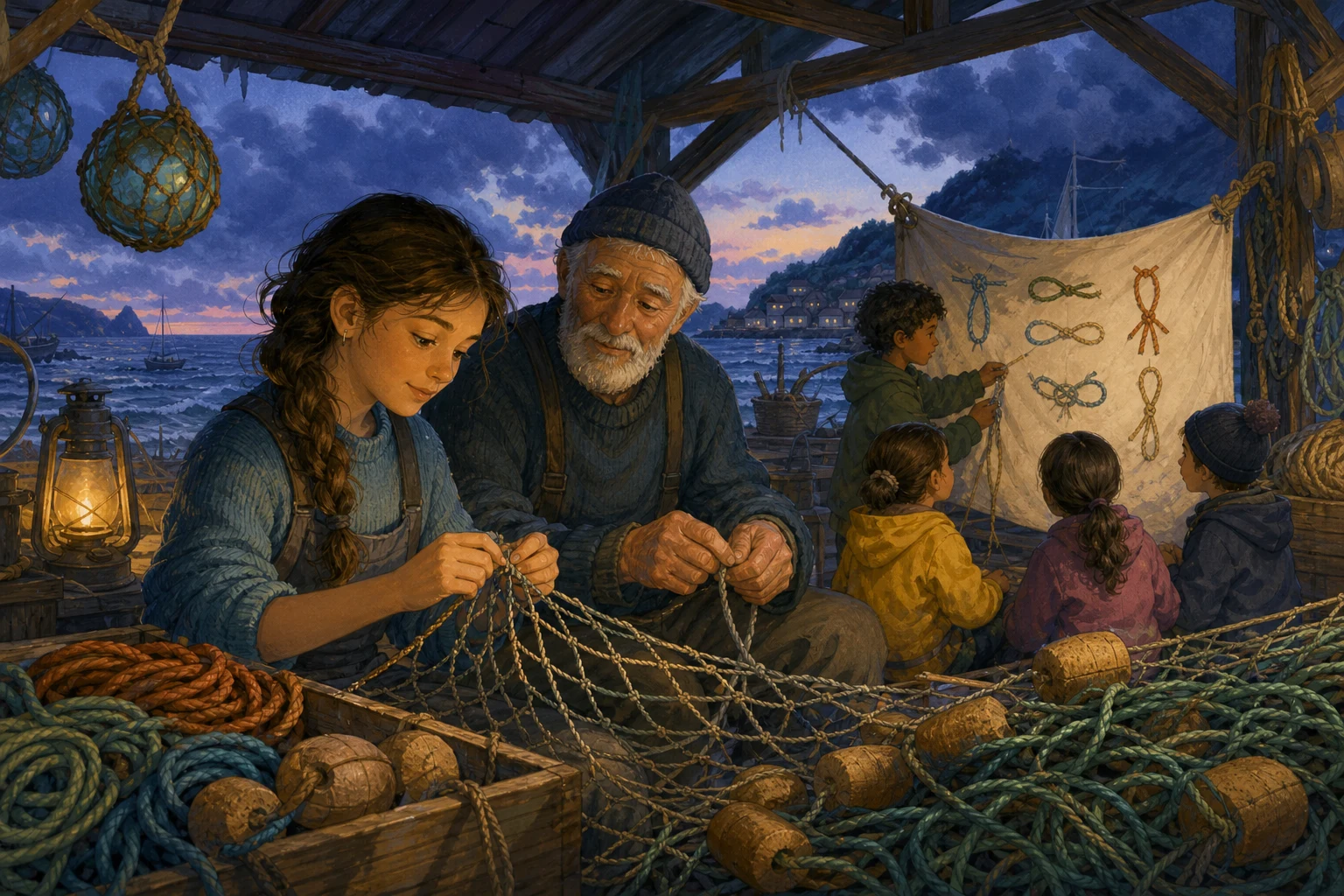
Knots for the Evening Tide
When storm preparations pull younger children away from school, Mina turns her grandfather’s net shed into an evening classroom—then learns to let every learner become a teacher.
Read Story →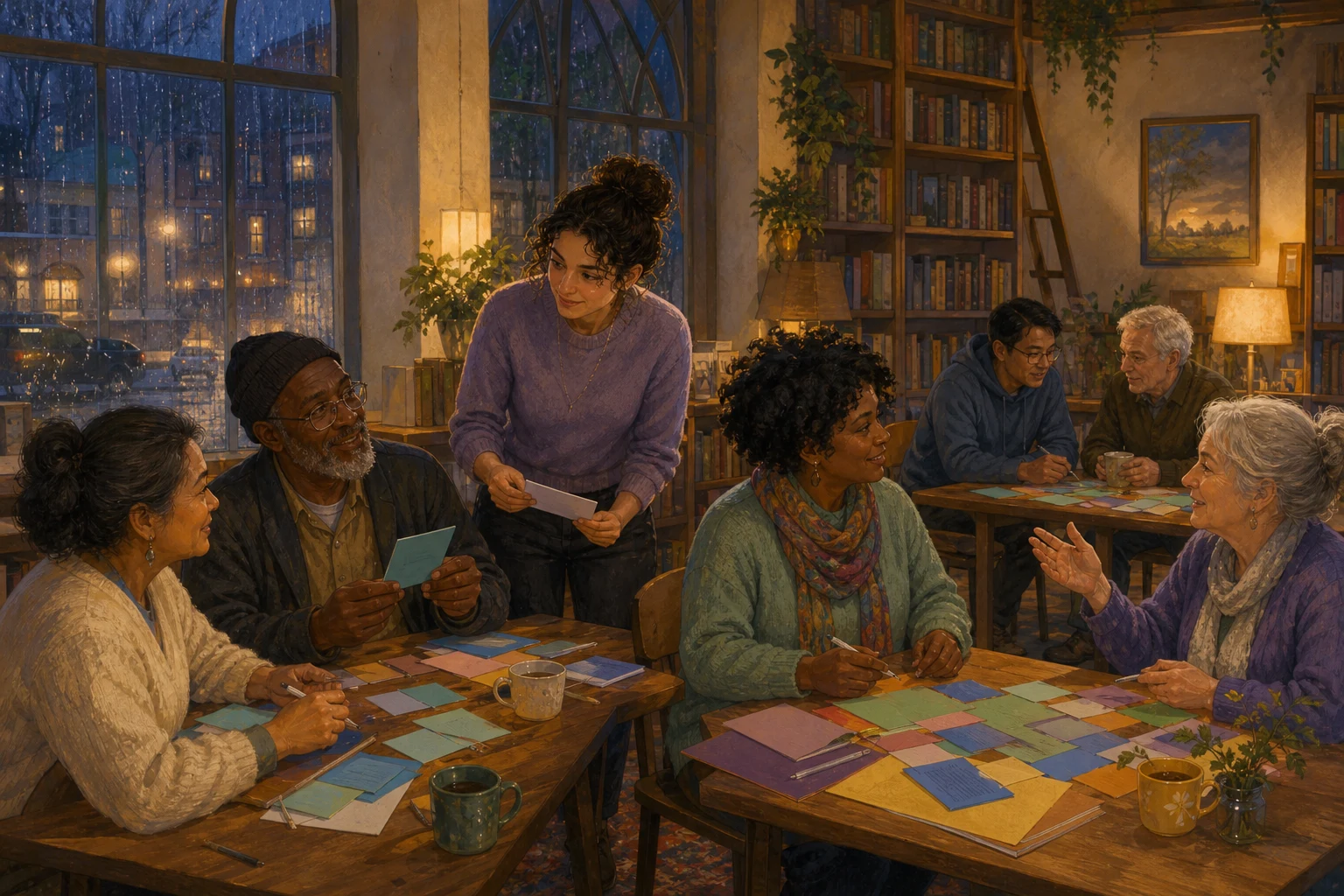
Forms with Room to Breathe
A legal clerk who once answered every question discovers that the best guidance leaves people ready to answer one another.
Read Story →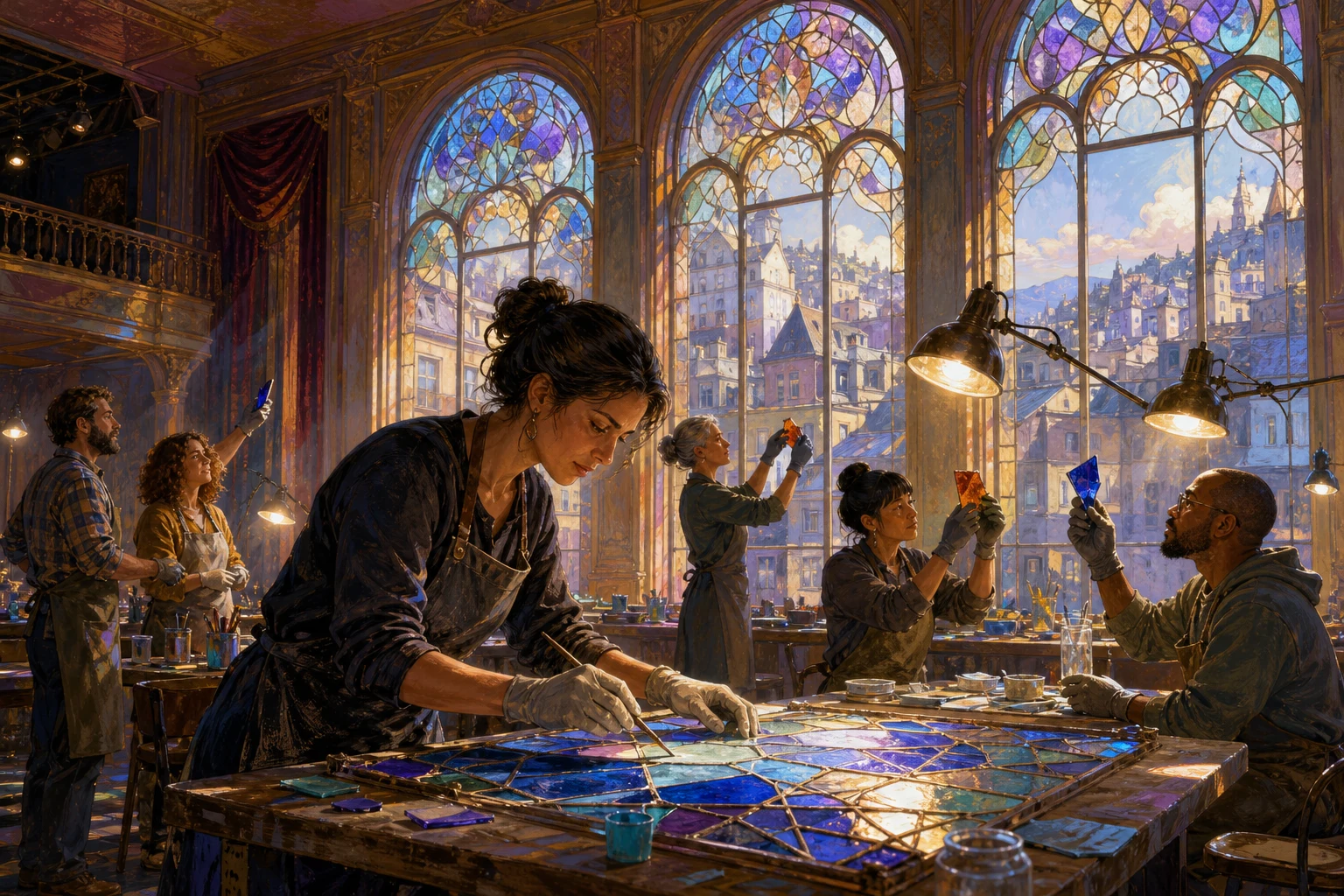
Light Through the Practice Glass
Belen trusted glass more than people. Glass showed every flaw immediately; people waited until later. Then a theater deadline forced her to choose between protecting her reputation and opening her work to others.
Read Story →