
Quote Stories
Ink Along the Waterway
Rina learns that a sign can point to more than a door.
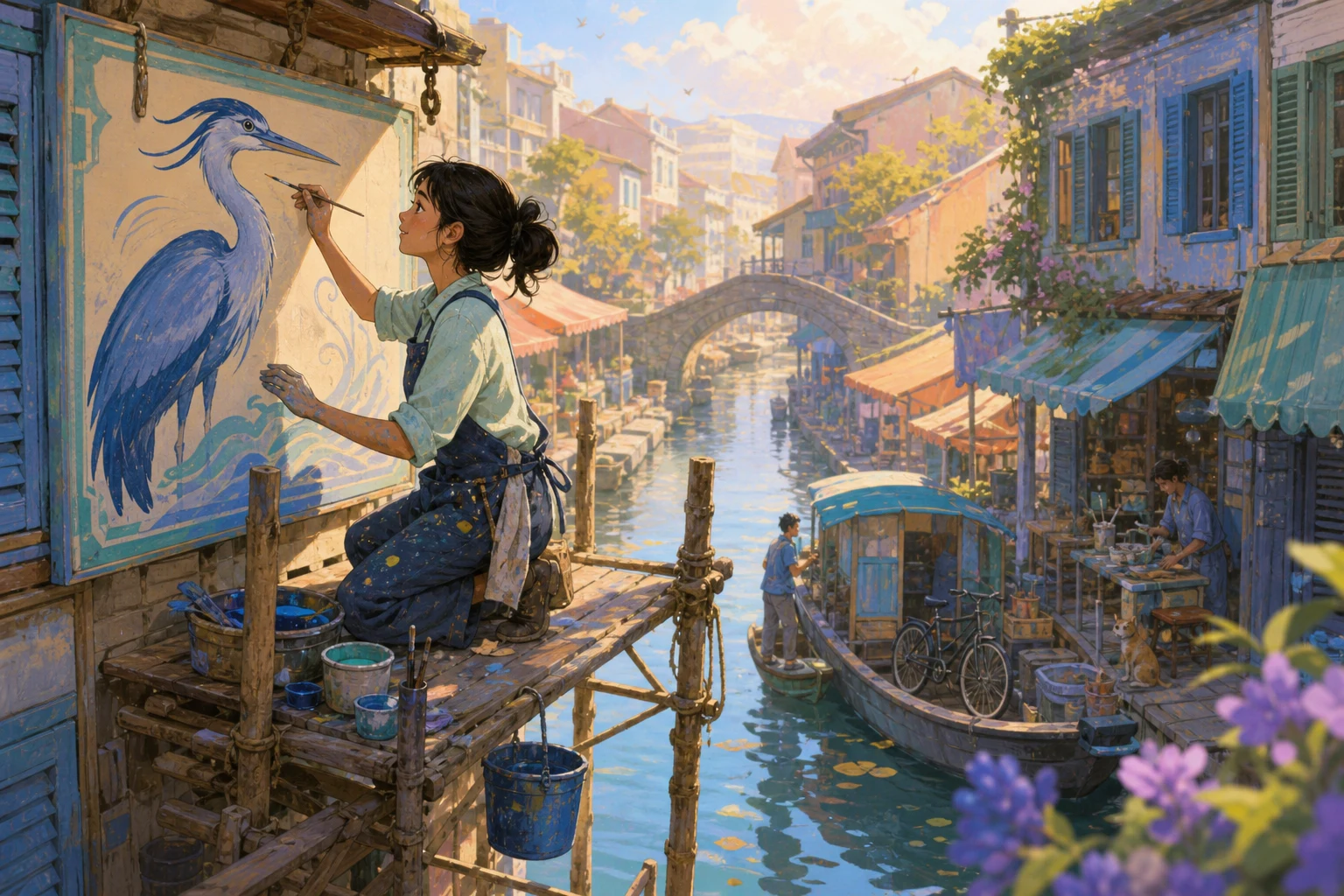
Rina’s first mistake was six meters tall and painted yellow.
She stood on a scaffold beneath the morning sun, brush in hand, admiring the new sign above the spice warehouse. Its letters were crisp. Its border was even. Its bright yellow background matched the other signs she had finished along Lantern Quay.
Then a bicycle barge stopped below.
“Where’s the herb market?” the delivery rider called.
Rina pointed toward the next bridge. The rider pedaled away, turned at the canal, and disappeared into a lane that ended at a locked gate.
A minute later, an elderly woman followed the same direction. Then two children carrying a basket.
“Wait!” Rina shouted.
By the time she climbed down, all three had vanished into the maze of bridges and awnings.
Her supervisor, Mara, studied the sign. “It is beautiful.”
“It is wrong.”
Mara nodded toward the faded wall beside it. Beneath layers of gray and yellow, Rina could just make out a blue heron with one raised wing.
“What did the bird mean?” Rina asked.
“Ask the people who still look for it.”
So Rina carried a notebook through the market. The fish seller remembered the heron marked the turn toward the cold-storage sheds. A retired boat builder said the raised wing meant the path narrowed after rain. Children knew that a painted orange kettle pointed toward the public water pump. A woman who had lived above the bakery for sixty years described a red thread woven into an old doorway sign—a guide for visitors who could not read the city’s script.
Rina wrote everything down.
The next morning, she painted over the yellow sign. Not completely. She kept the clear lettering, but added the blue heron beneath it, its raised wing angled toward the correct bridge. On the neighboring signs, she paired large words with familiar images: a kettle for water, a moon over the night clinic, three green leaves for the communal garden.
She tested each sign before the paint dried. She asked delivery riders to follow the arrows, invited children to read the letters aloud, and watched older shoppers navigate the lane without asking for help.
Mara noticed the change first. “You’re not repainting signs anymore,” she said. “You’re rebuilding a language.”
Rina looked down the waterway. The market lane no longer matched from end to end. It was brighter than before, but not uniform: herons beside kettles, leaves beside moons, old symbols sharpened by new lettering.
A week later, Rina brought Mara a folded proposal. It described Saturday lessons in lettering, color contrast, symbol design, and listening to the people who used a place every day.
“An apprenticeship?” Mara asked.
“A shared one,” Rina said. “Nobody should have to guess what a sign means. And nobody should have to erase where it came from.”
Below them, a barge horn sounded. At the bridge, a rider paused beneath the blue heron, smiled, and turned exactly where the raised wing pointed.
Related Quote Stories
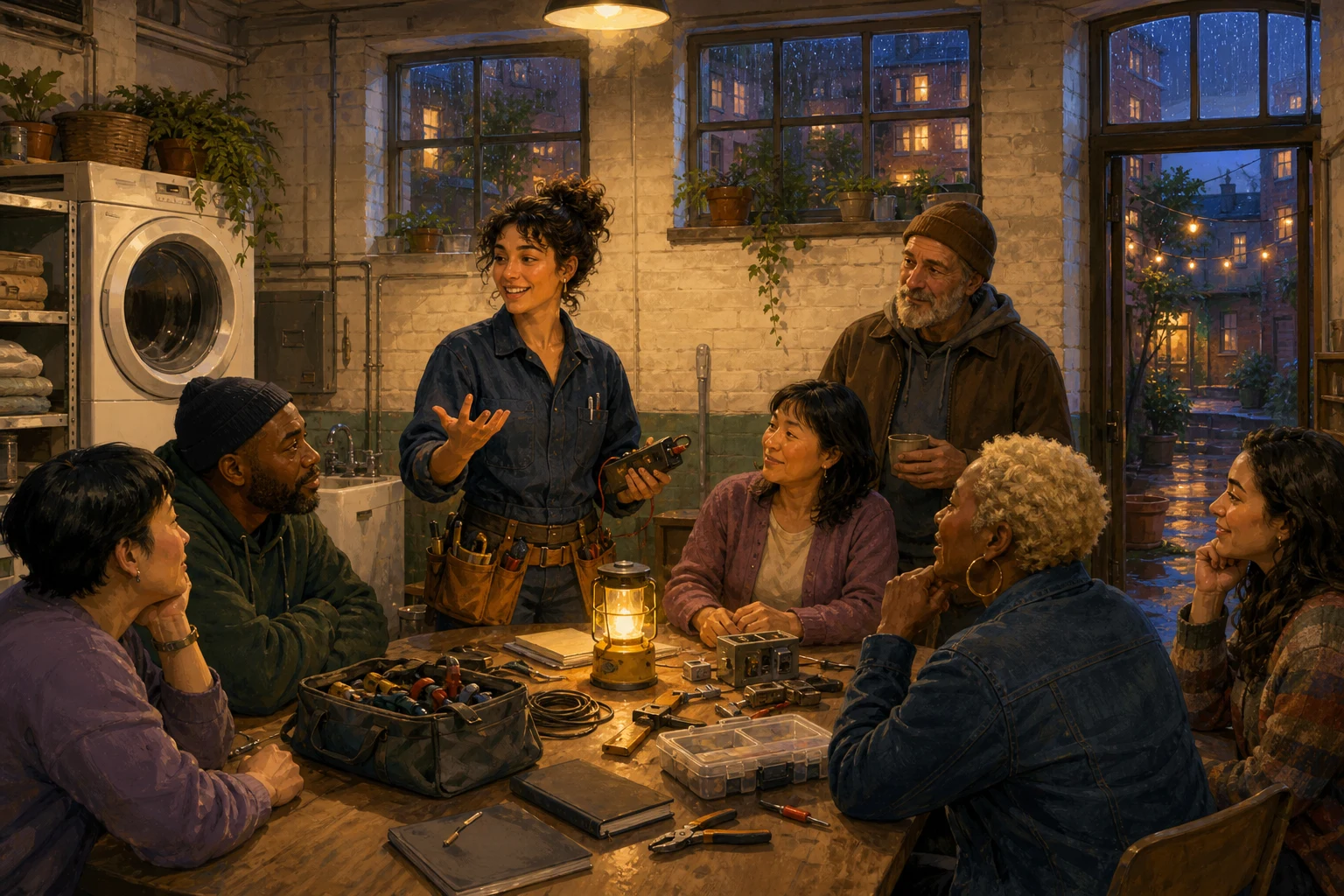
Light Between Floors
When the laundry room lights keep failing, an apartment electrician stops replacing bulbs alone and starts building confidence instead.
Read Story →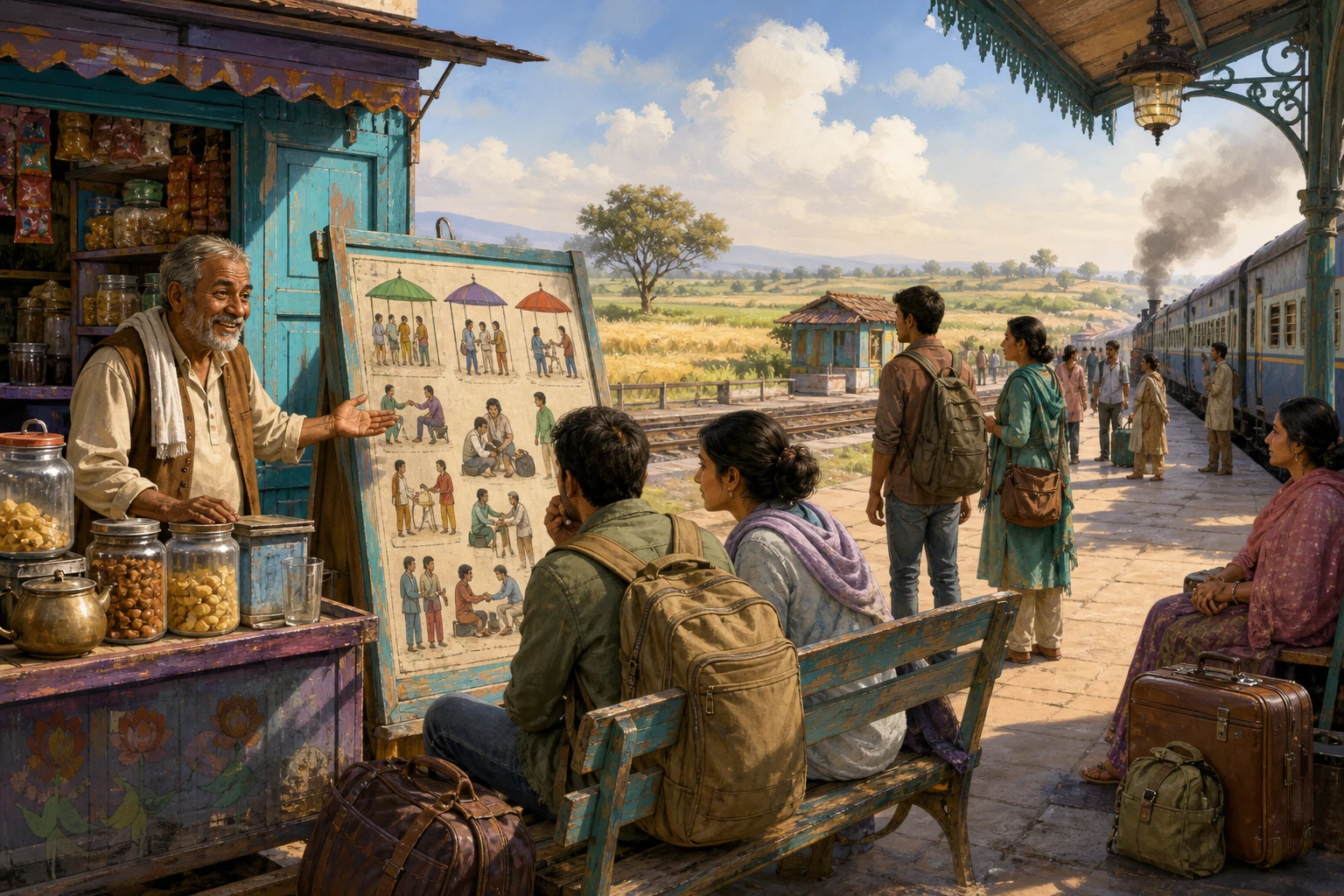
A Seat Between Departures
Omi places one bench beside her station kiosk for tired travelers. Soon it becomes a place for questions, small favors, and an unexpected lesson in accepting help.
Read Story →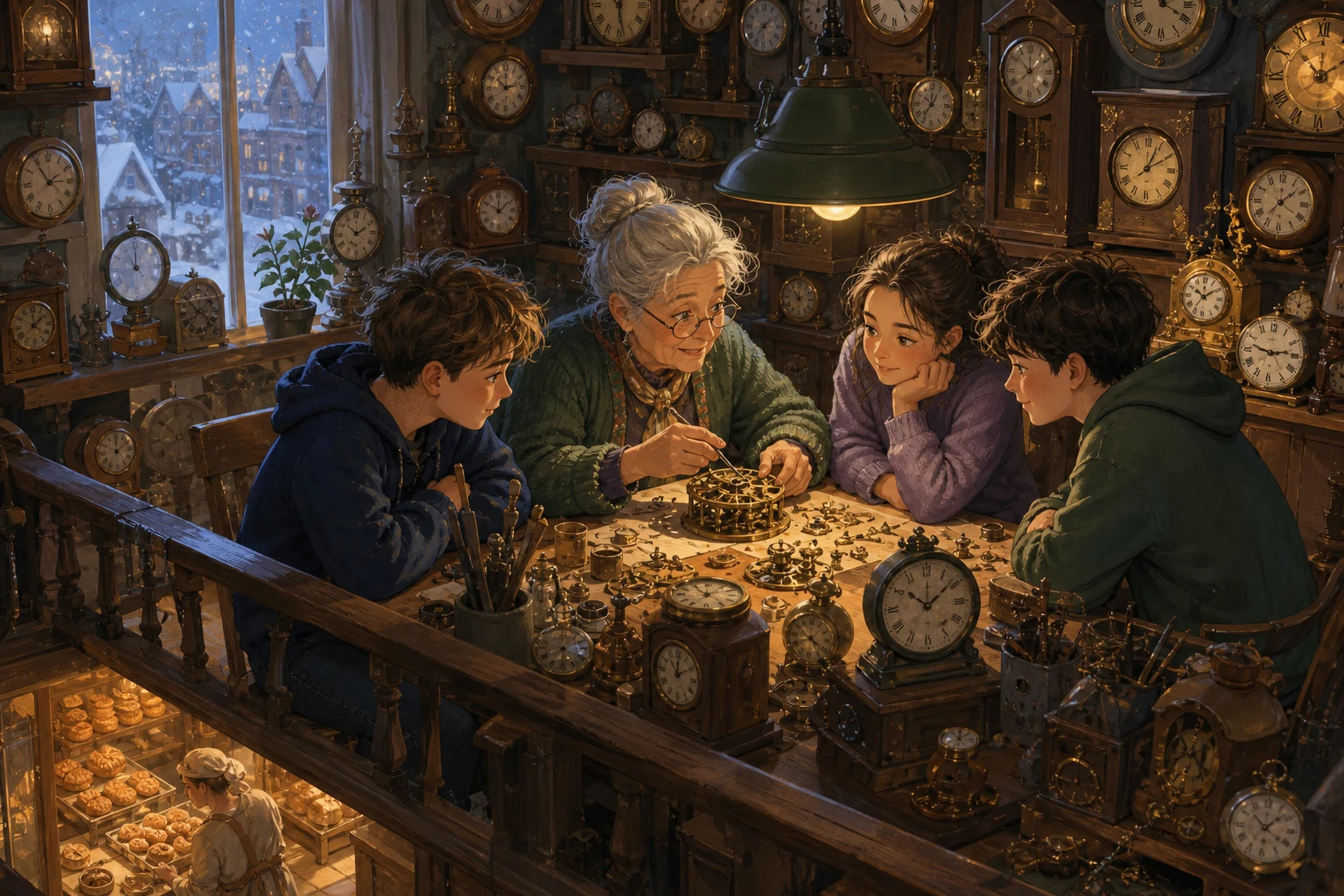
Sixty-Three Ways to Keep Time
Bela plans to close her sister’s clock shop, but a neighborhood exhibition—and a determined group of teenagers—gives her a reason to keep listening for what comes next.
Read Story →