
Quote Stories
Make Room on Channel Seven
A young broadcaster discovers that clear communication begins with giving every voice enough time.
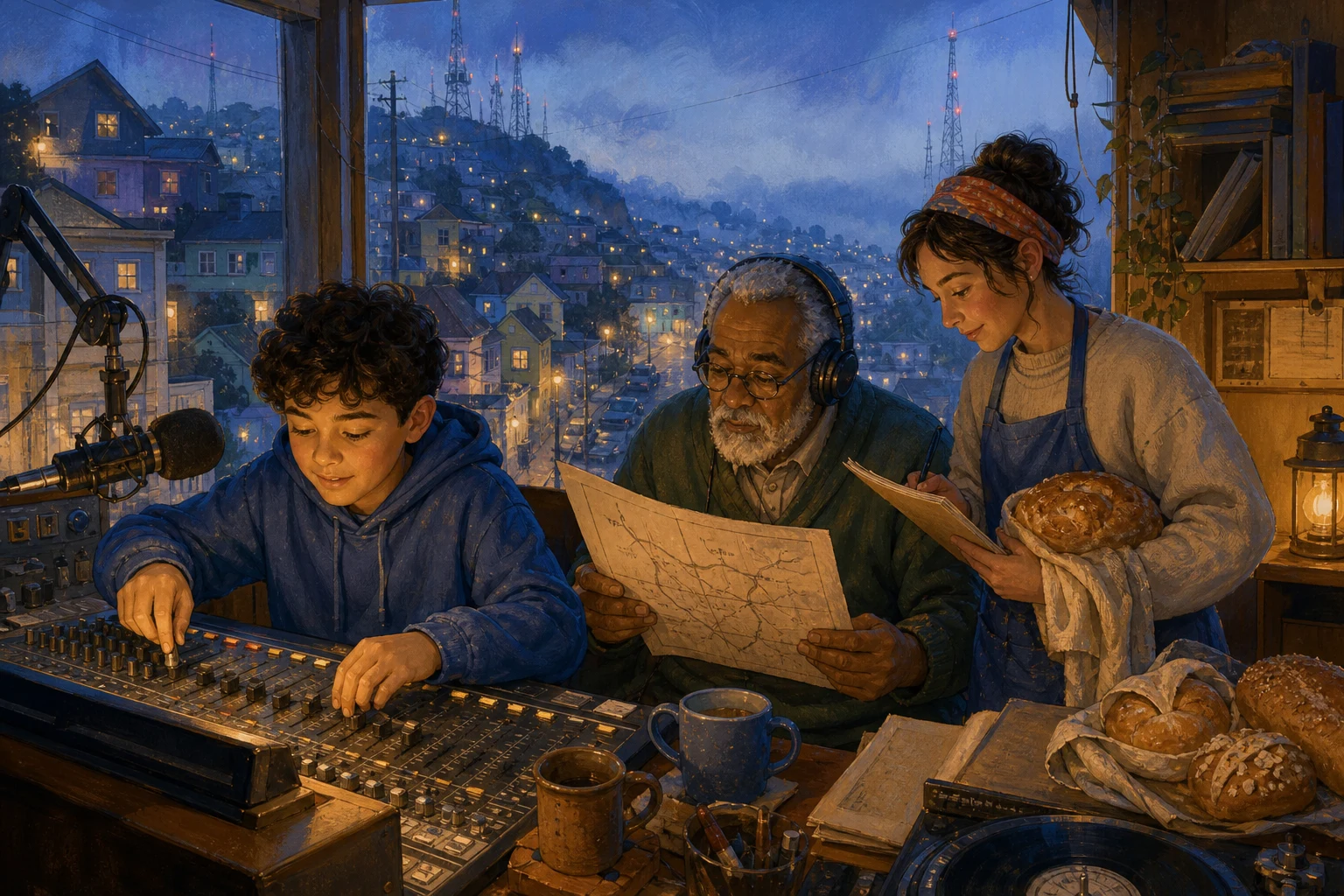
“You’re on in ten seconds,” Ilya whispered.
Three callers answered at once.
A woman began describing a missing blue umbrella. Someone else announced a change to the water schedule. Then a boy shouted that his cat had climbed onto a roof and refused to come down.
Ilya reached for the mixing knobs, but the voices tangled faster than he could separate them. The station’s red light blinked above the window. Outside, evening fog climbed the steep streets, softening the rooftop antennas and turning the courtyard lamps into pale moons.
“Thank you for listening,” Ilya said, though no one had been able to hear anyone clearly. “We’ll try again tomorrow.”
He switched off the transmitter and leaned back, miserable. He loved the neighborhood station because it carried news to people who did not have dependable internet. He loved the equipment, too: the sliders, cables, headphones, and green waveform glowing across the monitor. With the right settings, he believed, everything could be made orderly.
That was when Oren arrived carrying a canvas timetable case.
The retired bus dispatcher listened to the recording twice. “You have three routes using one stop,” he said.
“It isn’t a bus station.”
“Voices need stops, too.”
The next afternoon, Oren helped Ilya draw a schedule on a large sheet of cardboard. Announcements would have five minutes. Requests would have five. Lessons and songs would each have their own turn. If someone needed more time, they could return the following week.
Ilya called the program Open Frequency. He designed a bright poster and taped it beside the studio door.
The first guest was Mira, who wanted to teach listeners how to sharpen kitchen knives safely. She spoke quickly, swallowed half her instructions, and finished before Ilya had adjusted the microphone.
Next came a man with a song about spring rain. He forgot the second verse and began again from the beginning. Then two sisters called to ask whether anyone had found a parcel addressed to their grandmother.
Ilya kept glancing at the clock. The program was supposed to sound polished. Instead, it sounded like a cupboard full of falling pans.
At the bakery below the station, a quiet baker named Sava heard the broadcast. The next day, she brought Ilya a paper bag of warm rolls and a small notebook.
“You cut out every pause,” she said.
“I cut out the mistakes.”
“Sometimes a pause is where a person finds the next true word.”
Sava showed him how she shaped dough: not by forcing it into a perfect form, but by waiting for it to relax beneath her hands. Together they listened to Mira’s recording. Ilya restored two pauses. In one, Mira took a breath. In the other, she remembered the most important instruction.
The lesson became understandable.
After that, Ilya changed the program. Callers left their names and subjects with Oren, who arranged them like bus departures. Sava helped guests rehearse without making them sound rehearsed. Ilya learned to mark pauses with a pencil instead of deleting them.
A gardener explained how to save seeds. A teenager taught a knot used for hanging bicycles. A grandfather sang a lullaby and then invited anyone who knew another version to call in. The cat on the roof was eventually coaxed down by a neighbor playing a flute.
Weeks passed. People began gathering around radios in courtyards and kitchens. They listened not only for useful announcements, but for one another.
One foggy evening, Ilya noticed that the waiting list had grown longer than the broadcast schedule. He prepared to shorten everyone’s turn.
Then Sava placed her notebook beside the mixing board.
“What would you do?” she asked.
Ilya looked at the names: the woman with the blue umbrella, Mira, the sisters, the gardener, the teenager, and many others. He added a second weekly program. Then he left the final five minutes open for listeners to respond to what they had heard.
The following broadcast began with silence—not empty silence, but the brief, attentive kind. Ilya watched the red light come on.
“This is Open Frequency,” he said. “We have time for your voices.”
He lowered the music and listened.
For once, he did not hurry to fill the space.
Related Quote Stories
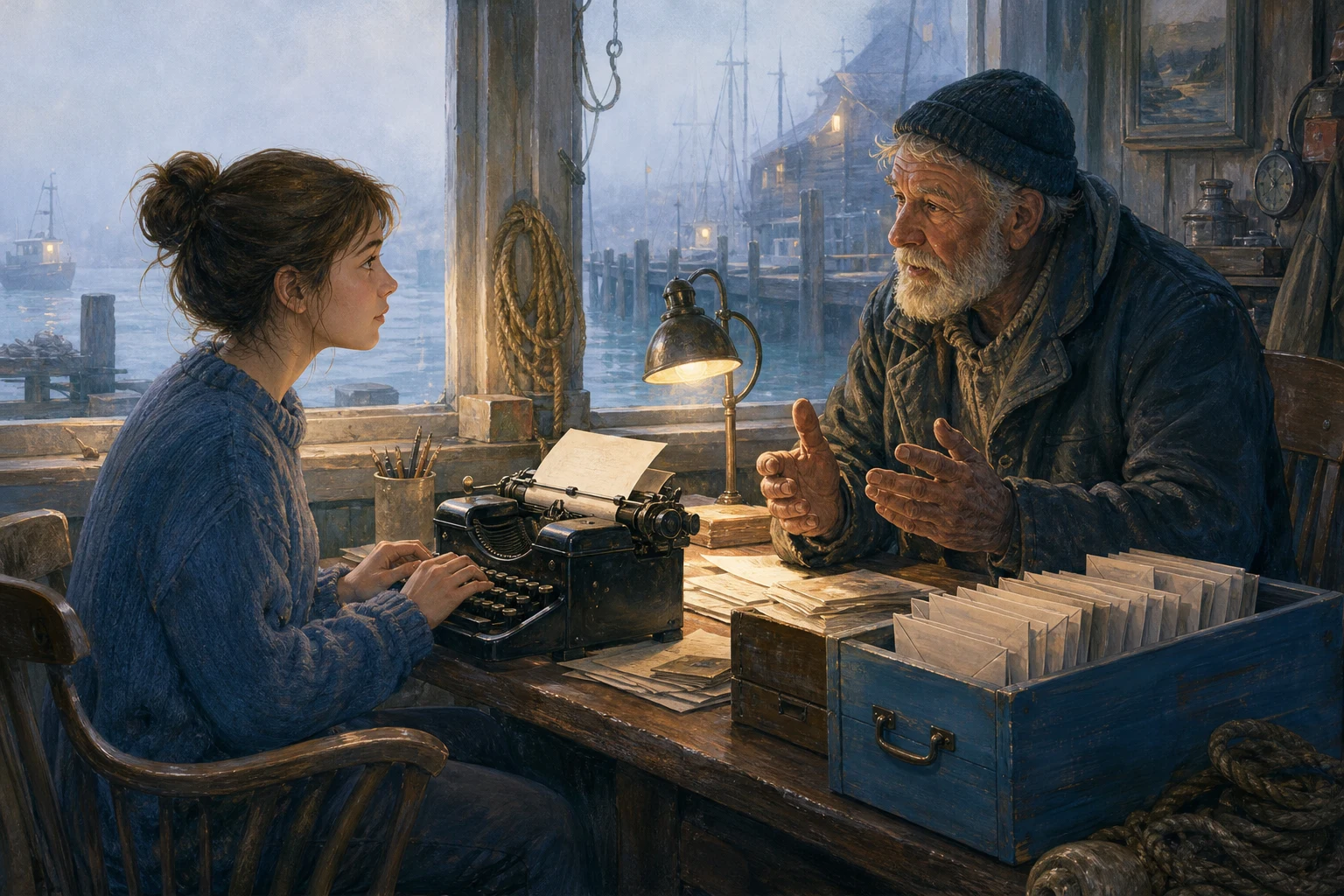
Letters in Their Own Weather
Mara can make any letter look important. What she must learn is how to make it sound like the person who meant it.
Read Story →
Names Beneath the Leaves
Sela thought every plant needed a fact card. Then the residents taught her that gardens remember people, too.
Read Story →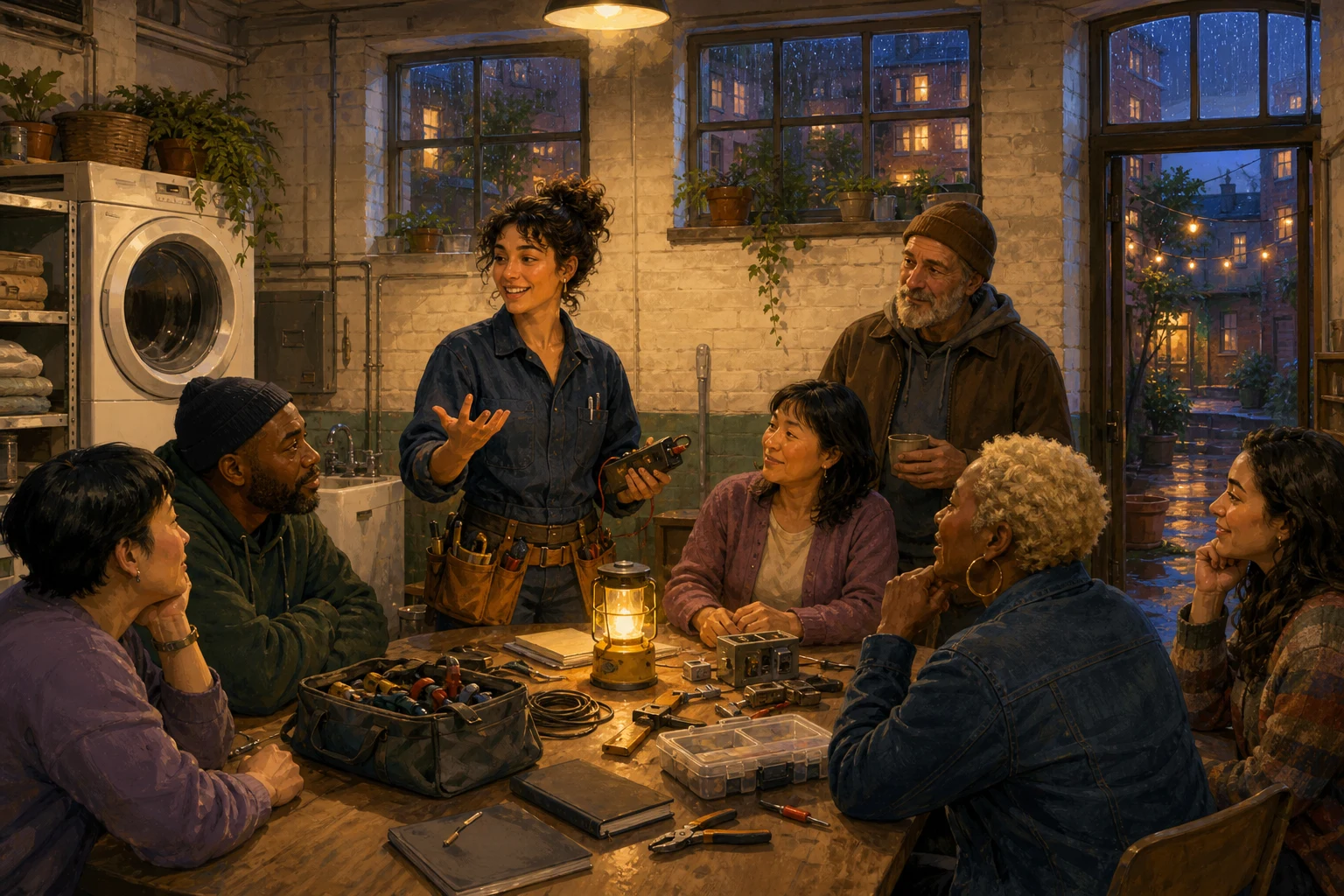
Light Between Floors
When the laundry room lights keep failing, an apartment electrician stops replacing bulbs alone and starts building confidence instead.
Read Story →