
Quote Stories
The Minute Between Trains
A clockmaker learns that precision is only useful when people can hear it.
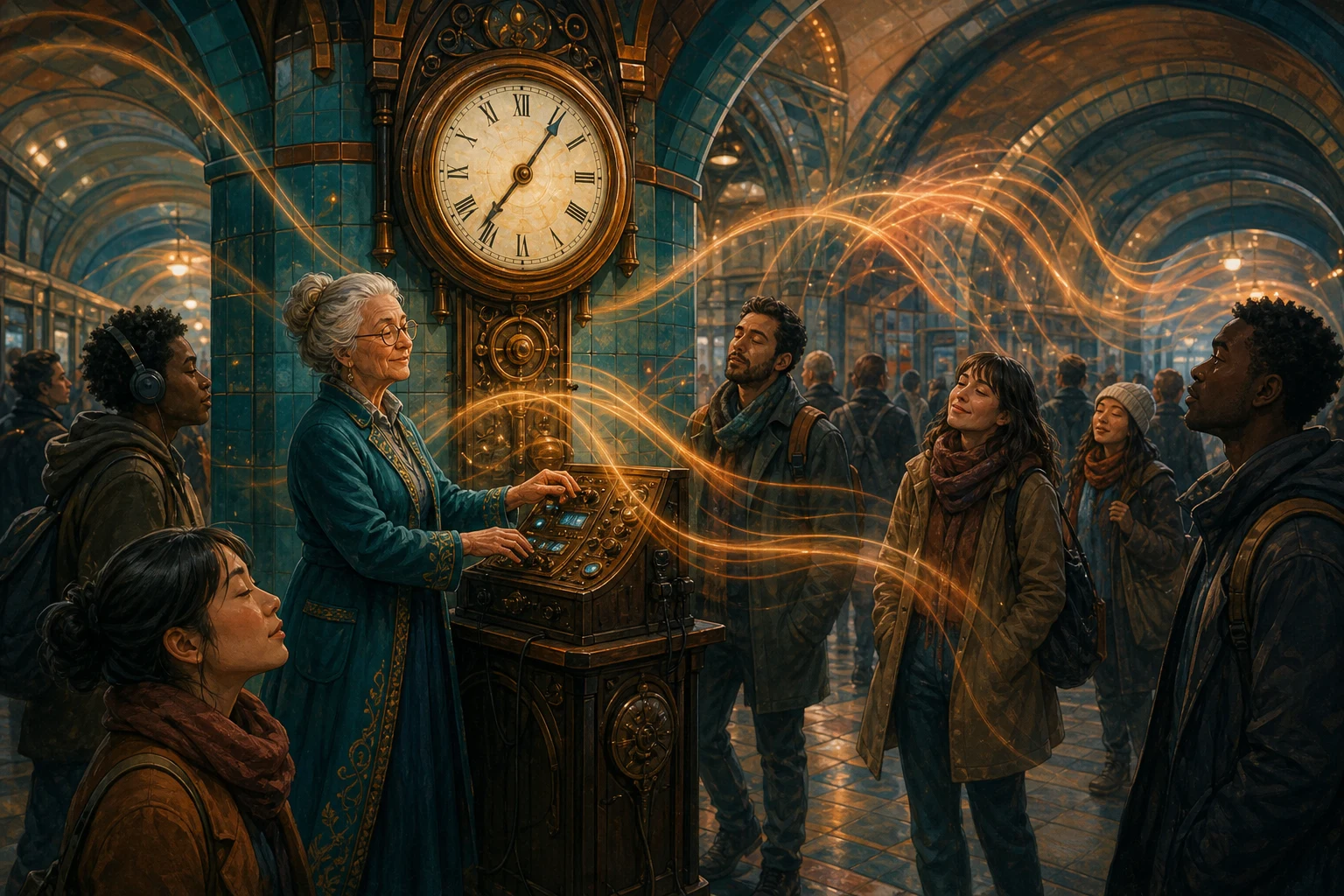
Irena had repaired the station clock three times, and three times it had kept perfect time. The trouble was not the clock. It was everything around it.
At six minutes past seven, the eastbound train shrieked into the platform. Its brakes groaned. Its doors chimed. Hundreds of shoes hurried over the tiles. Above them, the station clock gave its neat, silver note—and vanished beneath the noise.
By the time the sound faded, a woman stood alone beside a blue suitcase, staring down the tunnel. A boy held two paper cups of tea that had gone cold. An old man checked the empty bench beside him, then checked the clock.
“People keep missing one another,” the station supervisor told Irena. “Can you make it louder?”
“I can make it louder,” Irena said. “But then it will sound angry.”
She was seventy and had spent forty-six years repairing clocks in rooms where the loudest thing was usually a spring settling into place. She trusted gears. Gears did exactly what they were made to do.
The next evening, she returned with a listening device, a screwdriver, and a notebook. She recorded the station at every hour. Trains thundered. Footsteps clattered. Vendors called out prices. Somewhere, a child laughed each time the announcement system mispronounced a destination.
The clock’s chime was not weak. It was simply being asked to compete with a city.
Irena sat beneath the clock and wrote a new instruction in her notebook: Do not replace the sound. Give it a place.
She found a narrow pause between the warning bell and the opening of the train doors. It lasted forty-three seconds.
Into that pause, she recorded one sentence: “If you are meeting someone, wait by the clock.”
The station supervisor approved the test. The sentence played in Irena’s careful voice, followed by the chime.
No one heard it.
A young technician named Lio approached her afterward, carrying a coil of colored cable and an expression of polite concern.
“You’re placing it under the announcements,” Lio said.
“I am placing it between them.”
“There is a difference.”
“I know. That is why I am annoyed.”
Lio smiled. Together they studied the station’s sound patterns. They moved the message by half a second, then two seconds. They shortened the chime. They removed the echo that made it blur against the tiled walls.
But Irena had another idea. If the station was a meeting place, perhaps the message should not belong to one voice.
She asked the tea seller, the ticket inspector, the cleaner, the flower vendor, and the man who repaired umbrellas to record the sentence. Each spoke differently. Some rushed. Some sang the final word. One pronounced “clock” so solemnly that Lio had to turn away to hide a laugh.
Irena invited commuters to add their own versions. A baker recorded it in the language she had learned from her grandmother. Two sisters spoke together. A quiet student asked to try again three times, then produced a warm, confident sentence that made Irena look up from the controls.
The first evening of recordings was a disaster. Voices overlapped. The umbrella repairer began too soon. Someone’s dog barked directly into the microphone. The message played after the train doors closed, when everyone was already gone.
Irena packed her tools.
“It is not precise,” she said.
“No,” Lio replied. “It is unfinished.”
That distinction irritated her more than the failed timing.
They returned the next night. They built a small sequence: one voice before the train, another after it, the chime at the center. Every departure used a different pair of speakers. The messages were brief enough to hear and varied enough to invite attention.
Soon, people began using the clock as a landmark.
“By the clock after the northbound train.”
“Give me one minute; I’ll meet you beneath the blue light.”
“Wait there. I know where you are now.”
A nurse found her brother after years of passing through the station at different hours. A courier returned a lost sketchbook. A child who had wandered from her aunt was reunited before anyone needed to panic. None of these events belonged to Irena, exactly. She had only made the pause audible.
One evening, Lio brought her a paper cup of tea.
“The repair crew meets after the last train,” he said. “We could use someone who knows how to listen to machines.”
Irena looked at the station clock. It was accurate to the second. Around it, voices rose and fell, crossed and separated, then found their way toward one another.
“What would I repair?” she asked.
“Whatever is keeping people from hearing each other.”
Irena pretended to consider this difficult offer. Then she opened her notebook and wrote down the meeting time.
For once, she did not arrive alone.
Related Quote Stories
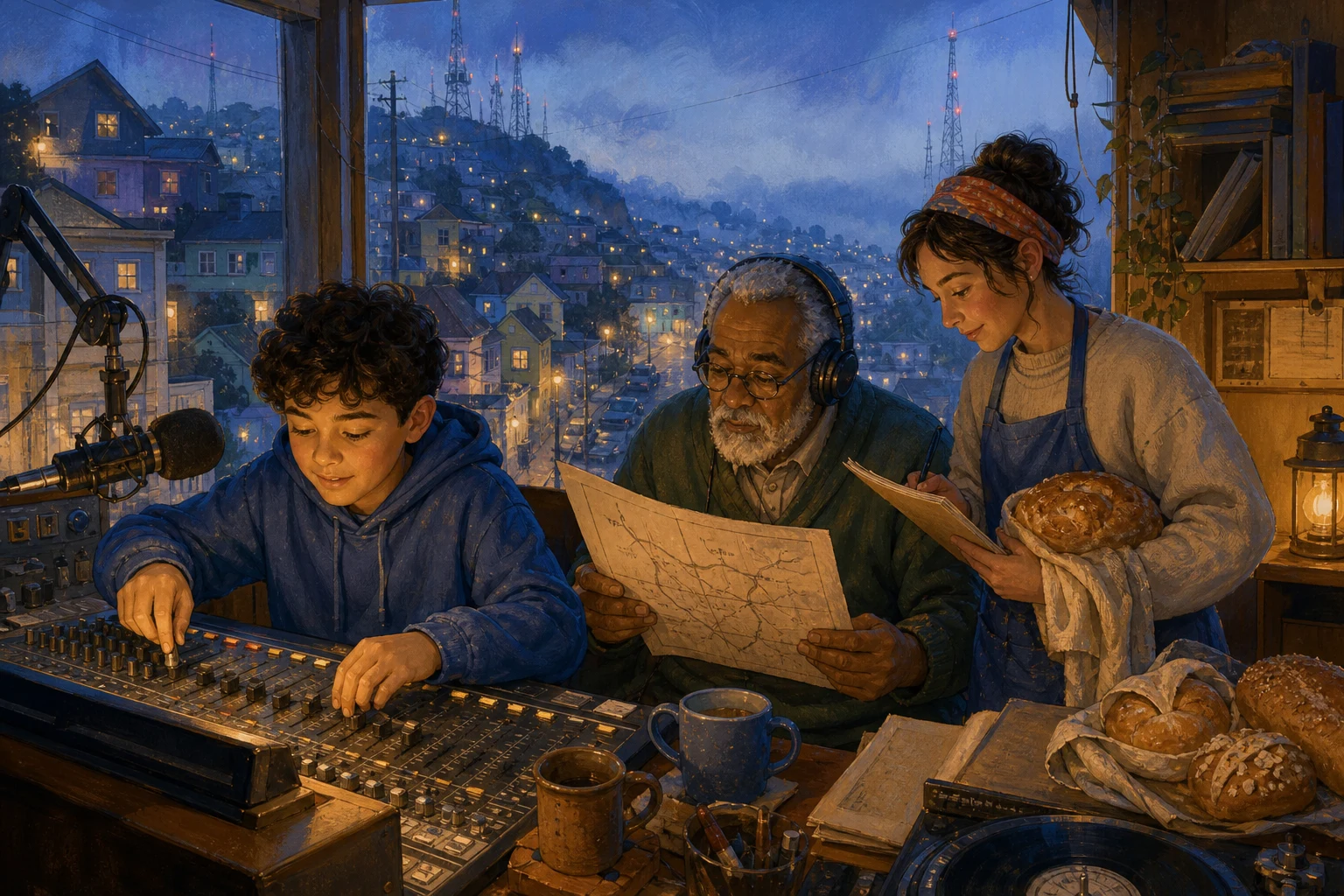
Make Room on Channel Seven
Ilya wants to make the neighborhood station flawless. Instead, a retired dispatcher and a hesitant baker teach him that the best broadcast is not the loudest one, but the one that leaves room for everyone.
Read Story →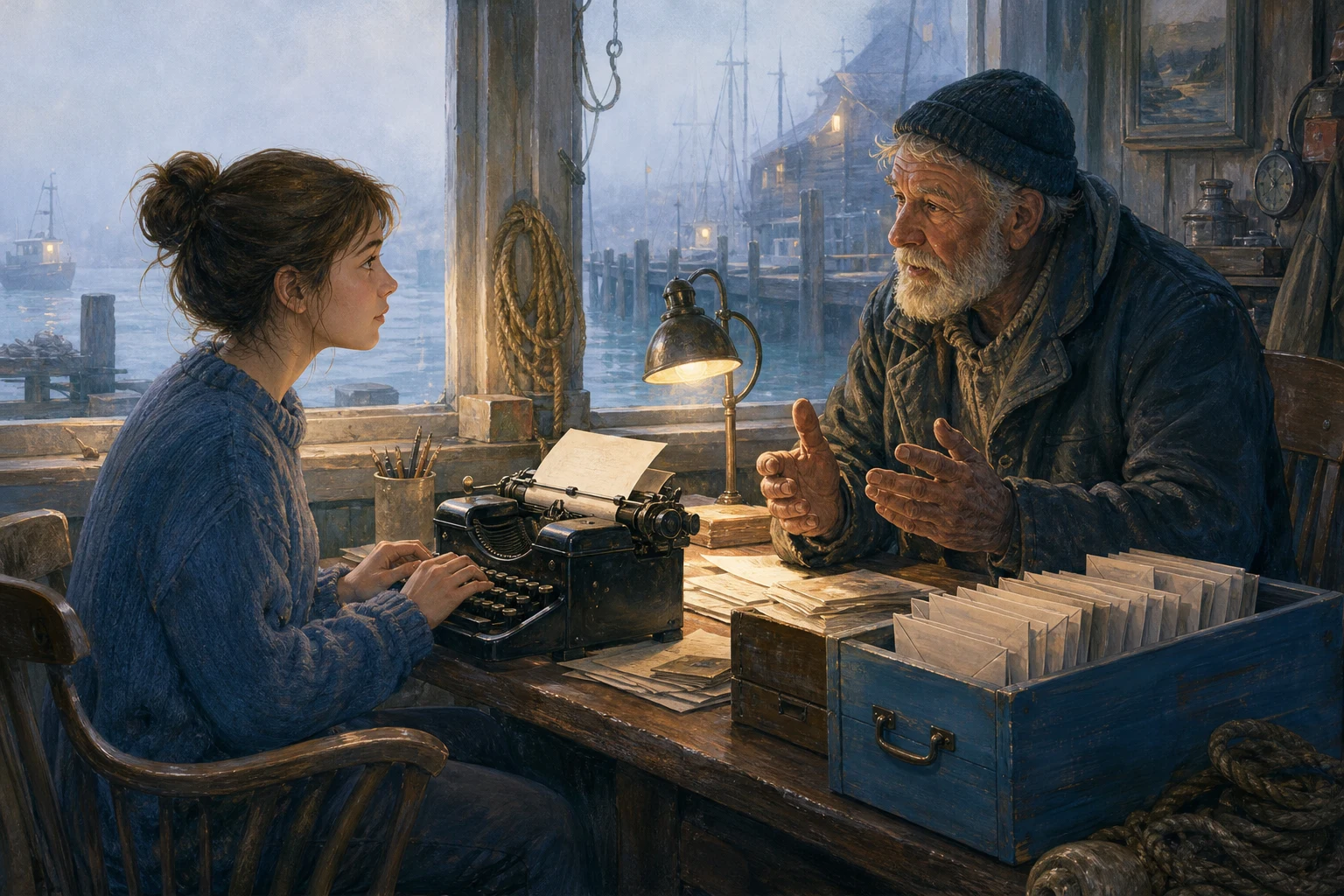
Letters in Their Own Weather
Mara can make any letter look important. What she must learn is how to make it sound like the person who meant it.
Read Story →
Before the Oven Wakes
Salma knew how to make dough behave. Teaching Ren was another matter entirely.
Read Story →