
Quote Stories
After the Lights Went Out
A baker discovers that honoring the past can leave room for new hands.
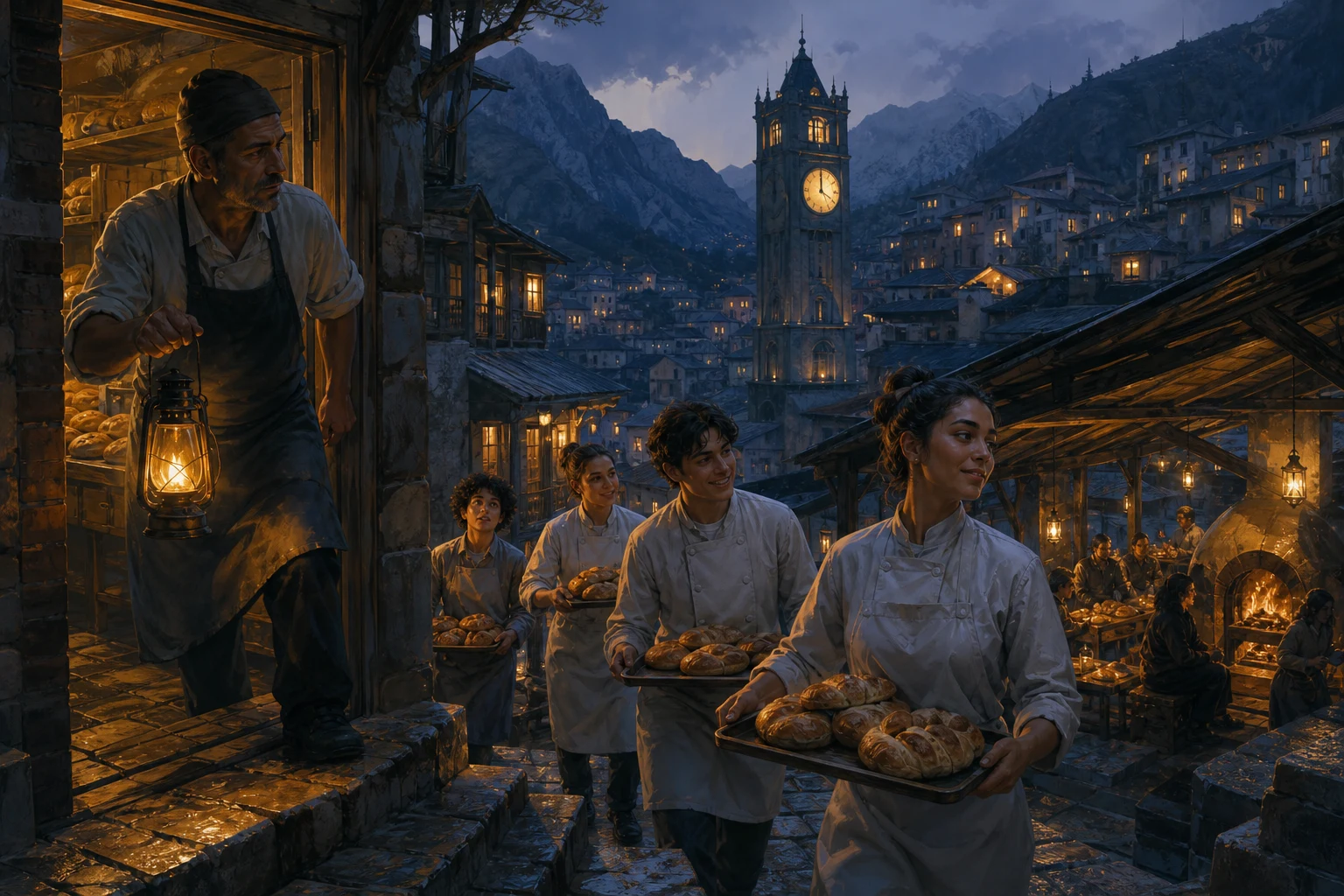
The oven clock stopped at 9:16, and every lamp in Bellweather Bakery went dark.
Tomas stood motionless beneath the old clock tower, one hand still resting on the dough scraper. Outside, the mountain city had become a scatter of candlelit windows and quiet stairways. Inside, forty loaves waited for the morning festival.
“Please tell me that was part of the plan,” said a voice near the pantry.
Tomas recognized Mira, one of the culinary students who had asked to practice in his kitchen. Three others stood behind her, each carrying a flashlight and wearing the borrowed white aprons they had brought for the evening.
“It was not,” Tomas said.
He had refused them for weeks. His sister had left him the bakery, along with a handwritten schedule that specified when to knead, when to rest, and precisely how many turns belonged in every loaf. Tomas followed it as if the routine were a rope across deep water. New students meant spilled flour, broken utensils, and questions he could not answer without admitting that some of the old methods no longer worked.
Now the festival order was trapped in a cold oven, and the dough was already rising too quickly.
“We can use the stone hearth at the market,” Mira said. “The one under the covered arcade.”
“It hasn’t been used in years.”
“Then it may be ready for a new career.”
Tomas almost smiled. Instead, he gathered the dough into crates. The students carried trays through the steep lanes while Tomas hurried behind them, clutching his sister’s recipe book beneath his coat.
The market hearth was smoky, uneven, and missing one iron door. It was also warm.
They worked by lantern light. Mira adjusted the heat with broken roof tiles. Jun mixed herbs into the remaining dough. Salma shaped small twists from scraps Tomas would normally have discarded. Tomas objected to each suggestion until the first batch emerged golden, fragrant, and slightly crooked.
“They look nothing like Leda’s,” he said.
“No,” Mira replied. “But they smell like people will want another.”
By dawn, the festival tables held loaves, twists, and flat rounds marked with the students’ improvised patterns. Customers bought everything. One child asked for the crookedest roll.
Back at the bakery, Tomas opened his sister’s book. Between two familiar recipes, he found a blank page. He wrote the date, then added a new heading: Evening Apprentices.
The following week, the students returned—not as guests waiting for permission, but as learners with keys, schedules, and ideas. Each brought one affordable recipe and one improvement for the bakery. Tomas taught them how to read dough by touch. They showed him how to calculate portions without wasting flour.
Months later, the white aprons hung beside Leda’s old blue one. Tomas still followed some of her routines. He simply stopped mistaking them for walls.
At closing time, he placed the newest recipe in the book. The page no longer looked blank. It looked ready.
Related Quote Stories
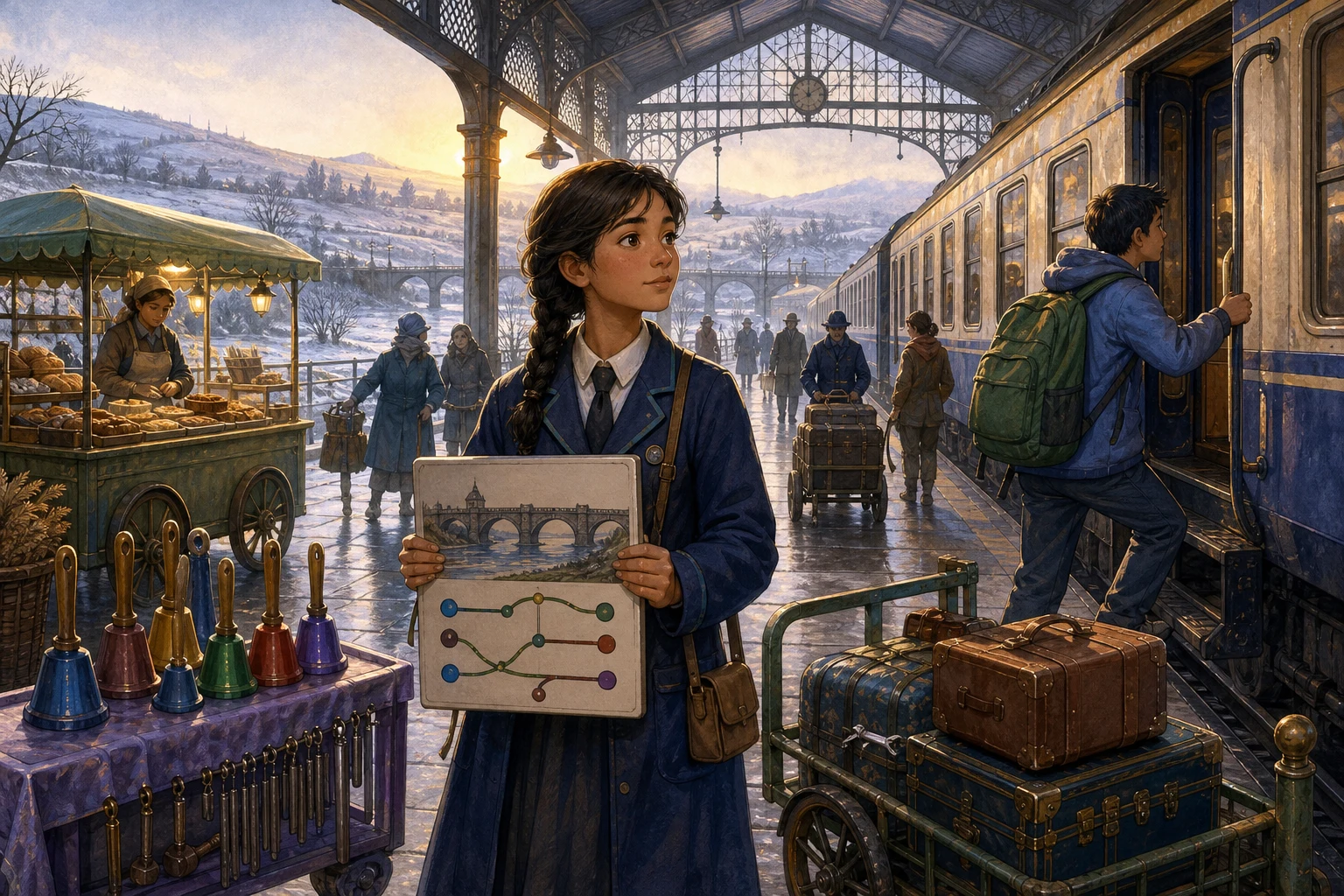
A Clearer Way Home
When a new student keeps missing the right train, Omi replaces a perfect timetable with a system built from colors, chimes, and careful listening.
Read Story →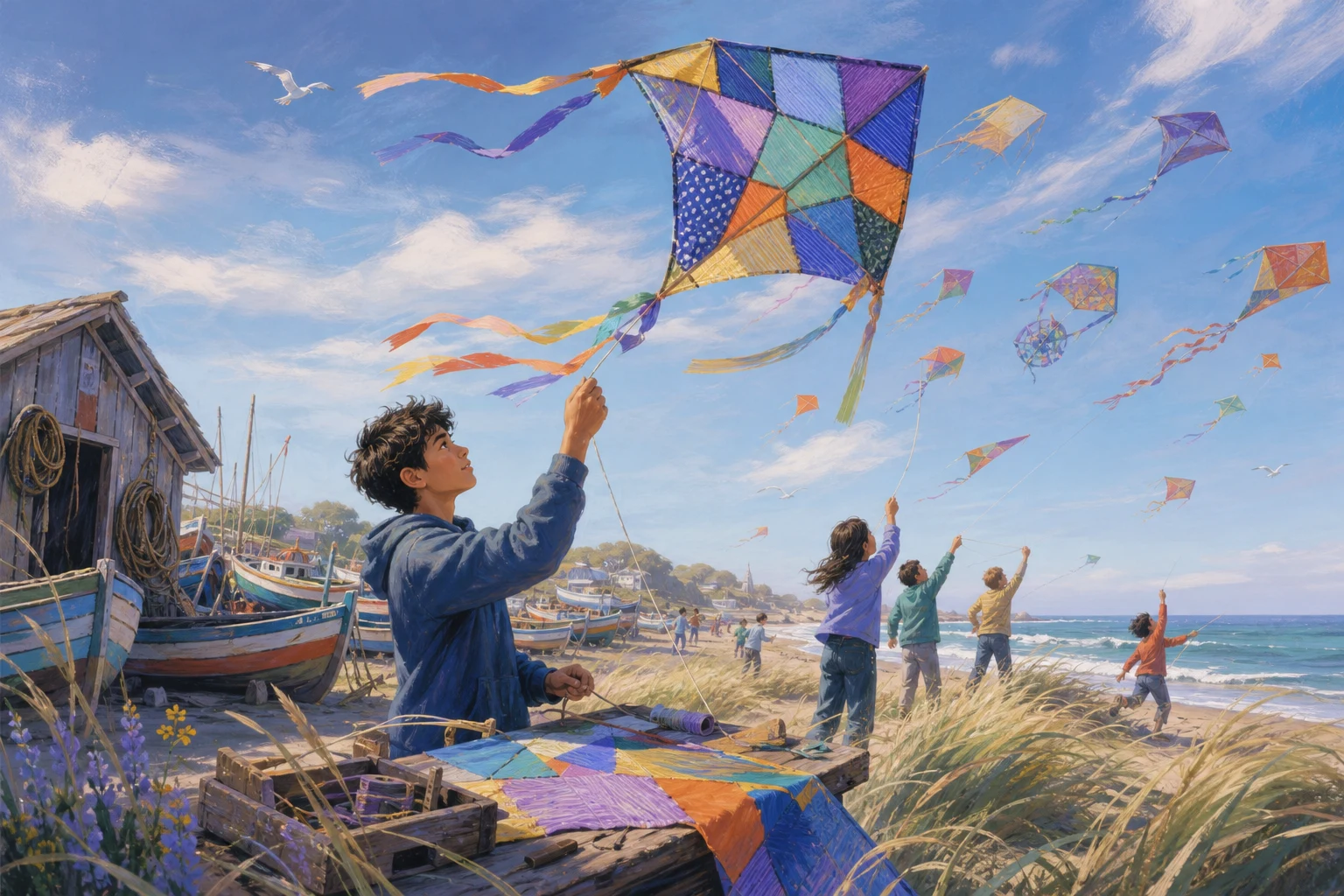
Wind-Tested
Ilya’s grand competition kite keeps tearing apart—until the scraps lead to an idea that can carry everyone’s hopes.
Read Story →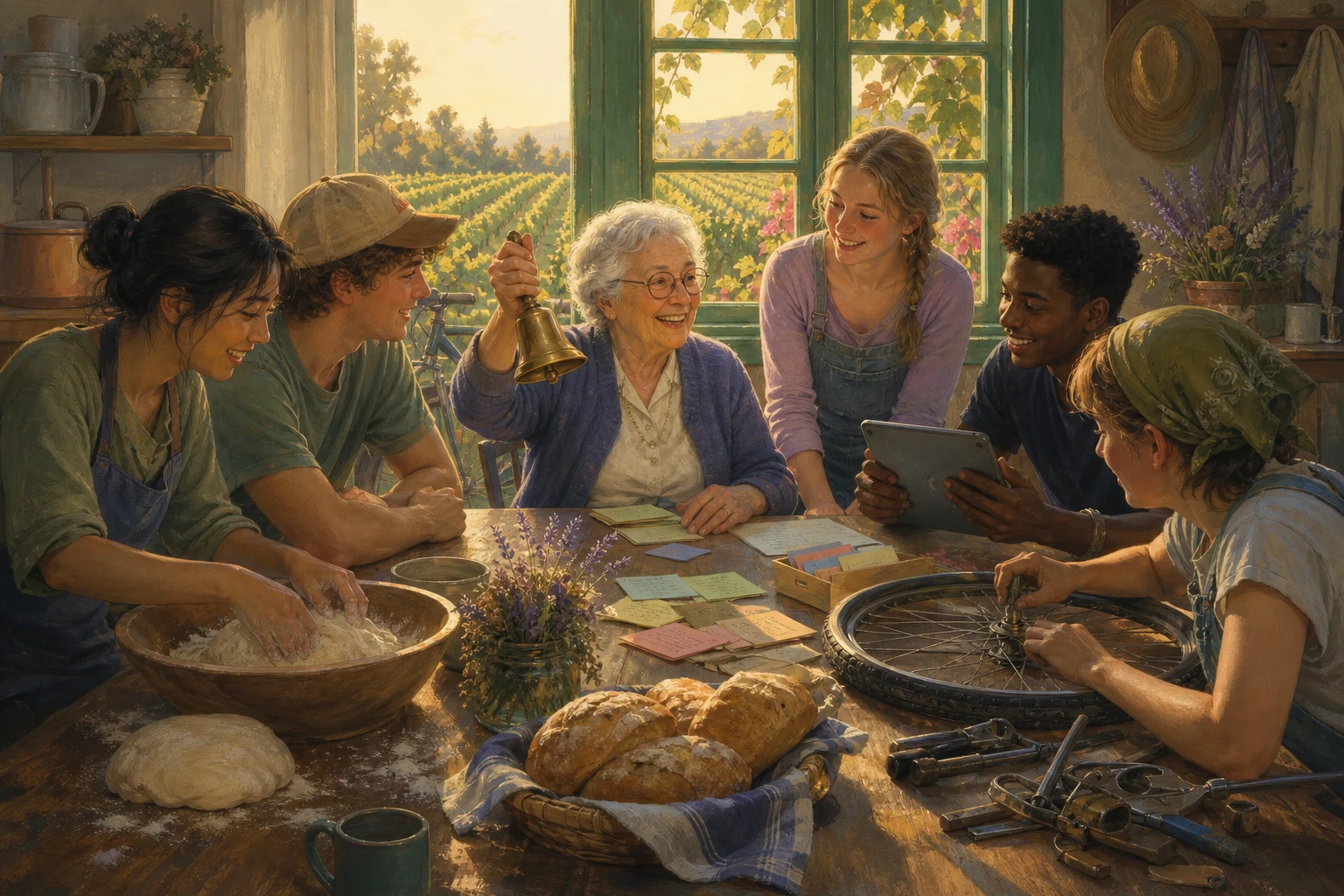
Bellwork After Supper
Mara’s first timetable lasted three days. Her second had pockets, crooked arrows, and a place for whatever someone knew how to do.
Read Story →