
Quote Stories
A Pocketful of Repairs
Mara discovers that a craft survives by changing hands.
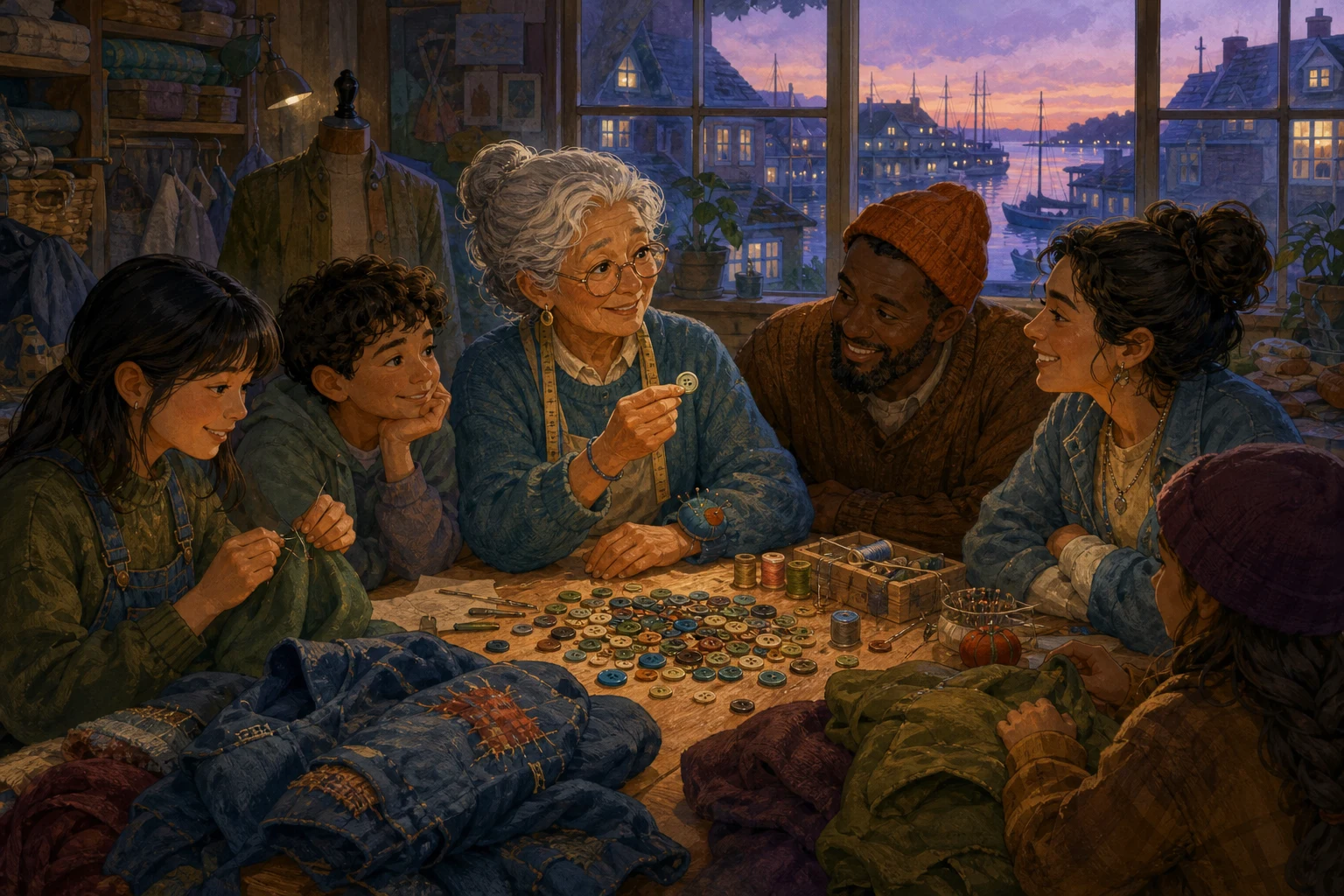
The buttons spilled across Mara’s cutting table like colored seeds.
A red one rolled beneath the iron. A wooden one stopped beside her thimble. Three pearly buttons gathered in the fold of a delivery rider’s jacket, which had arrived at her shop with one sleeve pinned shut.
“Can you save it?” the rider asked.
Mara turned the jacket over. Its buttons did not match in size, shape, or color. One had been carved from a shell. Another was stamped with a tiny ship. The largest was green glass.
“Save it?” she said. “It has already survived more than most garments.”
The rider grinned. “That means yes?”
“It means bring me tea while I work.”
For thirty-eight years, Mara had repaired dock coats, market aprons, school uniforms, and jackets worn thin at the elbows. Her shop smelled of steam, soap, and salt carried in from the harbor. At the end of the month, she planned to close the shutters for good.
She had told herself retirement would be peaceful. Lately, though, the thought felt less like rest and more like vanishing.
The jacket changed her plans—not the retirement itself, but what might come after it. Mara began asking customers to bring the spare buttons languishing in kitchen drawers and biscuit tins. A baker delivered a jar of white plastic buttons. A fisherman brought brass fasteners from an old work coat. Someone left a paper envelope filled with tiny blue buttons and no name.
Mara sorted them by color, not by usefulness. Soon the shelves glittered.
On the first Thursday evening, six people crowded around her cutting table for a mending lesson. Mara demonstrated a neat cross-stitch, then a reinforced seam, then three ways to attach a button so firmly it could outlast the shirt.
Everyone watched. Nobody spoke.
At last, a young woman named Lio raised her hand.
“My grandmother knots the thread differently,” she said. “May I show you?”
Mara almost said no. The knot Lio demonstrated looked loose and inelegant. Then Lio explained that it had been designed for coats worn by people who needed to undo them quickly with cold fingers.
A retired sailmaker offered a loop used on canvas. The baker showed how she repaired flour sacks. The delivery rider, whose name was Senn, knew a quick stitch that held through bicycle rain.
Mara put down her needle.
“Next week,” she said, “you bring the first lesson.”
The circle grew. People arrived with torn pockets, loose hems, and stories attached to every scrap of cloth. Mara stopped standing at the center. She moved around the room, asking questions and making room on the table.
Then the employment office sent over a basket of donated clothes for people beginning new jobs. The garments were clean but tired: a suit missing a cuff button, a coat with a split lining, trousers shining at the knees.
The circle repaired them one by one.
Senn matched a brass button to a navy jacket. Lio replaced a frayed pocket. Mara taught a nervous apprentice to make a hem that could be lengthened later. Each finished garment received a small card tucked inside the pocket: “Made ready with care.”
On Mara’s final day behind the shop counter, she expected to feel hollow. Instead, the shutters stayed open. The table was covered with thread, cloth, and buttons waiting for their next owners.
Senn brought back his repaired jacket. The mismatched buttons shone against the faded fabric.
“You kept the green one,” Mara said.
“It’s my favorite.”
Mara touched the wooden button near the collar. “Good. A jacket should know where it has been.”
That evening, she removed the shop’s old sign and carried it inside. In its place, the circle hung a new one, painted on a piece of reclaimed board:
MENDING TABLE — EVERYONE MAY TEACH.
Mara read it twice. Then she unlocked the door for the next person carrying something worth saving.
Related Quote Stories

Lanterns Between Currents
Isha measured every delivery in minutes—until the dark paths between the market stalls taught her that getting somewhere mattered less than helping others find the way.
Read Story →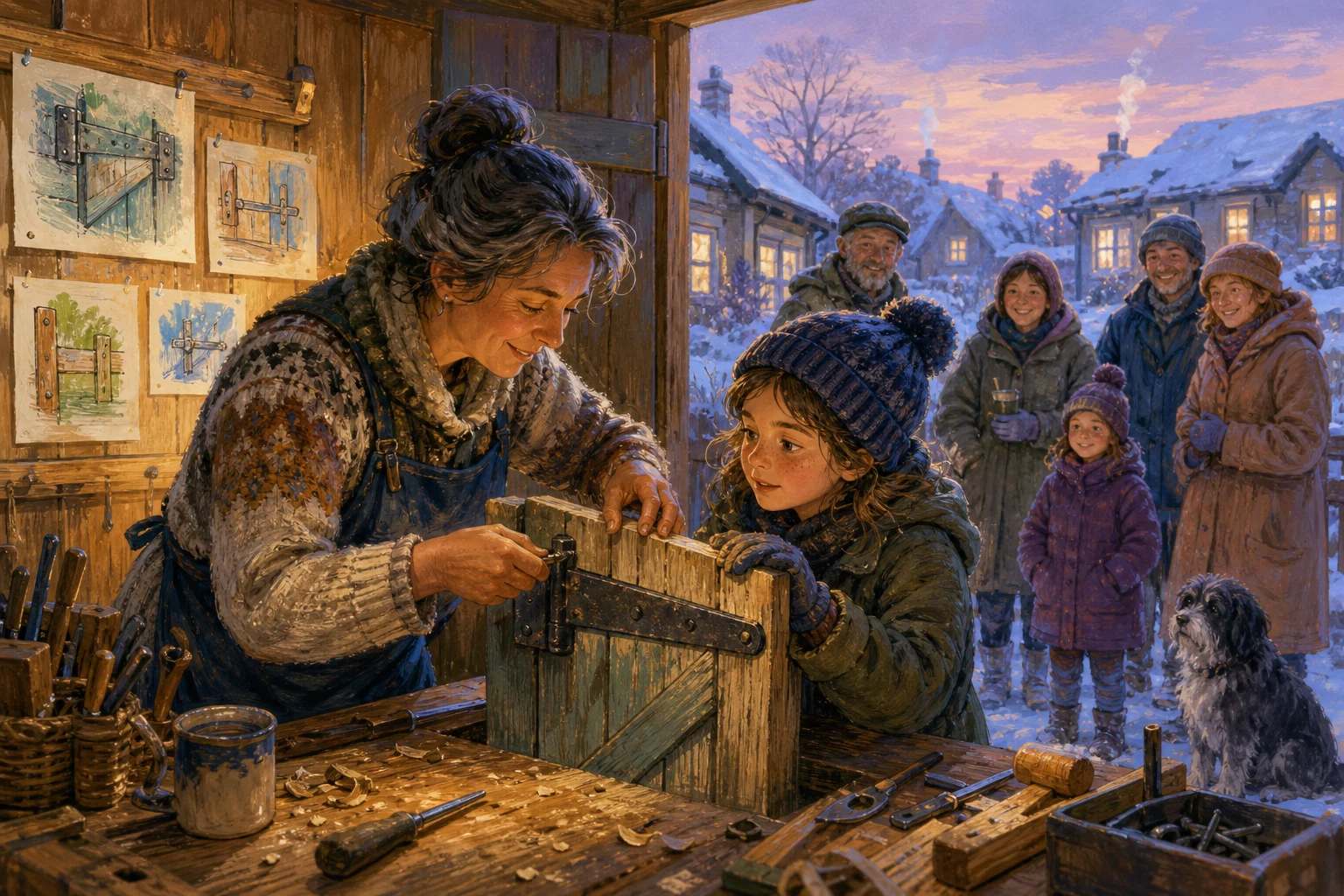
Hinges in Winter
Anja inherits a repair shed she intends to close, but a broken gate—and a child’s careful drawings—opens a different future.
Read Story →
Leave a Little Wall
Iven expected applause for his mural. Instead, he got a list of everything his bright new design had covered—and discovered a better way to finish it.
Read Story →