
Quote Stories
Leave a Little Wall
Iven learns that the best public art makes room for more than one voice.

By noon, Iven had painted over the last gray square of plaster.
He stepped backward across the dusty lane, brush dripping turquoise, and admired the wall. Sunbursts climbed toward the roofline. Mango leaves curled around painted windows. A scarlet bird flew through a ribbon of gold.
“Beautiful,” he told himself.
Then Mrs. Valea arrived carrying a wooden sign.
“Where should I hang this?” she asked.
Iven looked at the sign. It read: VALEA’S TEA, OPEN SINCE THE YEAR OF THE GREAT RAIN.
“Perhaps beside the wall?” he suggested.
“There is no beside,” she said.
Soon other shopkeepers appeared. The baker held a faded photograph of her grandmother’s bread stall. Two brothers brought a hand-painted board marking the lane’s old name. An elderly fisherman carried a blue plank covered in names of boats that no longer sailed.
Iven’s mural had covered the hooks, ledges, and patches where people displayed pieces of their lives during the annual street fair.
“I thought everyone wanted something new,” he said.
“We wanted something new, too,” said Mr. Oran, the fisherman. “But not instead of everything else.”
That evening, Iven sat beneath the wall while rain ticked against the awnings. His master, Luma, found him turning a brush between his fingers.
“You can repaint it,” she said.
“It took three weeks.”
“Then you know how to paint. The harder question is what the wall is for.”
The next morning, Iven brought out rolls of canvas, lengths of bright cloth, wooden dowels, and brass clips. He visited every stall in the lane and asked one question: “What should people be able to add?”
The answers became a plan.
He painted narrow frames beside the mural, leaving hooks between them. He stitched pockets into fabric panels so children could tuck in drawings. He made a long blue banner for names, recipes, wishes, and memories. Nothing was nailed permanently. Everything could be moved, replaced, or joined by another piece.
At first, people were cautious. Mrs. Valea contributed her sign. The baker added the photograph. The brothers painted the lane’s old name in three colors. Children covered one panel with lizards, sandals, kites, and enormous purple clouds.
By the night before the fair, the wall no longer looked like Iven’s design alone. It looked like a bright hillside opening its many windows.
On the morning of the celebration, a gust of wind tore one fabric panel loose. Iven reached for it, but a child named Sela caught the corner. Together they reattached it with stronger clips. Then the baker offered spare ribbon, and the fisherman suggested a lower hook for smaller hands.
By afternoon, visitors were adding their own panels: a poem, a pressed leaf, a drawing of a vanished doorway, a list of songs to play after sunset.
Iven stood at the edge of the crowd, holding an unused square of yellow cloth.
Luma nudged him. “What will you put there?”
He looked at the wall. There was still space.
“Nothing yet,” he said. “Someone may have something better.”
Above him, the painted bird seemed to fly beyond the gold ribbon, into a sky that belonged to everyone.
Related Quote Stories
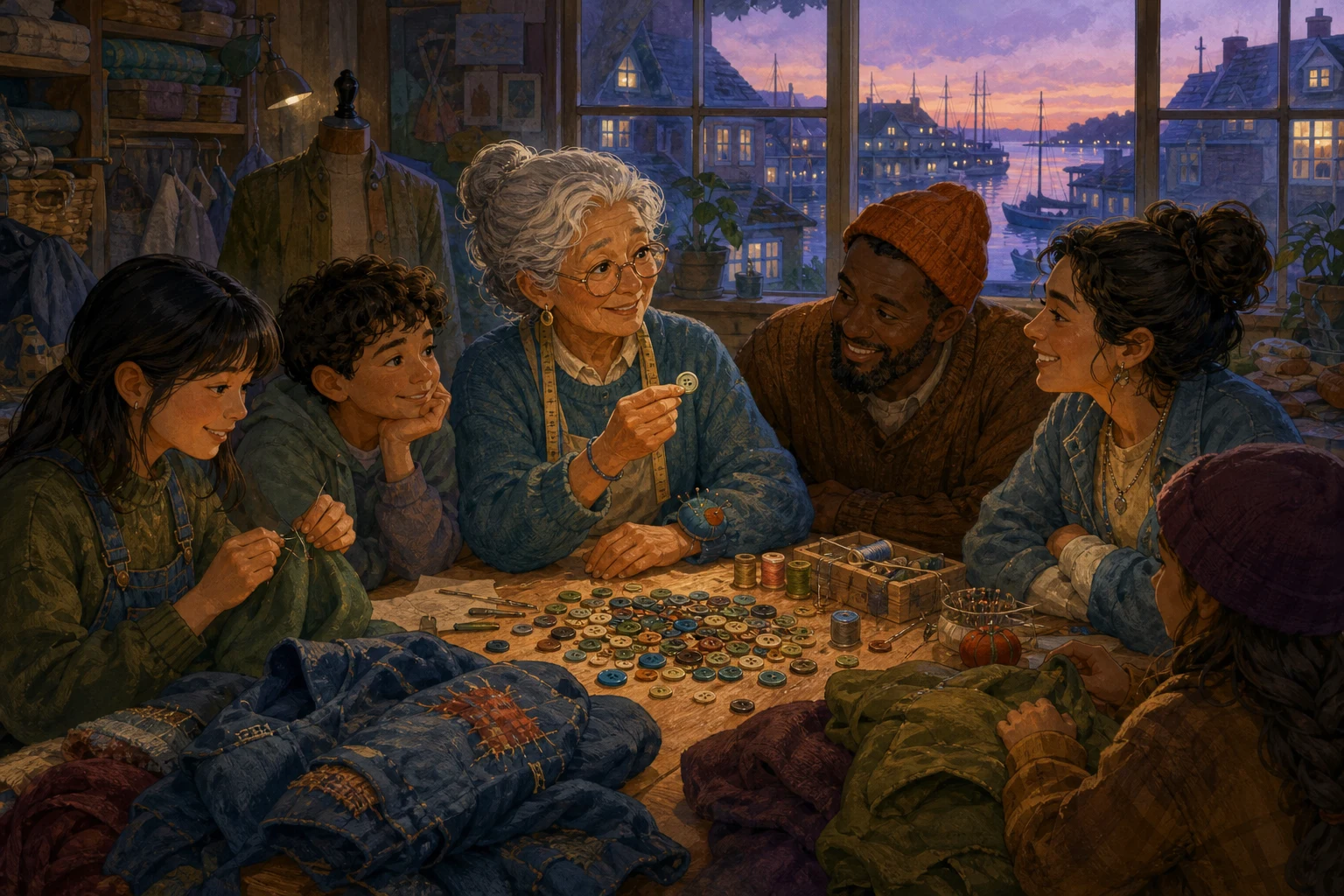
A Pocketful of Repairs
When a delivery rider brings Mara a jacket held together by mismatched buttons, the retiring tailor begins one last project: teaching the whole district how to mend what still has life in it.
Read Story →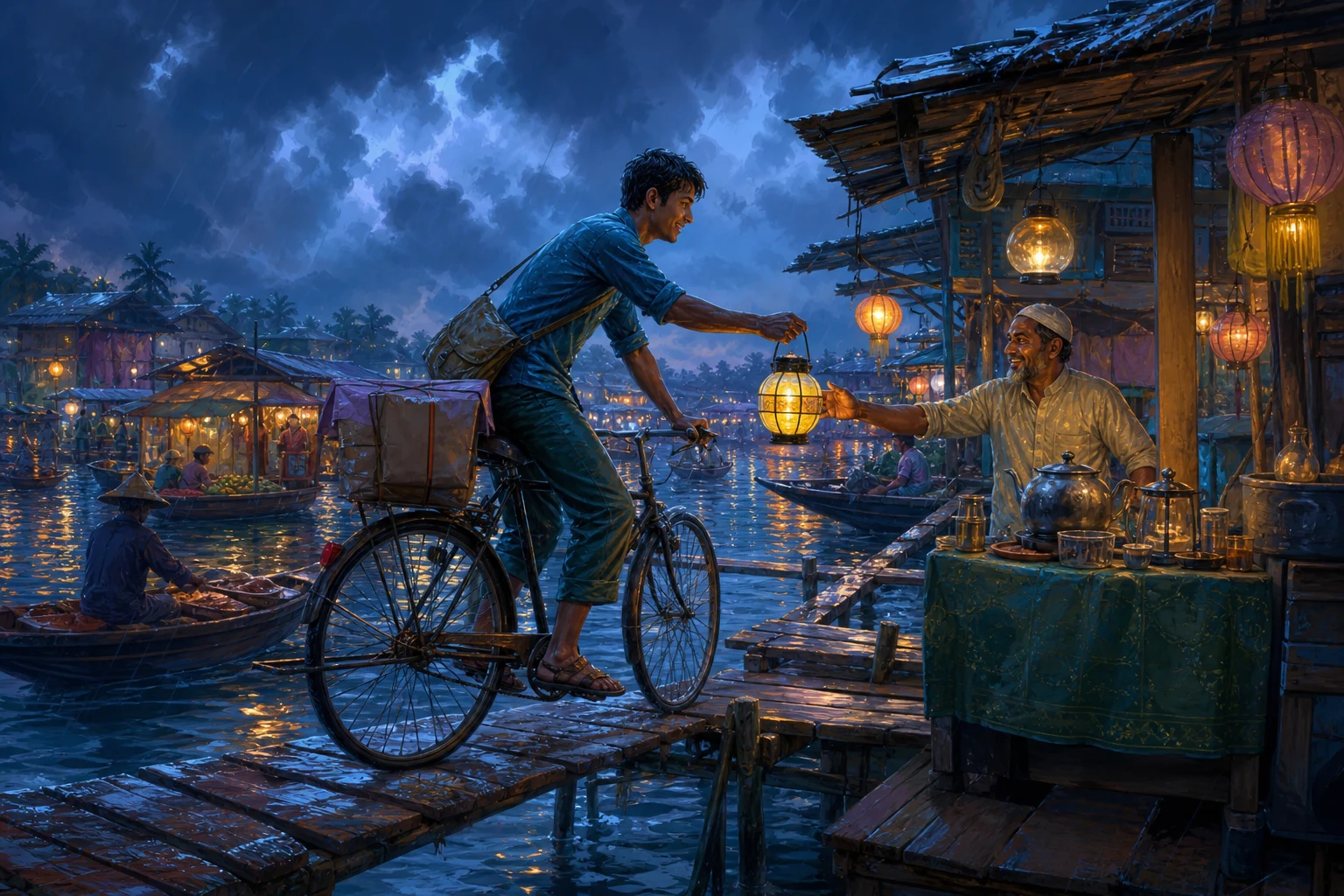
Lanterns Between Currents
Isha measured every delivery in minutes—until the dark paths between the market stalls taught her that getting somewhere mattered less than helping others find the way.
Read Story →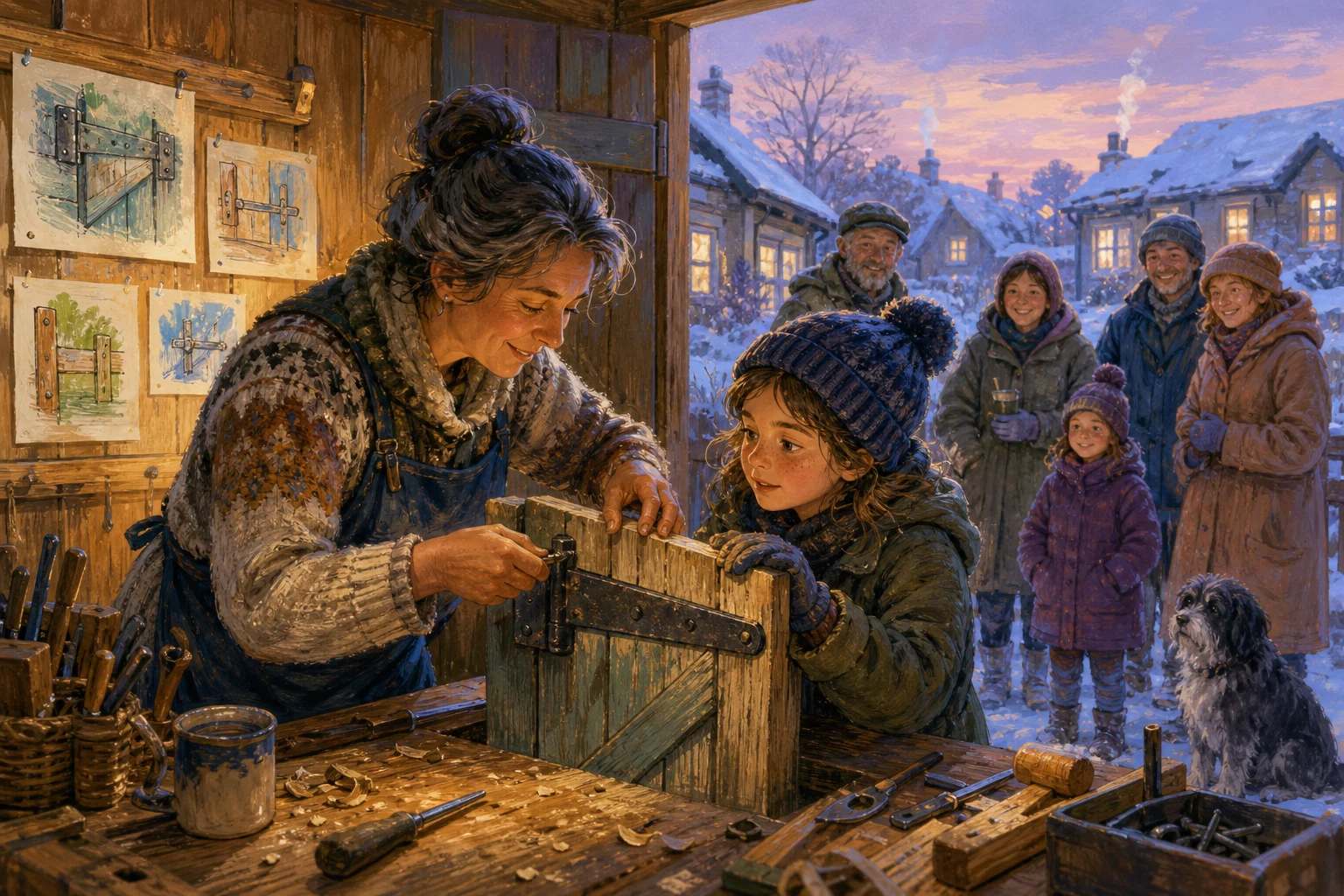
Hinges in Winter
Anja inherits a repair shed she intends to close, but a broken gate—and a child’s careful drawings—opens a different future.
Read Story →