
Quote Stories
Lanterns Between Currents
A courier discovers that the safest route is one people share.
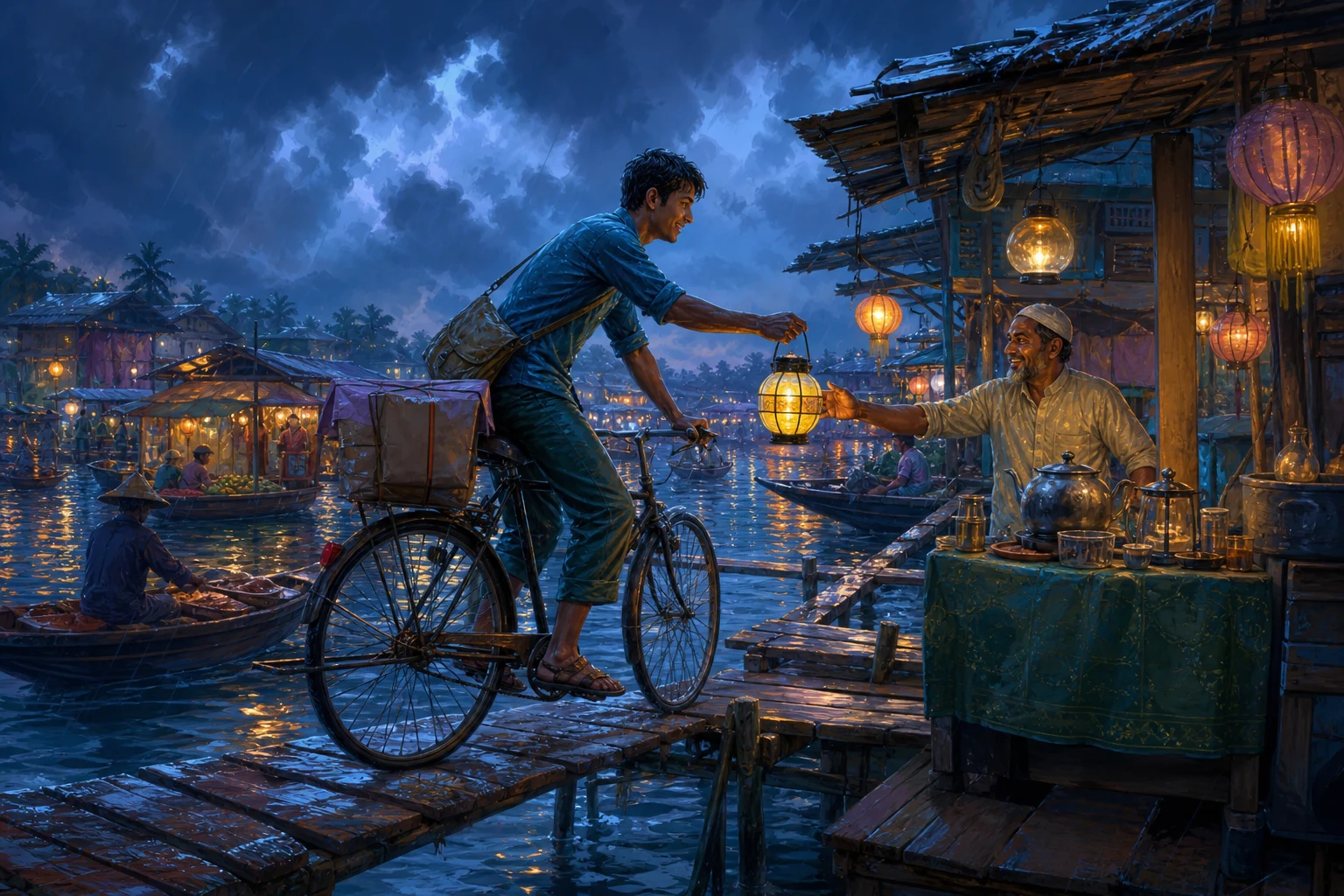
Isha was halfway across the west footbridge when the darkness moved.
Not a person. A missing lamp.
The municipal lantern above the bridge had gone out again, leaving the planks silvered only by moonlight and the river sliding below. Isha stopped her bicycle, balanced three parcels against the handlebars, and listened to the market behind her: frying shallots, boat engines, a musician testing the same three notes on a reed flute.
“Don’t stand there,” called Auntie Ranu from her tea stall. “Either cross or come back.”
“I’m crossing,” Isha said.
She crossed quickly. That was what she did best.
At nineteen, Isha could carry six orders through the evening market without spilling soup or bending a pastry box. She knew which ferry pilot accepted late deliveries, which alley flooded first, and which dog slept beneath the spice seller’s table. Speed was her private proof that she was useful.
But that week, speed stopped being enough.
The lamps along the eastern paths failed one by one. Customers missed turns. A basket of steamed buns arrived cold because the buyer had waited at the wrong pier. Two stallholders argued over whose directions were correct, though both had lived beside the same canal for decades.
“You told me to follow the blue wall,” one complained.
“There are four blue walls,” said the other.
Isha began carrying a stub of chalk and writing arrows on the boards near the bridges. By the next evening, rain had washed them away. She tried memorizing everyone’s preferred route. That only made her late.
So she stopped rushing long enough to ask.
The boat pilots described crossings by current and tide. Children pointed out steps hidden beneath hanging laundry. A street musician said, “You can hear the noodle stall before you see it.” Elderly vendors remembered paths that no longer appeared on any public map.
Isha drew everything in a small notebook: a bell tied to a blue post, three crooked palms, the bridge where the planks sounded hollow. Each person knew a piece. No one knew the whole route.
The idea arrived while she was sheltering beneath a tarpaulin, watching a vendor trim a wick.
“What if the route carried its own light?” Isha asked.
By dusk, she had borrowed twelve glass lanterns, painted yellow bands around their handles, and visited every stall between the ferry landing and the eastern homes.
“One lantern each,” she explained. “Keep it burning until the next marked stall takes over. If someone is leaving, they can follow the yellow band.”
The vendors stared at her.
“Who refills the oil?” asked a fish seller.
“Who replaces the glass?” asked Auntie Ranu.
“And if everyone forgets?”
Isha opened her notebook. “Then we make a schedule.”
They did not agree immediately. But the next night, the first lantern hung outside the tea stall. At the bridge, a ferry pilot carried the second across. A child at the dumpling stand took the third and waited until the musician at the corner arrived. The route moved hand to hand, stall to stall, like a quiet relay.
Then the storm came.
Rain struck the market roof so hard that conversation became shouting. Boats tugged at their ropes. Water raced down the steps, and the ordinary paths vanished beneath ripples and floating leaves.
Isha had one parcel left: medicine wrapped in waxed paper for an old basket maker on the far side of the canal. She nearly turned back. Then she saw the yellow glow ahead.
The lantern at the spice stall was still burning.
A fish seller carried it to the bridge. The musician took it next, shielding the flame beneath his coat. Two children guided Isha around a flooded stairway, calling directions through the rain. At the final crossing, Auntie Ranu was waiting with another lamp.
The basket maker received her parcel before the storm reached the roof tiles.
By morning, the market was muddy, tired, and full of plans. The vendors compared oil supplies. Boat pilots offered to mark safe crossings. The children proposed brighter paint. Even the municipal lamp keeper came to inspect the broken fixtures and found, to his surprise, that the market had already drawn a better map than his office possessed.
Isha still delivered parcels. She still raced the sunset when she could. But she no longer measured every journey by how quickly she finished it.
Some evenings, she followed the lantern route without carrying anything at all. She watched one small light pass to the next, each keeper trusting someone else to continue the work.
Across the dark water, the market glimmered—not because one person had lit it, but because no one had tried to keep the light alone.
Related Quote Stories
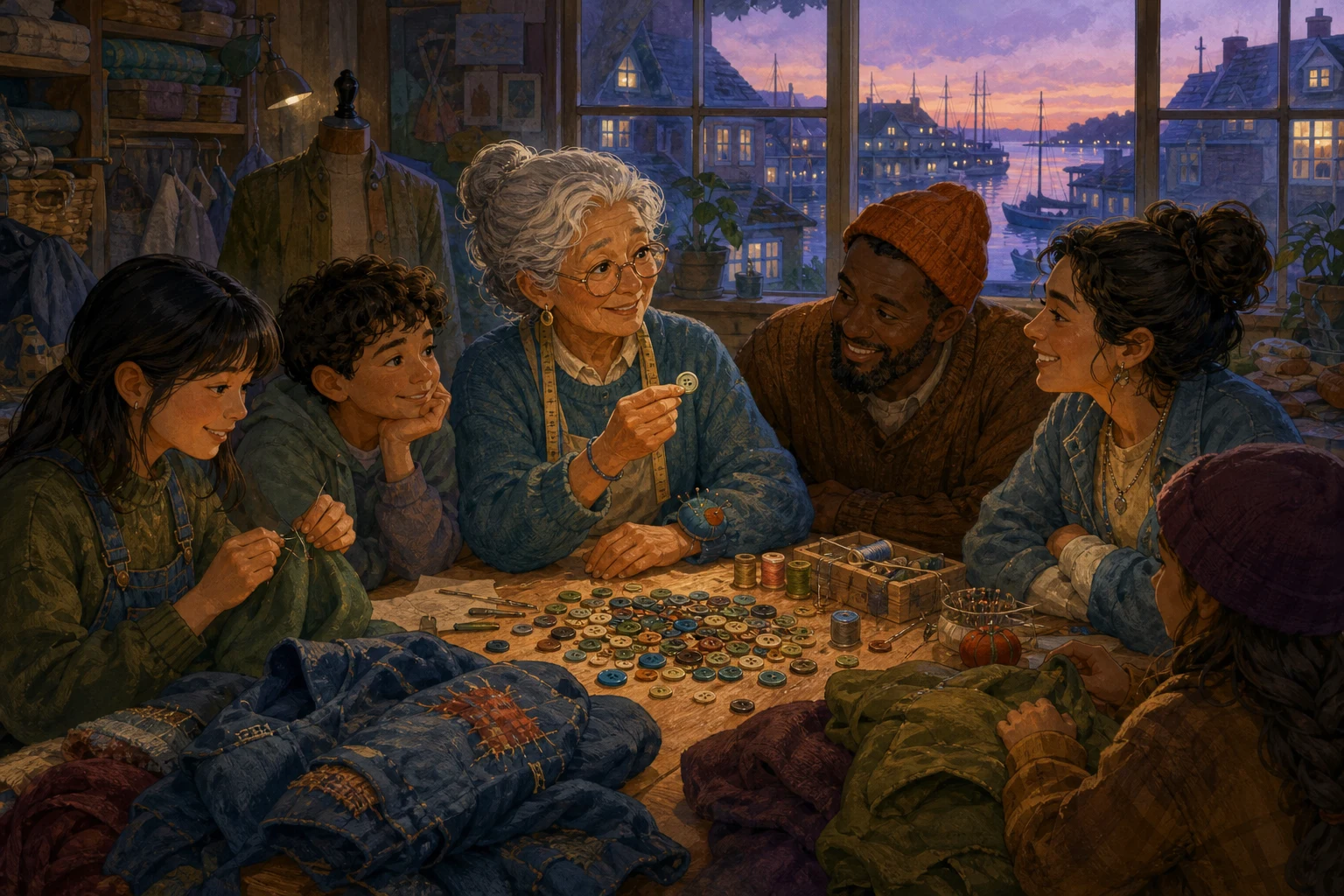
A Pocketful of Repairs
When a delivery rider brings Mara a jacket held together by mismatched buttons, the retiring tailor begins one last project: teaching the whole district how to mend what still has life in it.
Read Story →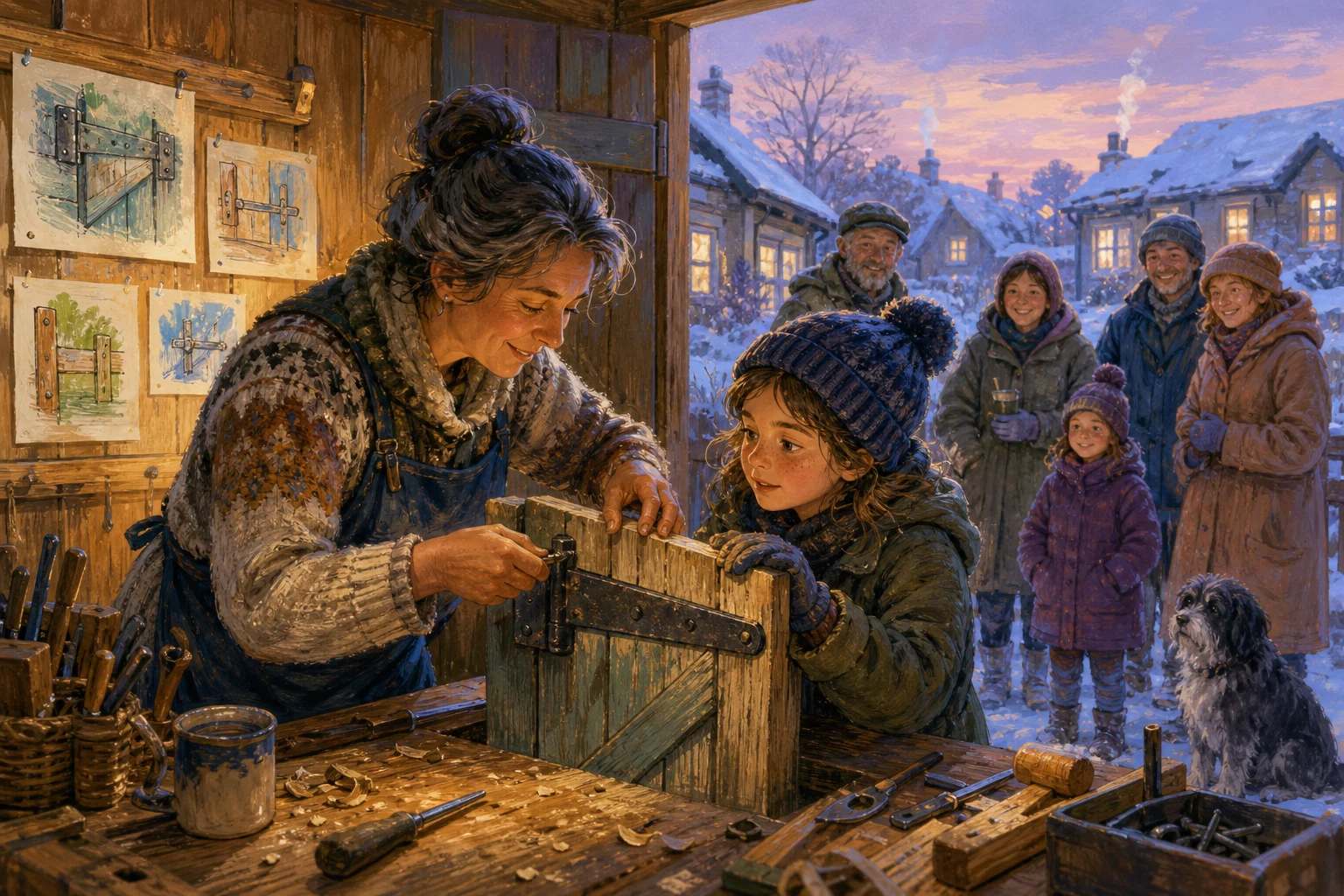
Hinges in Winter
Anja inherits a repair shed she intends to close, but a broken gate—and a child’s careful drawings—opens a different future.
Read Story →
Leave a Little Wall
Iven expected applause for his mural. Instead, he got a list of everything his bright new design had covered—and discovered a better way to finish it.
Read Story →