
Quote Stories
A Roof Full of Green
Vale learns that good design begins by asking what must remain.
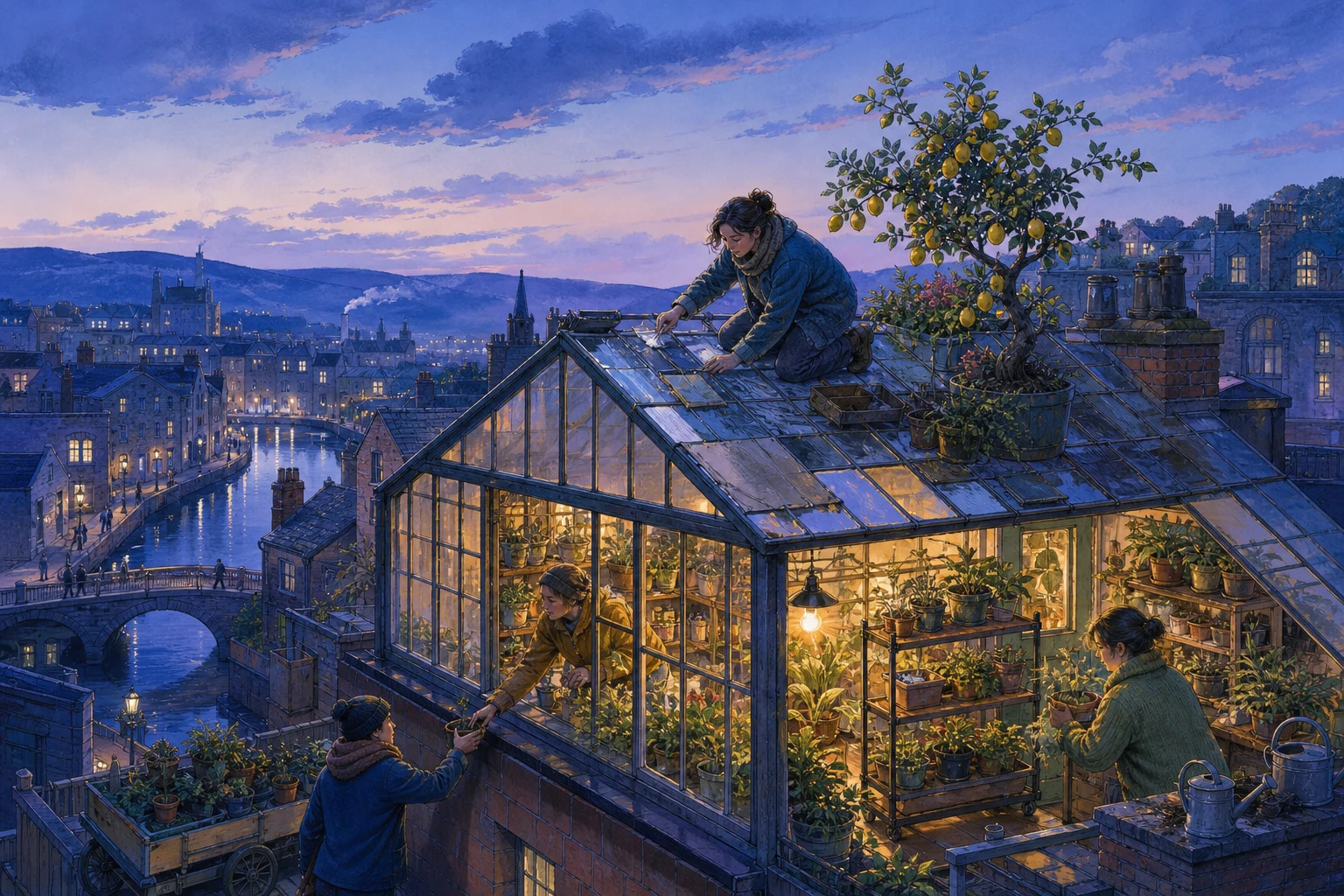
Vale arrived with a measuring tape, three black rubbish bags, and a plan to turn the old rooftop greenhouse into something clean enough to win a competition.
Her mother had given her one Saturday to clear it before the first hard frost. The greenhouse stood above the converted mill where Vale’s family lived, its glass clouded with dust and its metal frame furred with rust. Inside, trays crowded every ledge. Vines curled around broken chairs. A lemon tree leaned toward the northern panes as if listening for better weather.
Vale set her portfolio sketches on the nearest table. Her competition model showed a bright, spare pavilion: white shelves, precise angles, not a leaf out of place.
She lifted a cracked blue pot and found a handwritten tag beneath it.
MILA — THIRD FLOOR
PLEASE DON’T THROW AWAY
The next tag belonged to a tailor from the canal quarter. Another was marked with a date from twelve years earlier. A small jade plant had a name but no address.
Vale called her mother.
“How long have these been here?” she asked.
“Long enough that people think of the roof as theirs,” her mother said. “That may be the problem.”
Vale wanted to say that plants did not belong in a design competition. Instead, she photographed the tags.
By evening, she had found Mila, who came upstairs in a yellow scarf and recognized the blue pot immediately. She had left it during a hurried move when her father was ill. The tailor came next, carrying a spool of green thread to show Vale the exact color of the vine he had once grown beside his worktable. A student from the attic brought a pot of mint that had survived three apartments and two winters.
Each person remembered the greenhouse differently. To Mila, it was a place where she had learned to wait. To the tailor, it was a quiet room above the noise. To the student, it was proof that something could travel with you and still take root.
Vale’s clean pavilion began to look less like a solution and more like an eraser.
She redrew the plan. The shelves became movable. Narrow paths widened around the pots. Old window frames became windbreaks. Every corner received a small brass plate with the plant’s name, its caretaker, and one sentence about why it had been kept.
Her mother watched the changes without commenting. When Vale asked whether the roof could support a shared worktable, she brought up a carpenter. When Vale needed reclaimed glass, the tailor knew a glazier. By the following week, people were arriving with screws, seedlings, tea, and opinions.
Then the weather turned.
A storm crossed the town on the night before Vale’s competition deadline. Wind struck the greenhouse in long, shaking blows. By morning, six panes had shattered, rain pooled beneath the lemon tree, and the roof’s eastern corner sagged.
Vale opened her laptop. Her model was nearly finished. The submission portal closed at noon.
For a minute, she imagined the judges seeing her pavilion: elegant, controlled, untouched by weather or other people’s needs.
Then she heard glass breaking again.
Vale shut the laptop.
The repair took all morning. Mila held a ladder steady. The tailor tied down the frame with green thread until proper wire arrived. Vale’s mother organized buckets below the leaks. Even the attic student, who had never used a drill, learned to brace a beam while Vale replaced the worst of the broken panes with clear plastic sheets.
At eleven fifty-eight, Vale’s phone chimed with a reminder about the deadline. She silenced it and climbed onto the roof.
The greenhouse looked patched, uneven, and alive. Rain tapped the temporary roof. The lemon tree stood upright again.
A month later, Vale received a letter from a cooperative of residents who wanted her help redesigning three unused rooftops. They had seen the greenhouse and did not want a polished object. They wanted places that could change as people changed.
The commission was small. It would not replace the competition prize.
Vale accepted anyway.
That evening, she added one final plate to the greenhouse wall. It read:
SPACE RESERVED FOR WHAT ARRIVES NEXT.
Then she left the drill on the table, where anyone could reach it.
Related Quote Stories

Blue Between the Steps
When the reading hut’s lamp goes dark, Pella leaves a story in the snow—and discovers that the best ending is one no single person could write.
Read Story →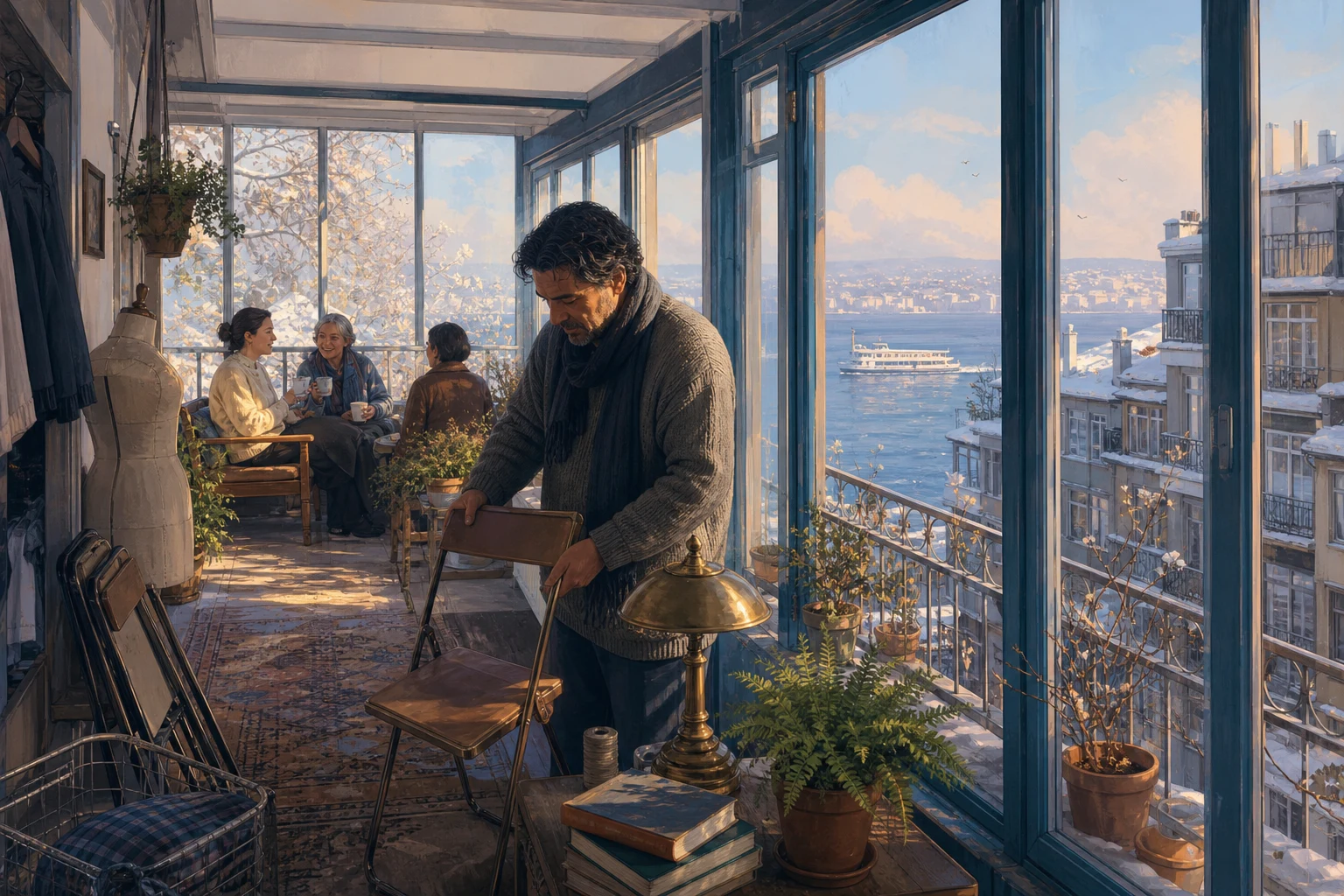
Where the Afternoon Lands
Nessa knew exactly how much fabric a winter coat required. She was less certain how much room a neighbor needed to feel welcome.
Read Story →
Markers on the Climb
Mirela wanted a faster time. Her cousin wanted simply to reach the top. Between them, the club discovered a better way to ride.
Read Story →