
Quote Stories
Blue Between the Steps
A winter story about making room for every voice
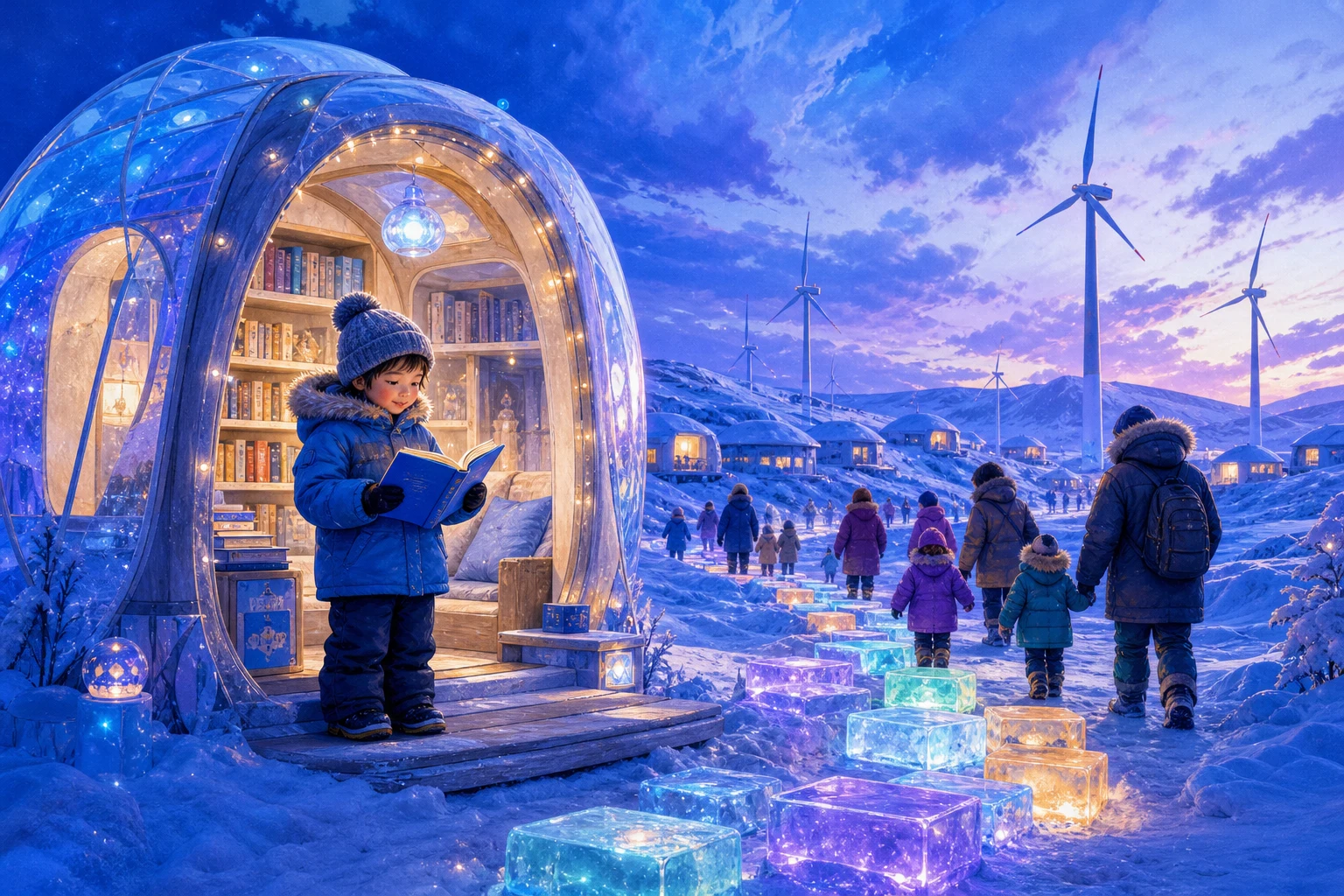
Pella found the reading hut by following the blue marks.
They appeared after dusk, little squares of frozen water pressed into the snow: one beside the wind tower, another near the covered footbridge, a third at the bend where the snow road dipped between two insulated homes. Each block held a trapped streak of color—blue, green, violet—like a piece of sky that had fallen and hardened.
At the last marker, Pella knelt beside the hut and tried the lamp.
Nothing happened.
She pressed the switch again. The solar panel above the door was buried beneath a skin of frost, and the lamp gave only a tired blink before going dark.
Inside, the shelves were crowded with books. Their spines showed wolves, moons, ships, gardens, and distant mountains. But no one had been reading them. In the long winter twilight, the hut had become too dim to enter comfortably.
Pella took out her notebook.
If the lamp would not shine, she decided, the story would have to.
She wrote three sentences about a fox who carried a small blue door through the snow. Then she copied each sentence onto a strip of waterproof paper and tucked the strips beneath colored ice blocks along the path.
The next evening, a mittened hand had moved one block. A child had found the second sentence and carried it home.
By morning, the fox had lost its door.
Pella found the paper frozen into a ridge beside the washhouse. The words were smeared, the edges curled, and the sentence no longer made sense. She tried again, writing larger and pressing each strip beneath a flat piece of ice. A wind gust lifted two pages and sent them skittering toward the storage sheds.
“Your fox is traveling faster than the story,” said a voice behind her.
Edda stood at the path’s edge, holding a brass instrument and a thermos. She had once studied clouds and winds, and still measured the weather for pleasure.
“I need stronger paper,” Pella said.
“You need to know what the weather intends to do with it.”
Pella frowned. She did not want the weather involved. She wanted the story to stay hers long enough to become good.
But Edda showed her how to place markers where the wind slowed: behind the low wall, beneath the eaves, and in the shelter of the old snow fence. She also explained that blue ice absorbed the dim light differently from clear ice, while green ice stood out against packed snow.
At the paint shop, Pella asked Rusk, the sign painter, for advice. Rusk tested six kinds of lettering on scraps of sailcloth.
“People read with their eyes,” he said, “but they also read with their feet. Make the next place easy to find.”
So Pella added arrows. Then she added a small fox paw beside each one.
The younger children contributed their own improvements. Tavi insisted that every third marker should be red, because his little sister could not tell blue from purple in the dark. Mina suggested that the story should pause at the footbridge, where families could gather without blocking the path. Someone else drew a moon wearing boots.
Pella kept rewriting the fox. At first, she erased every line that did not sound like hers. When Tavi offered a sentence about the fox being afraid of an empty door, she nearly brushed it away.
Then she noticed that the sentence made the fox kinder.
She left it in.
For five evenings, the trail grew. One fragment described a lantern buried beneath a hill. Another introduced a seal who knew the way through the white fog. At the footbridge, readers found a blank panel sheltered beneath a clear block of ice. They could add the next line with a grease pencil and leave it for the morning walkers.
The story changed shape.
The fox stopped carrying the door alone. The seal taught it to listen for hollow places beneath the snow. The lantern turned out not to belong to anyone. It belonged to whoever needed to find the way home.
On the sixth evening, the community gathered at the reading hut. Edda had cleared the solar panel. Rusk had painted a bright sign above the door. The younger children carried colored ice blocks in baskets, and Pella’s mother brought a kettle of warm berry drink.
Pella stood at the first marker with the notebook pressed against her coat.
“I thought I would read it,” she said. “But I don’t know which version is the real one.”
“Read all the versions,” Edda suggested.
So they followed the trail together. At every marker, someone read a sentence. Children took turns with elders. People paused to explain drawings, repair loose blocks, and add lines to the blank panels. Inside the hut, the lamp finally glowed, pale at first and then steady enough to reveal every shelf.
At the final marker, Pella found a sentence she did not recognize. It had been written in careful, uneven letters:
The door was blue because everyone had touched it.
Pella looked around. No one claimed the line.
She smiled and opened the hut door wider. The warm light spilled across the snow, joining the blue markers one by one until the whole trail seemed to lead—not to an ending, but to a place where the next reader could begin.
Related Quote Stories
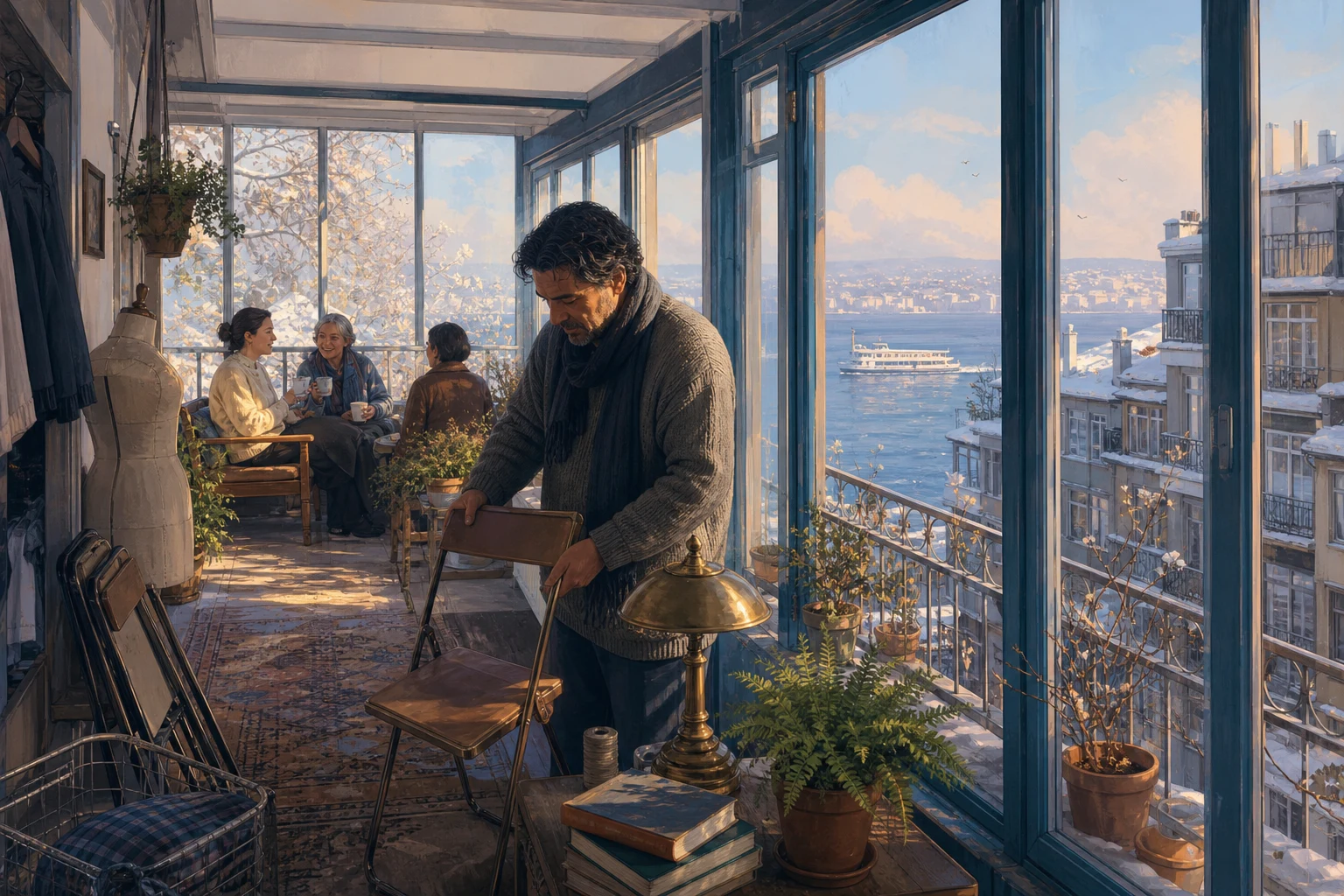
Where the Afternoon Lands
Nessa knew exactly how much fabric a winter coat required. She was less certain how much room a neighbor needed to feel welcome.
Read Story →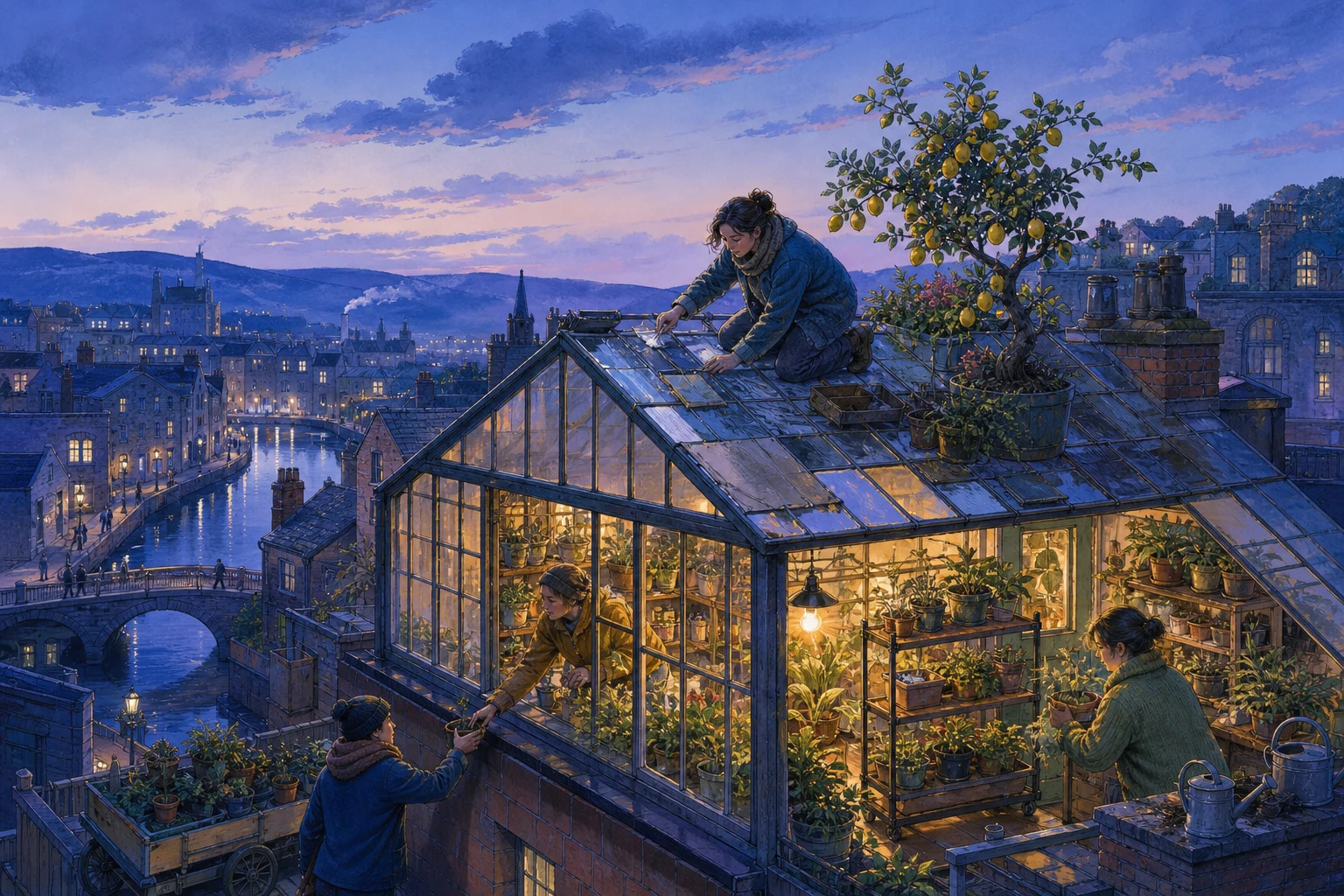
A Roof Full of Green
Vale arrived with a measuring tape, three black rubbish bags, and a plan to turn the old rooftop greenhouse into something clean enough to win a competition. Then she found the name tags.
Read Story →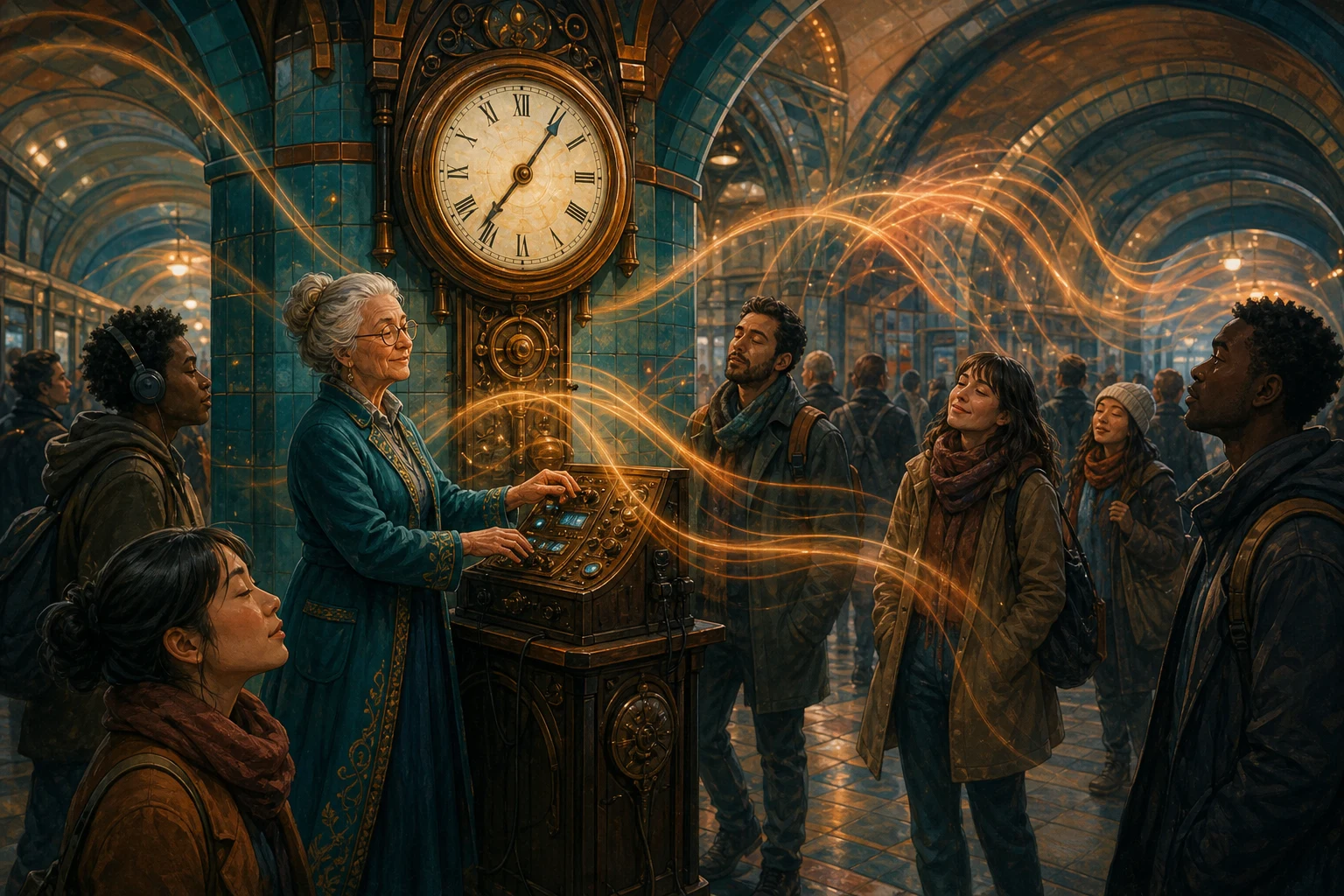
The Minute Between Trains
Irena had repaired the station clock three times, and three times it had kept perfect time. The trouble was not the clock. It was everything around it.
Read Story →