
Quote Stories
Where the Afternoon Lands
Nessa learns that sharing a room begins with sharing the rules.
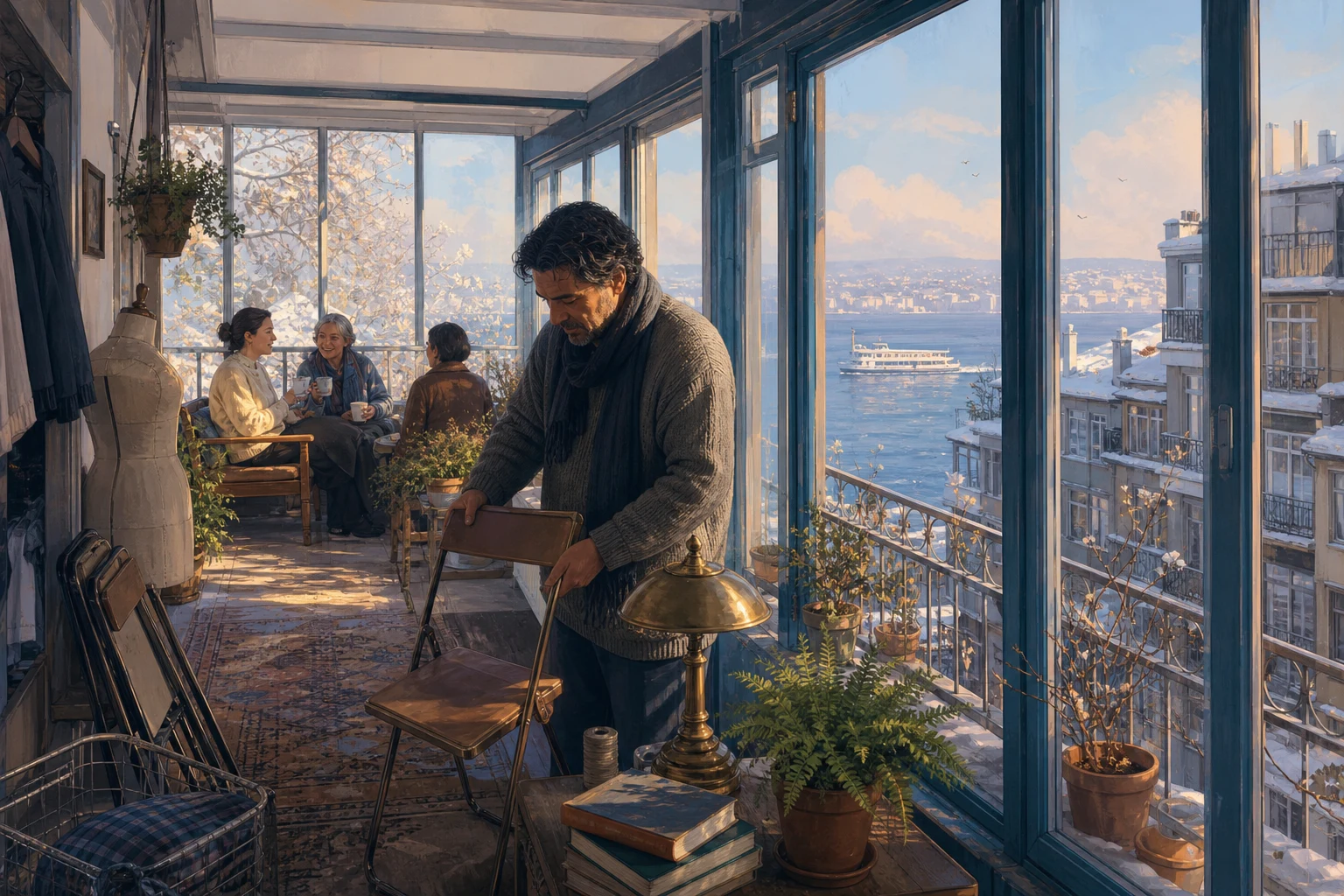
Nessa knew exactly how much fabric a winter coat required. She could measure a sleeve by touch, find a crooked seam beneath a thumb, and turn a discarded curtain into three useful pockets. She was less certain how much room a neighbor needed to feel welcome.
That question began with sunlight.
Every afternoon, a pale rectangle moved across the apartment district, slipping over balconies, courtyards, and enclosed walkways before resting briefly on the eastern walls. Residents followed it with folding chairs. They carried lamps from one room to another. They placed potted herbs on windowsills, then moved them again when the ferry fog thickened the glass.
Nessa noticed the empty rooms because she repaired their curtains. Behind many doors stood unused sitting rooms, spare bedrooms, and narrow corners filled with furniture no one had touched since autumn.
At the sewing table, she drew a plan on the back of a pattern envelope: one afternoon each month, residents could lend a sunny corner and borrow what made it comfortable—a chair, a lamp, a book, a plant, perhaps a kettle.
She called it the Window Seat Exchange, though most of the seats were not windows and some were not exchanges.
“Who decides who gets the good chair?” asked Bram from the third floor.
“The person who brings it,” Nessa said.
“And who decides when it comes back?”
Nessa paused. “The person who borrows it.”
Bram folded his arms. “That sounds less organized than you usually are.”
It was, Nessa admitted, less organized than a hem. Still, on the first Saturday of winter, six residents opened their doors. Nessa brought two folding chairs, a brass lamp, and a stack of novels. A student named Iven brought a fern. Bram lent a low table but warned everyone not to mark it.
For forty minutes, the arrangement worked beautifully. People read, mended socks, and watched the ferry lights appear across the lake.
Then someone moved the brass lamp without asking. A child spilled tea near the novels. Bram discovered a scratch on his table. The upstairs music became louder. By dusk, three people had left early, and Nessa had taken home a list of complaints longer than her cutting table.
She considered closing the project. A well-made coat did not require six people to agree where the pockets belonged.
The next day, Iven appeared at her workshop with a roll of blue paper.
“I have a better schedule,” he said. “But it needs fewer rules.”
Nessa looked at the teenager’s page. He had drawn the building as a clock, assigning each apartment a different hour of sunlight. He had also marked quiet periods, borrowing times, and places where people could leave objects without carrying them through crowded halls.
“You noticed all that?” she asked.
“I noticed everyone arguing about it.”
Together they rewrote the plan. Each gathering would have a host and a caretaker. Borrowed items would receive small tags showing their owner, return time, and one thing they could not tolerate: water, noise, open flames, or being moved. Guests could suggest changes before the next meeting. No one had to lend a room, and no one had to stay.
The second exchange was smaller. It was also calmer.
Bram’s table came back without a scratch. The child who had spilled tea returned with a cloth and polished the damp cover of a book. Iven’s fern sat in a patch of sun beside a woman who had not spoken to anyone in the building since moving in.
As the weeks passed, the corners changed. A retired musician hosted silent listening afternoons. Two neighbors who owned no lamps shared the brightest room in the arcade. Nessa stitched pockets onto the chair covers so visitors could keep pencils, glasses, and keys close at hand.
One afternoon, she arrived to find the brass lamp already lit. Beneath it lay a note in Iven’s handwriting: “Reserved for whoever needs to finish something.”
Nessa sat down. Around her, people talked softly, read, repaired, and sometimes simply watched the lake darken beneath the winter sky.
She had thought hospitality meant offering what one possessed. Now she understood it also meant making the offer adjustable—leaving a little space for another person to say what would help.
At closing time, no one hurried to reclaim the sunlight. They carried the chairs back together, room by room, while the last bright rectangle climbed the opposite wall and disappeared.
Related Quote Stories

Blue Between the Steps
When the reading hut’s lamp goes dark, Pella leaves a story in the snow—and discovers that the best ending is one no single person could write.
Read Story →
Rows That Remember Rain
Oren trusted numbers, neat columns, and the quiet certainty of a closed notebook. Then a child asked him a question his records could not answer.
Read Story →
Markers on the Climb
Mirela wanted a faster time. Her cousin wanted simply to reach the top. Between them, the club discovered a better way to ride.
Read Story →