
Quote Stories
Rows That Remember Rain
A beekeeper discovers that careful records become more useful when shared.
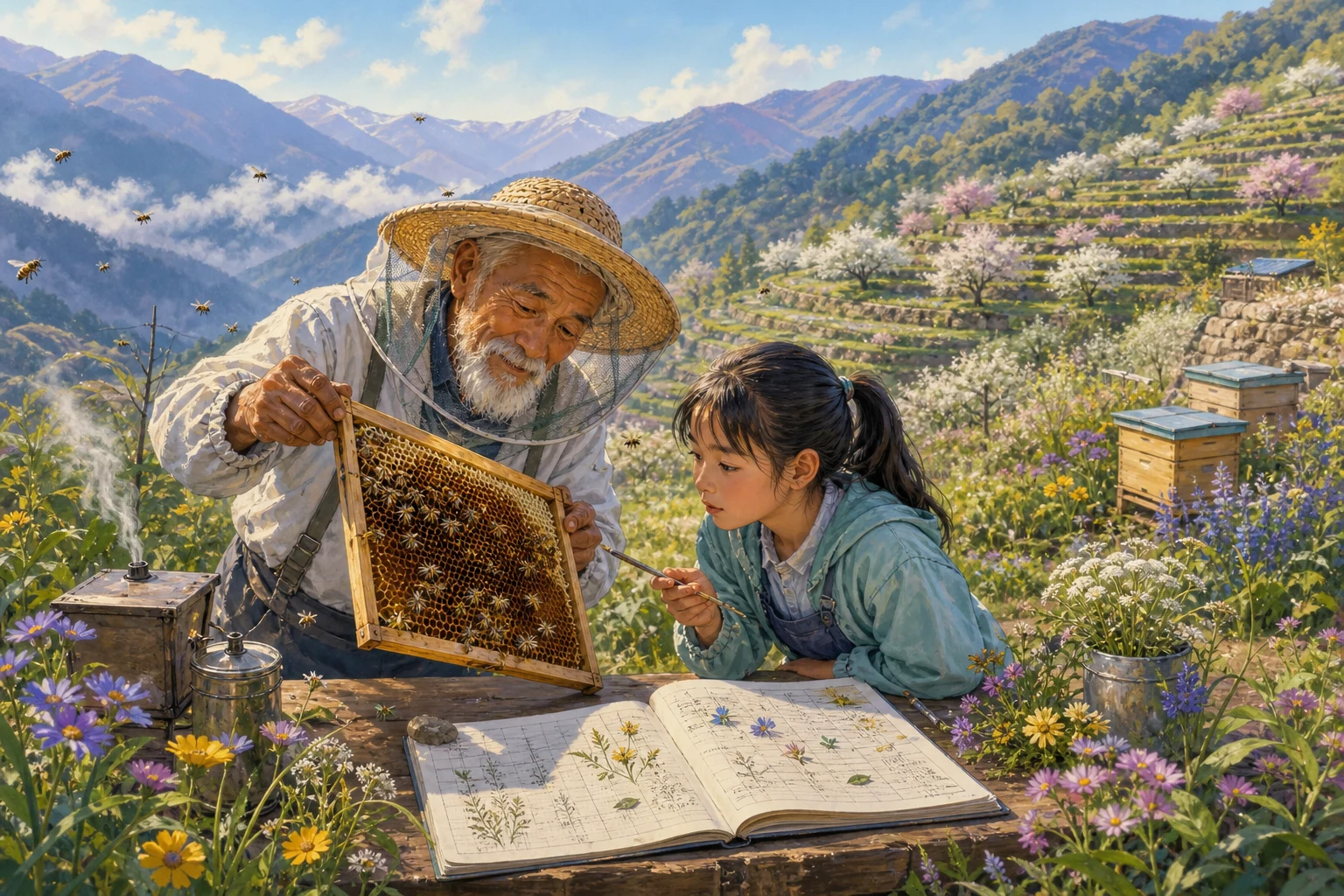
“Why are there no bees here?”
Lina stood beside the school garden with a magnifying glass in one hand and a wilted squash blossom in the other. Above her, the mountain wind moved through the young orchard, carrying the smell of stone, thyme, and distant rain.
Oren adjusted the strap of his bee veil. At sixty-four, he had learned to distrust questions that arrived before breakfast. He had also learned that children rarely accepted an answer simply because it was delivered confidently.
“Perhaps the flowers opened too late,” he said.
“They opened yesterday.”
“Perhaps the bees were elsewhere.”
“Where?”
Oren looked toward the terraced slopes. His hives stood in a sheltered hollow beyond the schoolhouse, each one numbered, dated, and recorded in a series of weatherproof ledgers. He knew when each queen had been introduced, when each hive had swarmed, and how much honey had been gathered in every season for nearly twenty years.
He did not know where the bees had gone yesterday.
Lina raised the squash blossom. “Can you help us find out?”
Oren almost said no. The seasonal growers’ gathering was that afternoon, and he had avoided it for three years. His former business partner, Sella, would be there. Their disagreement over hive placement had begun with a late frost and ended with words neither of them had managed to take back.
Instead, Oren said, “Bring me your notebook.”
The next morning, he showed the children how to watch without disturbing the flowers. They marked the time, temperature, wind direction, and number of visitors to each bed. Lina noticed that the bees appeared near the rosemary but not the squash. Another child found tiny native insects working among the clover.
Oren inspected the garden twice, then frowned at his ledger.
“What is it?” Lina asked.
“My records say this slope should be busy.”
“Maybe the records are wrong.”
Oren looked at her over the rim of his spectacles. Then, unexpectedly, he laughed.
“Records are not wrong,” he said. “People are wrong about what records mean.”
That evening, he opened an older ledger. Between measurements and hive counts, he found a page in Sella’s handwriting. Years earlier, they had planted a strip of wildflowers below the orchard. Sella had noted that the strip bloomed later than expected and suggested moving two hives closer to it. Oren had disagreed. The page ended with a dark ink mark where the argument had begun.
The following day, Oren walked to Sella’s shed carrying the ledger.
“I found something we both missed,” he said.
Sella studied the page. “You found something I wrote.”
“I found something neither of us followed.”
For a while, only the bees hummed between them. Then Sella brought out her own notebooks. Her observations were less tidy than Oren’s, full of sketches, weather symbols, and comments from orchard workers. Together, they saw a pattern: flowering times had shifted, and the garden’s newest beds had been planted according to old calendars.
They returned to the school with a plan. Instead of one master schedule, they created a shared log. Children recorded flowers in bloom. Growers added orchard notes. Beekeepers marked hive activity. Anyone could contribute an observation, even if they were unsure what it meant.
The first version was chaotic. Lina drew bees wearing crowns. Someone recorded “many yellow things.” Oren wrote three pages about wind speed before Sella crossed out most of it.
“Useful,” she said, “but not yet readable.”
By midsummer, the log had become a patchwork of practical knowledge. The growers planted staggered flowers. The school left part of its grass unmown. Oren and Sella moved several hives together, arguing about the best route and laughing when they discovered they still disagreed about nearly everything.
At the next seasonal gathering, Oren arrived early. He placed the newest ledger on the long produce-hall table, leaving several blank pages at the front.
Lina picked up a pencil. “What are those for?”
“For what we have not noticed yet,” Oren said.
Sella sat beside him. Outside, the orchard shimmered with small movements—bees among the blossoms, children among the rows, and people pausing to compare what they had seen.
Related Quote Stories
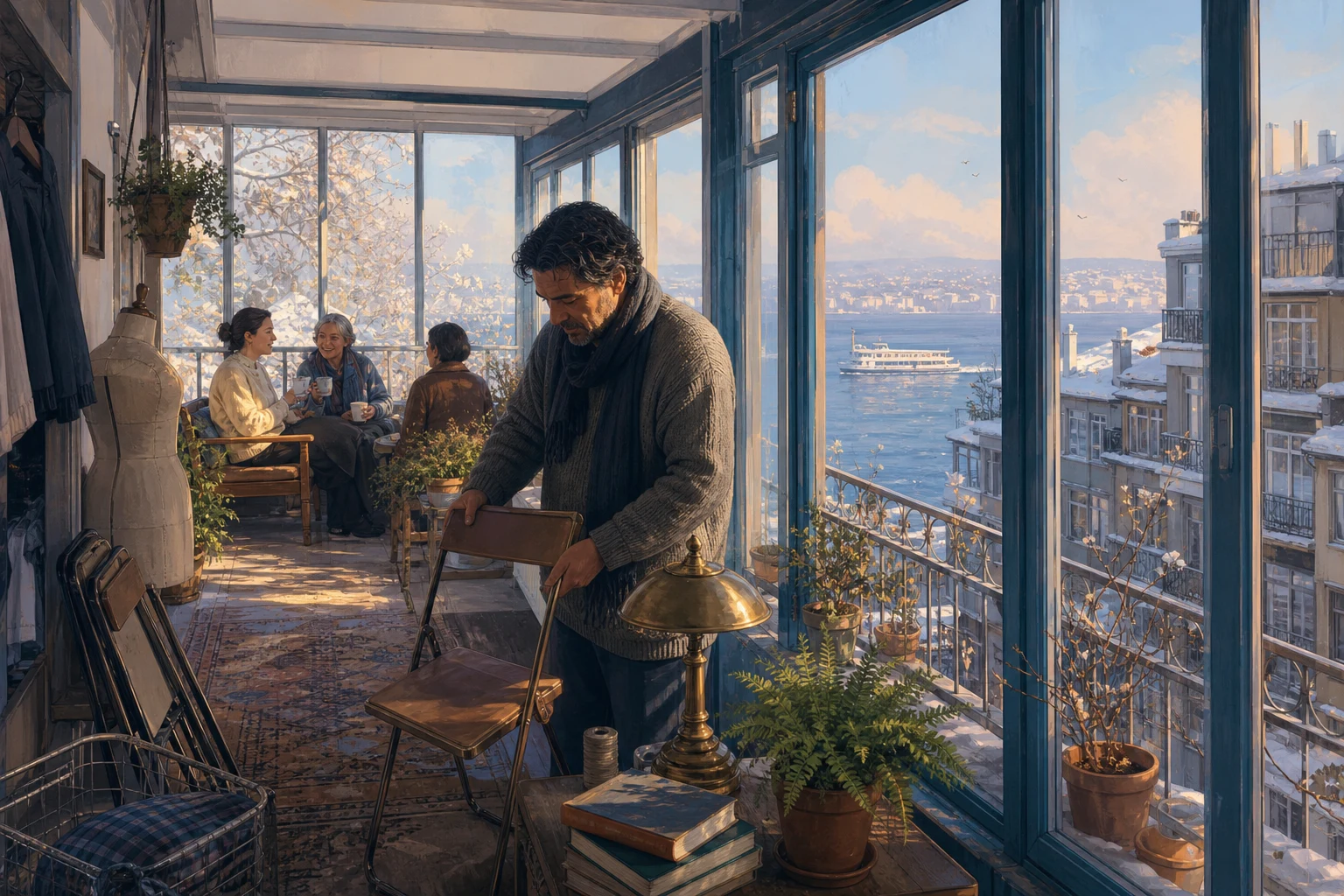
Where the Afternoon Lands
Nessa knew exactly how much fabric a winter coat required. She was less certain how much room a neighbor needed to feel welcome.
Read Story →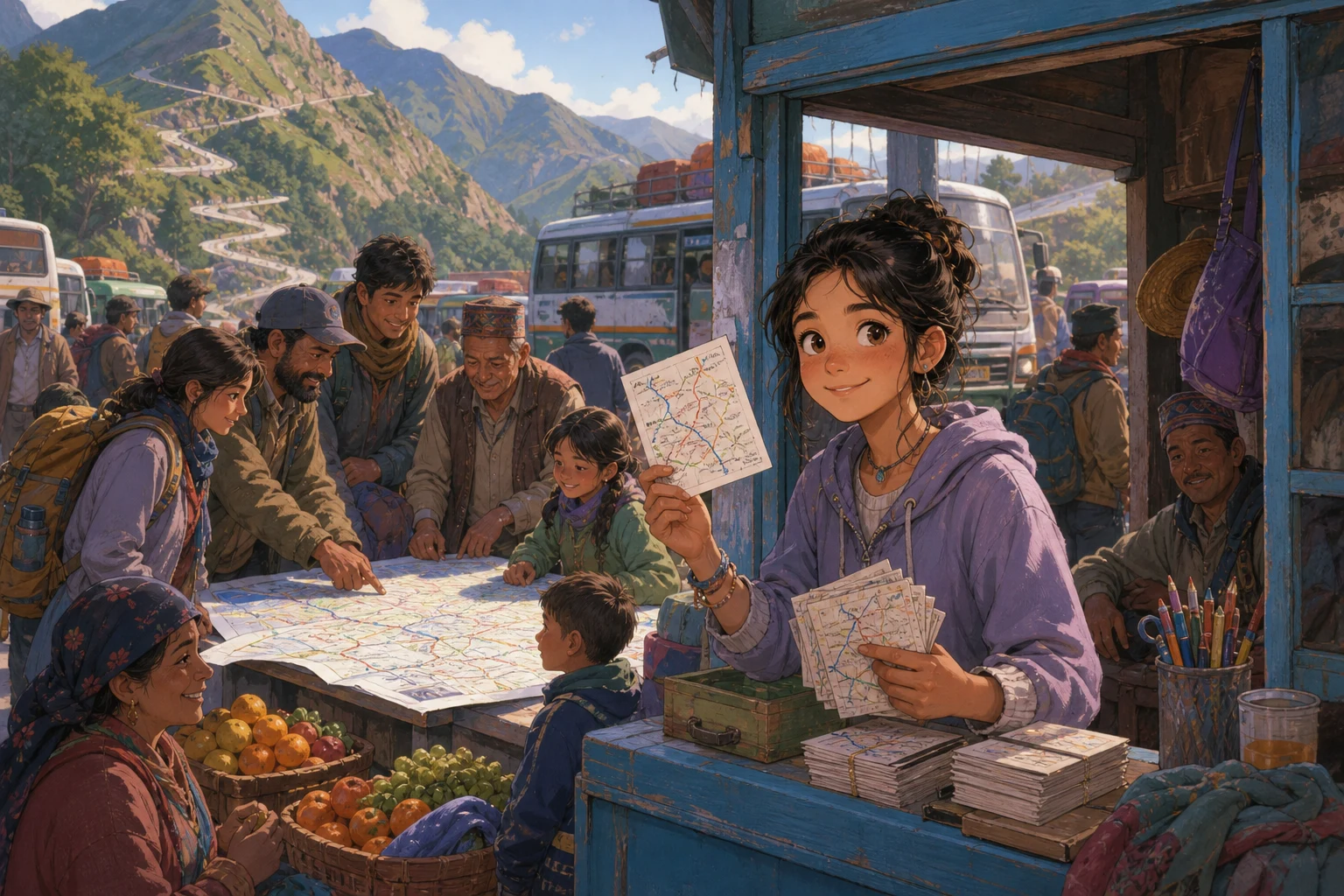
Routes Drawn in Pencil
Suri thought a map proved its maker knew the way. By evening, she understood that the best maps leave room for other people’s footsteps.
Read Story →
Markers on the Climb
Mirela wanted a faster time. Her cousin wanted simply to reach the top. Between them, the club discovered a better way to ride.
Read Story →